Infographic 37 · ZANISS SOFTWARES

EdTech Platform Development in India 2026

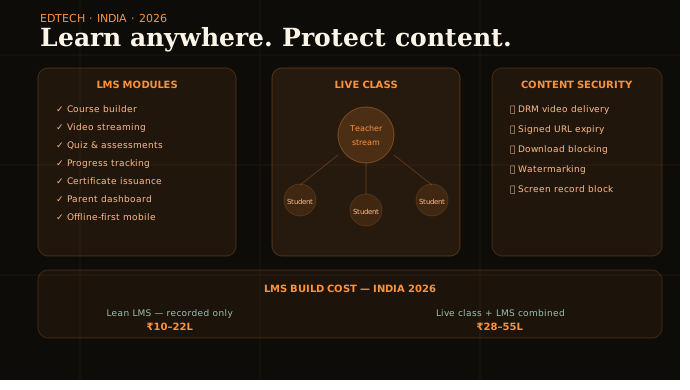
EdTech in India has matured past the 2021 funding-fueled feature race into a more disciplined build pattern focused on what actually drives learning outcomes and protects revenue. This infographic covers the core LMS module set, the live-class architecture connecting teachers to students in real time, and the content security layer that protects paid course content from piracy.

EdTech Platform Development in India 2026 — infographic by ZANISS SOFTWARES
EdTech Platform Development in India 2026 · Source: ZANISS SOFTWARES — free to share with credit and a link back to this page.

Key takeaways

  • A complete LMS needs seven core modules: course builder, video streaming, quiz/assessments, progress tracking, certificates, parent dashboard, and offlinefirst mobile access.
  • Live class infrastructure connects one teacher stream to multiple student endpoints — architecture must handle real-time scaling gracefully.
  • Content security (DRM, signed URLs, download blocking, watermarking, screenrecord blocking) directly protects your revenue from piracy.
  • Indicative cost: lean LMS with recorded content only (₹10–22L), live class + LMS combined (₹28–55L).
Key details at a glance

A complete LMS needs seven core modules: course builder, video streaming, quiz/assessments, progress tracking, certificates, parent dashboard, and offlinefirst mobile access. Live class infrastructure connects one teacher stream to multiple student endpoints — architecture must handle real-time scaling gracefully. Content security (DRM, signed URLs, download blocking, watermarking, screenrecord blocking) directly protects your revenue from piracy. Indicative cost: lean LMS with recorded content only (₹10–22L), live class + LMS combined (₹28–55L).
Want this applied to your business?

Book a free consultation and we'll map this framework to your project — no fluff, no sales pressure.