Infographic 48 · ZANISS SOFTWARES

DevOps and SRE in India 2026: Maturity Model

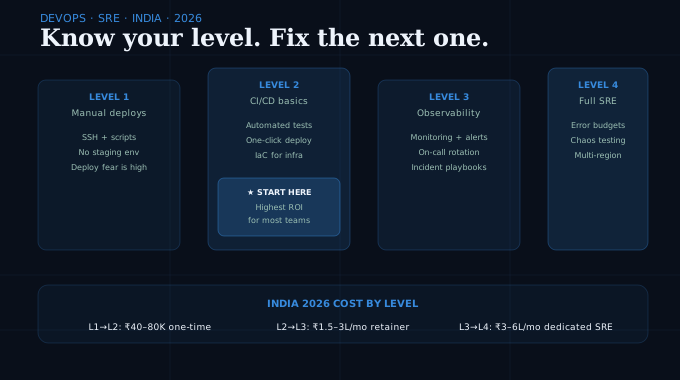
Most teams don't need full SRE maturity on day one — they need to know exactly where they sit today and which next step delivers the highest return. This infographic maps a four-level DevOps maturity model from manual deploys to full SRE, identifies the highest-ROI starting point for most teams, and shows realistic India 2026 cost to progress through each level.

DevOps and SRE in India 2026: Maturity Model — infographic by ZANISS SOFTWARES
DevOps and SRE in India 2026: Maturity Model · Source: ZANISS SOFTWARES — free to share with credit and a link back to this page.

Key takeaways

  • Level 1 (manual deploys via SSH/scripts, no staging environment) carries high deploy fear and risk.
  • Level 2 (CI/CD basics — automated tests, one-click deploy, Infrastructure as Code) is the highest-ROI starting point for most teams.
  • Level 3 adds observability (monitoring, alerting, on-call rotation, incident playbooks); Level 4 reaches full SRE (error budgets, chaos testing, multi-region).
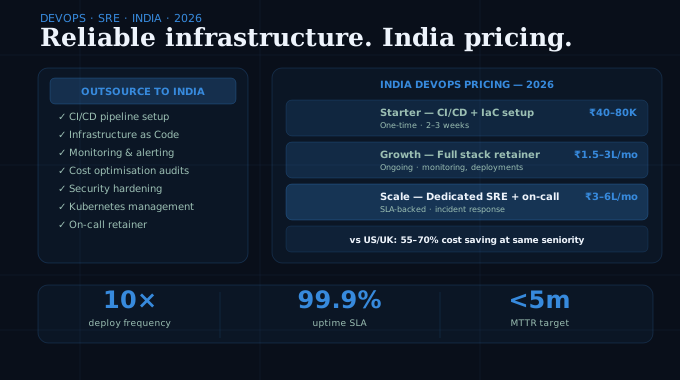
  • India 2026 progression cost: Level 1→2 is ₹40–80K one-time, Level 2→3 is ₹1.5– 3L/month retainer, Level 3→4 is ₹3–6L/month for dedicated SRE.
Key details at a glance

Level 1 (manual deploys via SSH/scripts, no staging environment) carries high deploy fear and risk. Level 2 (CI/CD basics — automated tests, one-click deploy, Infrastructure as Code) is the highest-ROI starting point for most teams. Level 3 adds observability (monitoring, alerting, on-call rotation, incident playbooks); Level 4 reaches full SRE (error budgets, chaos testing, multi-region). India 2026 progression cost: Level 1→2 is ₹40–80K one-time, Level 2→3 is ₹1.5– 3L/month retainer, Level 3→4 is ₹3–6L/month for dedicated SRE.
Want this applied to your business?

Book a free consultation and we'll map this framework to your project — no fluff, no sales pressure.