Quick Summary
- 1Starter DevOps setup (CI/CD, IaC, monitoring) in India 2026: INR 6–15 L
- 2SRE practice maturity pays back in 99.9%+ uptime and 40–60% faster recovery
- 3The highest-ROI starting point is almost always observability, not Kubernetes
- 4On-call discipline + runbooks beat fancy tooling for actual reliability
DevOps in 2026 is no longer a job title — it's a baseline expectation for any serious engineering team. The question isn't whether to invest, it's where to start so the investment pays back fastest. Here's the maturity model we use with Indian teams from 10 to 100 engineers.
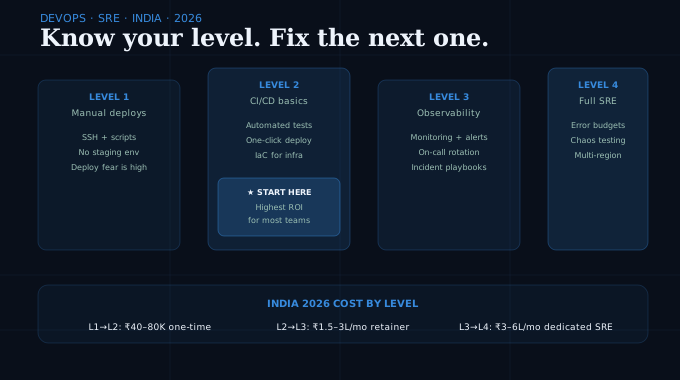
The four maturity levels
- Level 1 — Foundational: CI/CD on every repo, IaC for production, secrets in a vault, basic uptime monitor. Most teams under 15 engineers should aim here first.
- Level 2 — Observable: structured logs, metrics, traces correlated by request ID. Dashboards per service. Alerting that points to a runbook.
- Level 3 — Reliable: SLOs and error budgets, real on-call rota, blameless post-mortems, autoscaling, DR drills.
- Level 4 — Self-service: internal developer platform, golden paths, ephemeral environments, chaos testing.
Most teams should not chase Level 4 before they've earned Levels 1–3. The marketing around platform engineering hides how much discipline the lower levels need.
Where to start when budget is tight
Observability — full stop. Knowing what's actually happening in production pays for itself faster than any other DevOps investment. Logs, metrics, traces, and a few good dashboards routinely cut MTTR by 60–80% on their own.
Indicative DevOps / SRE engagement (India, 2026)
| Website Type | Price Range | Best For |
|---|---|---|
| Starter setup | INR 6–15 L | CI/CD, IaC, monitoring, alerting, secrets |
| Production hardening | INR 18–45 L | SLOs, on-call, runbooks, DR, autoscaling |
| Embedded SRE retainer | INR 2.5–8 L/mo | Ongoing reliability work, incident response, FinOps |
Planning a Website? Don't Overpay or Underbuild
Most businesses overspend on features they don't need — or underspend and rebuild within a year. We help you scope it right from day one.
The on-call discipline most teams skip
- Documented escalation path with names, not roles.
- Every alert links to a runbook — no orphan alerts.
- Blameless post-mortems written within 72 hours of any P1/P2.
- Error budget policy that engineers actually believe — release freeze when budget is gone.
Kubernetes — only when you actually need it
K8s is wonderful technology that costs most early-stage teams more than it returns. Below ~20 services or ~30 engineers, managed container platforms (ECS Fargate, Cloud Run, App Runner) usually win on cost and ops burden. Adopt Kubernetes when multi-team self-service genuinely demands it, not before.
FinOps as a DevOps function
Cloud spend has become an SRE concern in 2026 — observability for dollars, not just latency. Tag everything, review monthly with engineering accountable, and treat cost regressions like performance regressions. Our deep dive on controlling cloud bills covers the playbook.
How we engage
Fixed-scope setup engagements for Levels 1–2, retainer-based for ongoing SRE work. Every engagement ends with documentation the in-house team can own — no vendor lock-in. See cloud solutions for DevOps services or contact us for a maturity assessment of your current setup.
Pro Insight
Planning a cloud-native platform? Let's review your architecture for free.
At ZANISS SOFTWARES, we don't just build websites — we build growth systems.
- ✓SEO-first architecture
- ✓Conversion-focused design
- ✓High-speed performance
- ✓Scalable, future-proof code
📩 Response within 24 hours