
Choosing a custom software development company isn't just about hiring a vendor — it's about choosing a business partner. The wrong choice can lead to blown budgets, missed deadlines, and unscalable code. The right choice can propel your business years ahead of the competition.
With thousands of agencies, freelancers, and offshore teams competing for your project, how do you cut through the marketing noise? This guide breaks down the exact framework you should use to evaluate, select, and confidently hire a software development partner that aligns with both your technical needs and your business goals.
1. The Core Dilemma: Location, Structure, and Team Type
Before you look at specific companies, decide the structural framework that fits your project. Two big axes matter: where the team sits, and how the team is shaped.
Local vs. Remote vs. Hybrid
- "Near Me" (Local): Great for complex enterprise projects needing frequent in-person alignment, strict local data regulations (e.g. healthcare), or heavy hands-on collaboration.
- Offshore / Remote: Significant cost advantages and access to a global talent pool — but demands disciplined asynchronous communication and management.
- Hybrid: The best of both worlds. A local project manager or architect paired with an international development team.
Company vs. Agency vs. Freelancer
- Freelancers: Best for small, well-defined tasks or MVPs with tight budgets. They lack the scalability and multi-disciplinary skills of full teams.
- Agencies: Great for quick turnarounds on standard web or mobile apps, but they often juggle too many clients at once.
- Dedicated Software Partners: Ideal for long-term, complex, or enterprise-grade products. They embed in your business and focus on lifecycle management.
| Vendor Type | Average Cost | Communication Style | Scalability | Risk Factor |
|---|---|---|---|---|
Freelancers | Low | Direct / Variable | Low | High |
Standard Agencies | Moderate | Account-Manager Mediated | Medium | Medium |
Dedicated PartnersRecommended | Premium | Integrated / Asynchronous | High | Low |
Freelancers
- Cost
- Low
- Risk
- High
- Scalability
- Low
- Comms
- Direct / Variable
Standard Agencies
- Cost
- Moderate
- Risk
- Medium
- Scalability
- Medium
- Comms
- Account-Manager Mediated
Dedicated Partners
Recommended- Cost
- Premium
- Risk
- Low
- Scalability
- High
- Comms
- Integrated / Asynchronous
2. How to Evaluate a Partner's Technical Mastery
Never take a sales pitch at face value. To verify a development team's actual technical skills, look at three specific areas:
Review their portfolio for relevance
Don't just look for pretty apps — look for complexity alignment. If you're building a healthcare app, have they dealt with HIPAA compliance? If you're upgrading an enterprise system, do they have a track record in legacy modernization?
Look at the tech stack (and the "why")
Ask the company why they recommend a specific technology. If they suggest building everything in React Native or Python just because it's "what they do," that's a warning sign. A true partner chooses technology based on your scaling needs, security requirements, and long-term maintenance costs.
Inspect their Quality Assurance (QA) process
Great software isn't just written — it's tested. Ask potential partners about their testing protocols: do they use automated testing, manual testing, or both? What's their process for continuous integration and continuous deployment (CI/CD)?
3. Red Flags to Watch Out For During the Interview
When interviewing a software development firm, keep an eye out for these warning signs:
The "Yes Men"
Agreeing to every feature, timeline, and budget without pushing back means they're desperate for the contract — not focused on your success.
Lack of transparency in pricing
Vague estimations or flat-rate quotes on complex, ambiguous projects almost always lead to massive hidden fees later.
Unclear IP ownership
If a vendor hesitates to state in writing that you own 100% of the intellectual property and source code from day one — walk away.
4. Critical Questions to Ask Before Signing a Contract
Before you sign on the dotted line, make sure you have clear, written answers to these practical concerns:
- Who will actually be working on my project? Ensure they aren't outsourcing your work to a third party without your knowledge.
- What happens after launch? What do post-warranty support, SLA agreements, and ongoing maintenance costs look like?
- How do we handle scope creep? If features change mid-project, what's the formal change-management process and how is it priced?
Conclusion: Balance Cost with Capability
Choosing the right software development company comes down to balancing cost with capability, and trust with transparency. By focusing on alignment, verifying technical skills, and watching for common red flags, you can transform a risky vendor selection into a successful, long-term technical partnership.
Ready to see how a true software partner operates? Contact our team today for a free project scoping session.
Related infographic
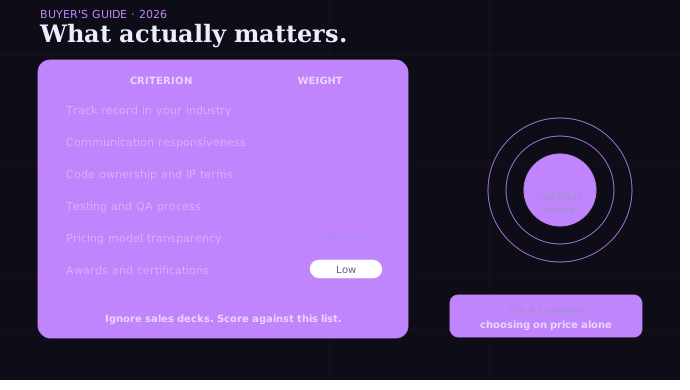
How to Find, Evaluate, and Hire a Reliable Software Development Company
A weighted decision scorecard for hiring a software development partner in 2026 — see the visual summary.
Let's scope your project together — no pressure, no sales pitch
45-minute working session with our senior engineers. We'll map your requirements, flag risks, and tell you honestly whether you need us or not.