Infographic 69 · ZANISS SOFTWARES

AI Governance for Indian Businesses in 2026 — The Framework at a Glance

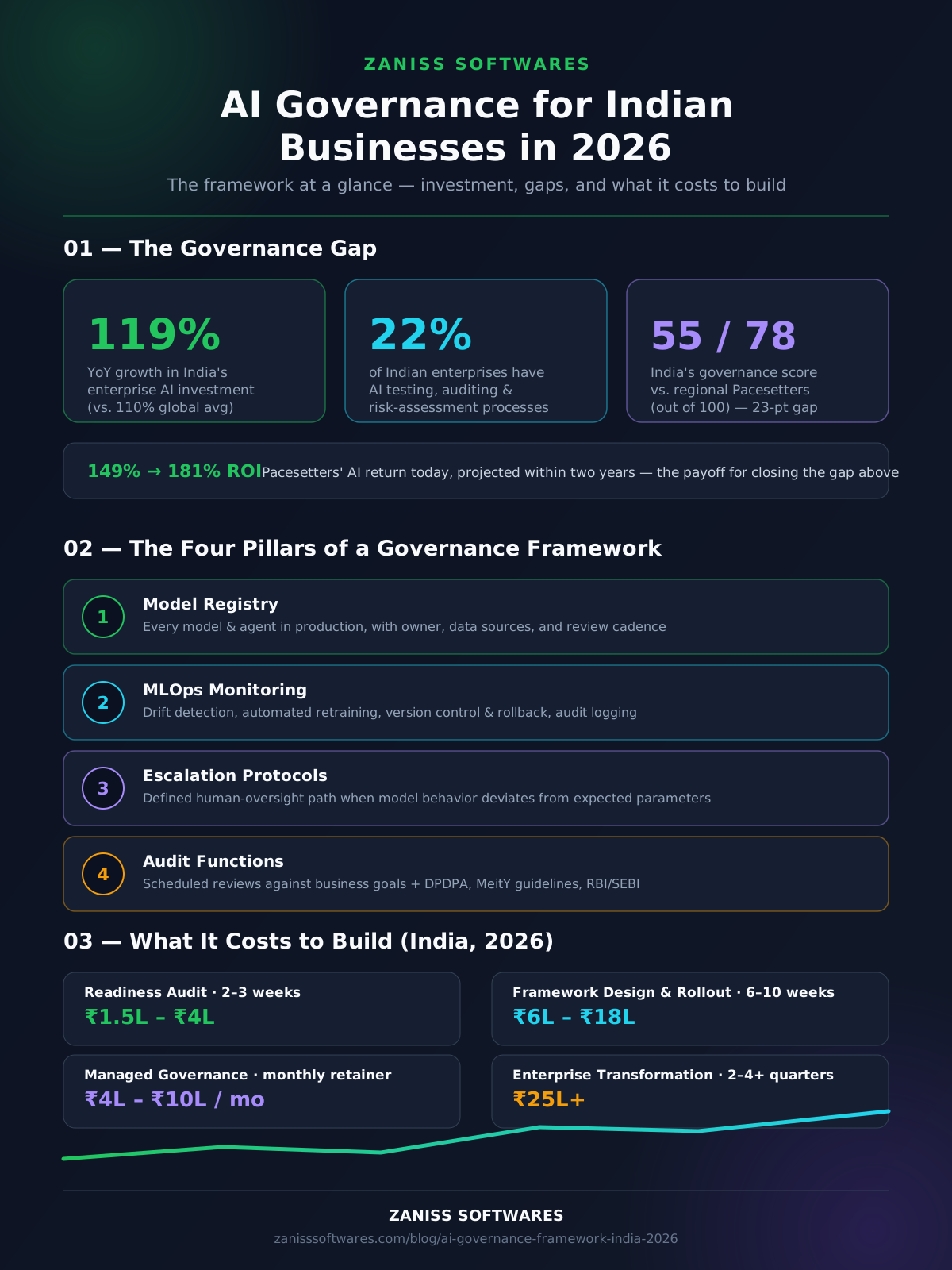
Enterprise AI investment in India grew 119% in the past year — but only 22% of Indian companies have the testing, auditing, and risk-assessment processes to govern what they've deployed. Here's the framework that closes that gap, and what it costs to build in 2026.

AI governance framework for Indian businesses in 2026 — the four pillars, regulatory landscape, and cost tiers — infographic by ZANISS SOFTWARES
AI Governance for Indian Businesses in 2026 — The Framework at a Glance · Source: ZANISS SOFTWARES — free to share with credit and a link back to this page.

Key takeaways

  • India's enterprise AI investment grew 119% year over year — ahead of the 110% global average — but the country's AI governance maturity score sits at just 55 out of 100, a 23-point gap behind regional "Pacesetter" organizations at 78.
  • A working governance framework rests on four pillars: a model registry, MLOps monitoring infrastructure, escalation protocols with human oversight, and regular audit functions.
  • MeitY's November 2025 India AI Governance Guidelines sit alongside mandatory DPDPA obligations and sector rules from the RBI and SEBI — voluntary today, increasingly expected in enterprise procurement and audits tomorrow.
  • Building a governance framework in India in 2026 typically ranges from ₹1.5L for a readiness audit to ₹25L+ for an enterprise-wide transformation programme, depending on how many AI systems are already in production.

The Governance Gap, By the Numbers

India's AI ambition is outrunning its AI oversight. Enterprise AI investment is up 119% year over year, now consuming 16.6% of the average IT budget and projected to hit 21.3% by 2027. But only 22% of Indian enterprises have AI testing, auditing, and risk-assessment processes in place, and just 18% have replaced fragmented legacy systems with integrated platforms. The payoff for closing that gap is real: regional "Pacesetter" organizations with mature governance report 149% ROI on AI investment, projected to reach 181% within two years.
The Four Pillars of a Governance Framework

Model Registry — a living inventory of every AI model and agent in production, with owner, data sources, and review cadence documented. MLOps Monitoring — continuous drift detection, automated retraining pipelines, version control with rollback, and centralized audit logging. Escalation Protocols — a defined path with human oversight for when a model's behavior deviates from expected parameters, especially in high-stakes decisions. Audit Functions — scheduled internal or third-party audits measuring outputs against business objectives and regulatory requirements (DPDPA, MeitY guidelines, RBI/SEBI where applicable).

What It Costs to Build (India, 2026)

AI Governance Readiness Audit: ₹1.5L – ₹4L, 2–3 weeks. Governance Framework Design & Rollout: ₹6L – ₹18L, 6–10 weeks. Managed AI Governance / Fractional AI Risk Advisory: ₹4L – ₹10L per month, ongoing retainer. Enterprise-Wide Transformation Programme: ₹25L+, 2–4+ quarters.

How to Decide: Audit, Framework, or Managed Program?

Start with a readiness audit if you're running one or two AI tools and need to know where the gaps are before committing budget. Skip straight to a full framework build if the business is in a regulated sector (financial services, healthcare, sensitive personal data at scale) or already has five-plus AI systems touching real customer data. Budget for the managed retainer from day one if there's no internal compliance or platform team to keep the model registry and audit cadence running — a framework nobody maintains goes stale within two quarters.

Frequently asked questions

Is AI governance legally required for Indian businesses in 2026?
The DPDPA is mandatory wherever AI touches personal data. MeitY's AI Governance Guidelines (November 2025) are currently voluntary, though regulated sectors carry additional binding requirements from the RBI and SEBI.
How is AI governance different from cybersecurity policy?
Security protects systems and data from unauthorized access. Governance covers what happens after access is authorized — whether outputs are accurate, monitored, reviewed by a human when it matters, and traceable to an accountable owner.
Can a smaller business just start with an audit instead of a full framework?
Yes. For most companies running one or two AI tools, a 2–3 week readiness audit is the right starting point before investing in a full build.

Want this applied to your business?

Book a free consultation and we'll map this framework to your project — no fluff, no sales pressure.