Infographic 47 · ZANISS SOFTWARES

Software Audit Services in India 2026

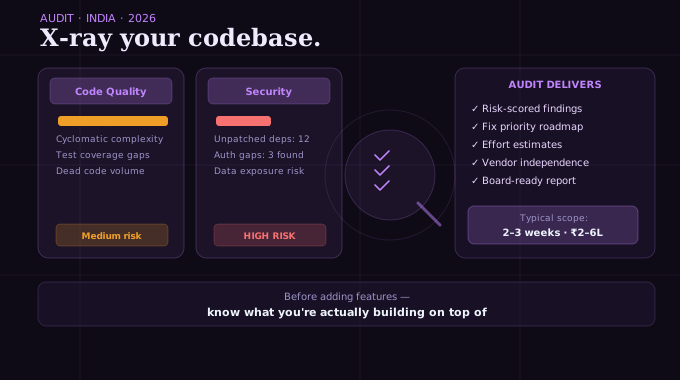
Before adding new features to an existing codebase, you need to know what you're actually building on top of — a software audit answers that question with risk-scored findings rather than guesswork. This infographic shows two core audit dimensions (code quality and security), the risk scoring each typically reveals, and what a proper audit engagement delivers.

Software Audit Services in India 2026 — infographic by ZANISS SOFTWARES
Software Audit Services in India 2026 · Source: ZANISS SOFTWARES — free to share with credit and a link back to this page.

Key takeaways

  • Code quality audits assess cyclomatic complexity, test coverage gaps, and dead code volume — typical findings score in the medium-risk range.
  • Security audits check unpatched dependencies, authentication gaps, and data exposure risk — these typically score higher risk than code quality alone.
  • A proper audit delivers risk-scored findings, a fix priority roadmap, effort estimates, vendor independence, and a board-ready report.
  • Typical India 2026 audit engagement: 2–3 weeks, ₹2–6L, depending on codebase size and depth required.
Key details at a glance

Code quality audits assess cyclomatic complexity, test coverage gaps, and dead code volume — typical findings score in the medium-risk range. Security audits check unpatched dependencies, authentication gaps, and data exposure risk — these typically score higher risk than code quality alone. A proper audit delivers risk-scored findings, a fix priority roadmap, effort estimates, vendor independence, and a board-ready report. Typical India 2026 audit engagement: 2–3 weeks, ₹2–6L, depending on codebase size and depth required.
Want this applied to your business?

Book a free consultation and we'll map this framework to your project — no fluff, no sales pressure.