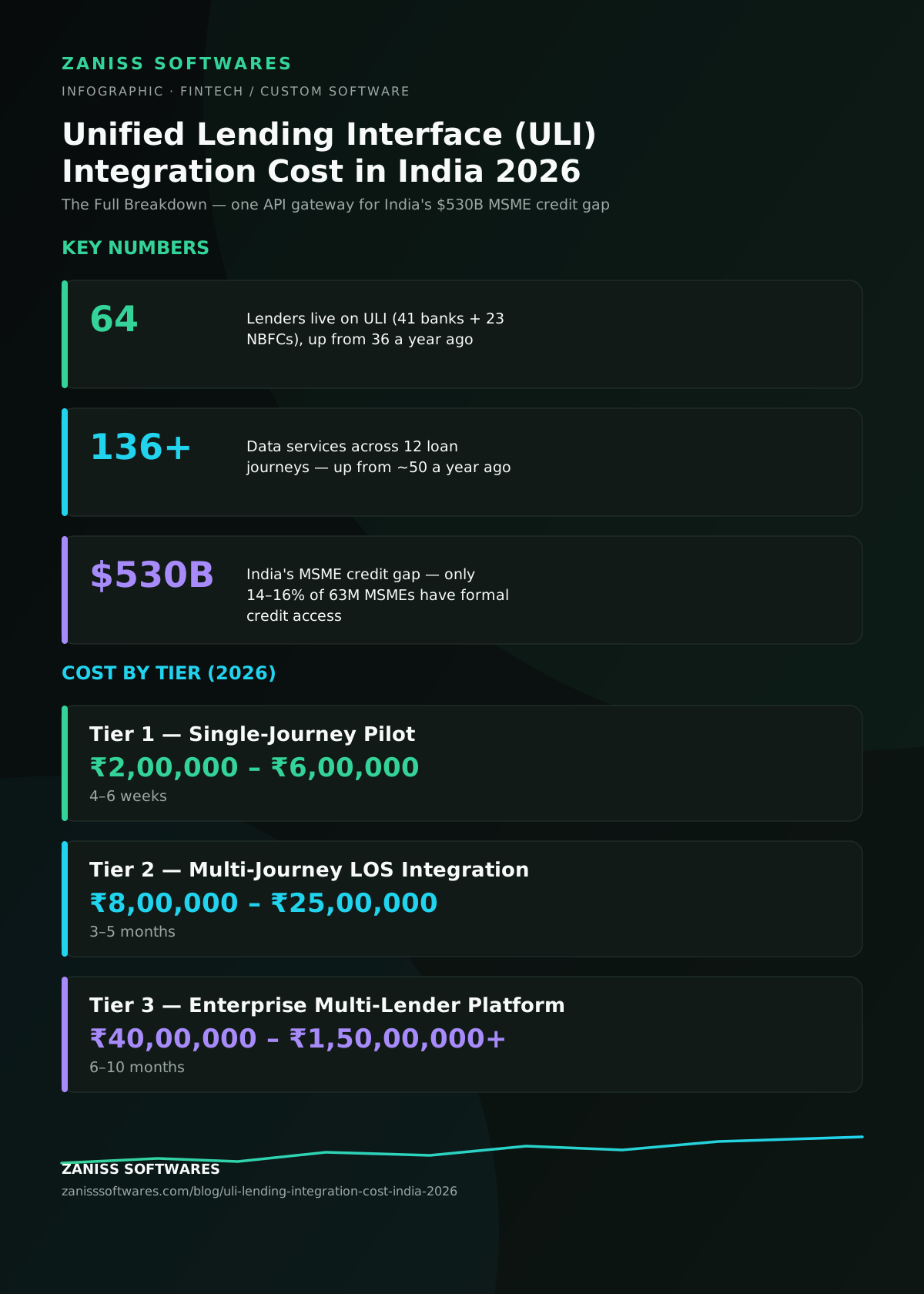
The Real Integration Cost Breakdown by Tier
Tier 1 — Single-Journey Pilot: ₹2,00,000–₹6,00,000, 4–6 weeks. One loan journey, 1–2 data services, RBIH sandbox onboarding.
Tier 2 — Multi-Journey LOS Integration: ₹8,00,000–₹25,00,000, 3–5 months. 3–5 journeys, AA consent layer, DPDP-compliant audit logging.
Tier 3 — Enterprise Multi-Lender Platform: ₹40,00,000–₹1,50,00,000+, 6–10 months. Multi-lender TSP platform, full BCP/DR, AA + OCEN + ONDC interoperability.
What Actually Drives the Cost Up or Down
Number of loan journeys and data services consumed, legacy vs API-first core banking/LOS, custom underwriting engine vs bureau scores, depth of compliance/audit requirements, and 24x7 BCP/DR needs for regulated entities.
How ULI, Account Aggregator and ONDC Fit Together
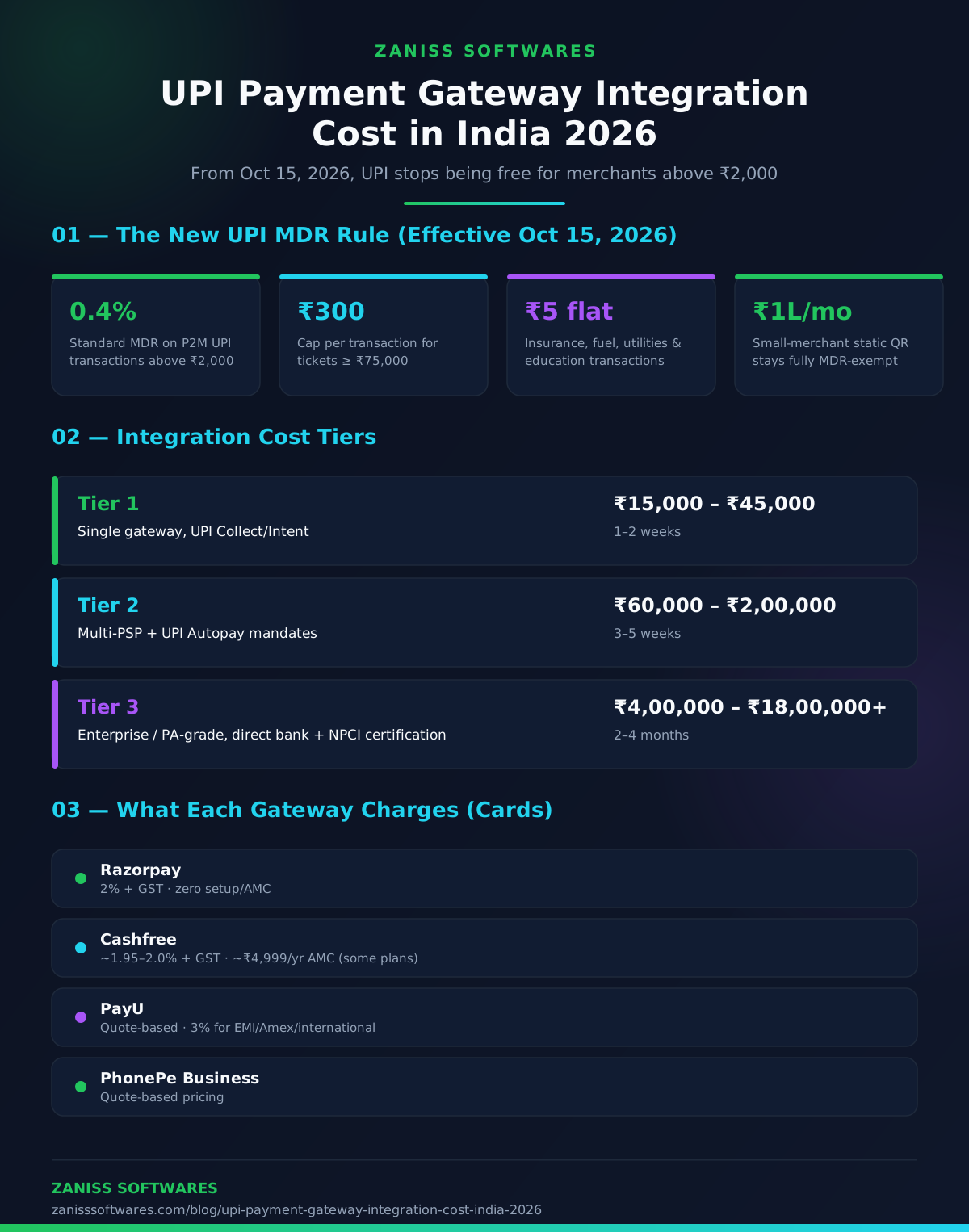
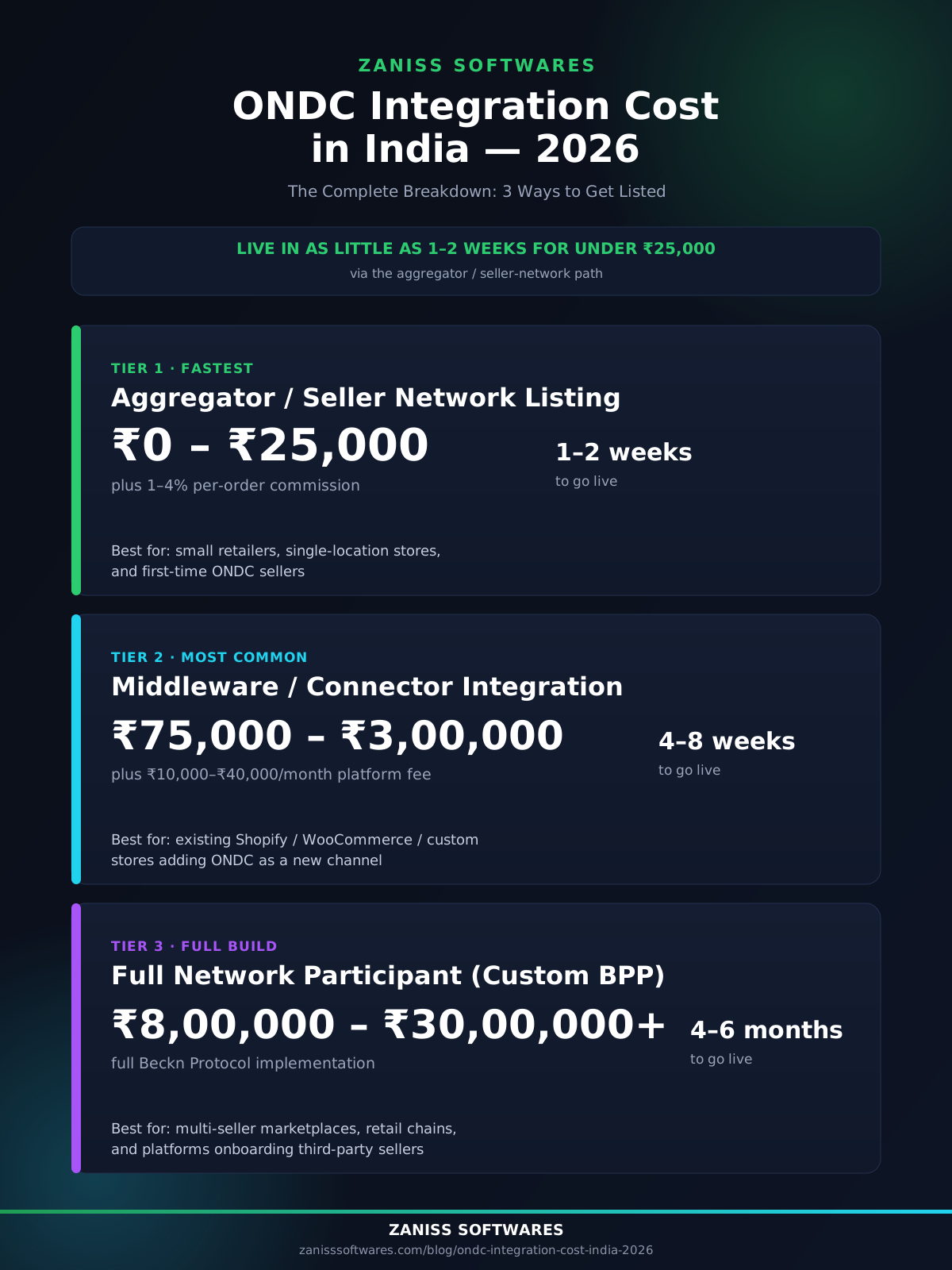
UPI moves money. Account Aggregator shares a customer's consented financial data. ULI moves the loan-lifecycle data — identity, land, tax, agri, credit-guarantee — that underwriting actually depends on. RBI designed all three to interoperate, not compete, and most 2026 builds touch at least two of them.
How to Evaluate Which Integration Tier You Need
Ask three questions before scoping a build: Are you a single regulated lender testing one product, or a platform serving many lenders? Is your core LOS/banking stack API-first or legacy? Do you need ULI alone, or also Account Aggregator consent and OCEN-style co-lending? If you can name one loan journey to launch first and one data service you can't ship without, you're ready to scope Tier 1 or 2 this quarter.
Frequently asked questions
- What exactly is the Unified Lending Interface (ULI), and is integrating with it mandatory?
- ULI is RBI's digital public infrastructure for lending data — a single API gateway connecting lenders to identity, land, tax, agri and credit-guarantee data sources across the loan lifecycle. It isn't legally mandatory, but with 64 lenders already live and growing fast, it's rapidly becoming the default way regulated entities access this data at scale.
- Which lenders and fintechs actually need to integrate with ULI in 2026?
- Banks and NBFCs originating retail, MSME, agri or dairy loans, plus fintechs building loan origination platforms or TSP-style infrastructure serving multiple lenders. If your loan book touches any of the 12 live journeys, it's worth scoping now.
- How long does a realistic ULI integration take, start to production?
- A focused single-journey pilot: 4–6 weeks. A multi-journey loan origination system integration: 3–5 months. A full multi-lender platform with enterprise compliance and BCP/DR: 6–10 months.