AA Integration Cost, By Tier
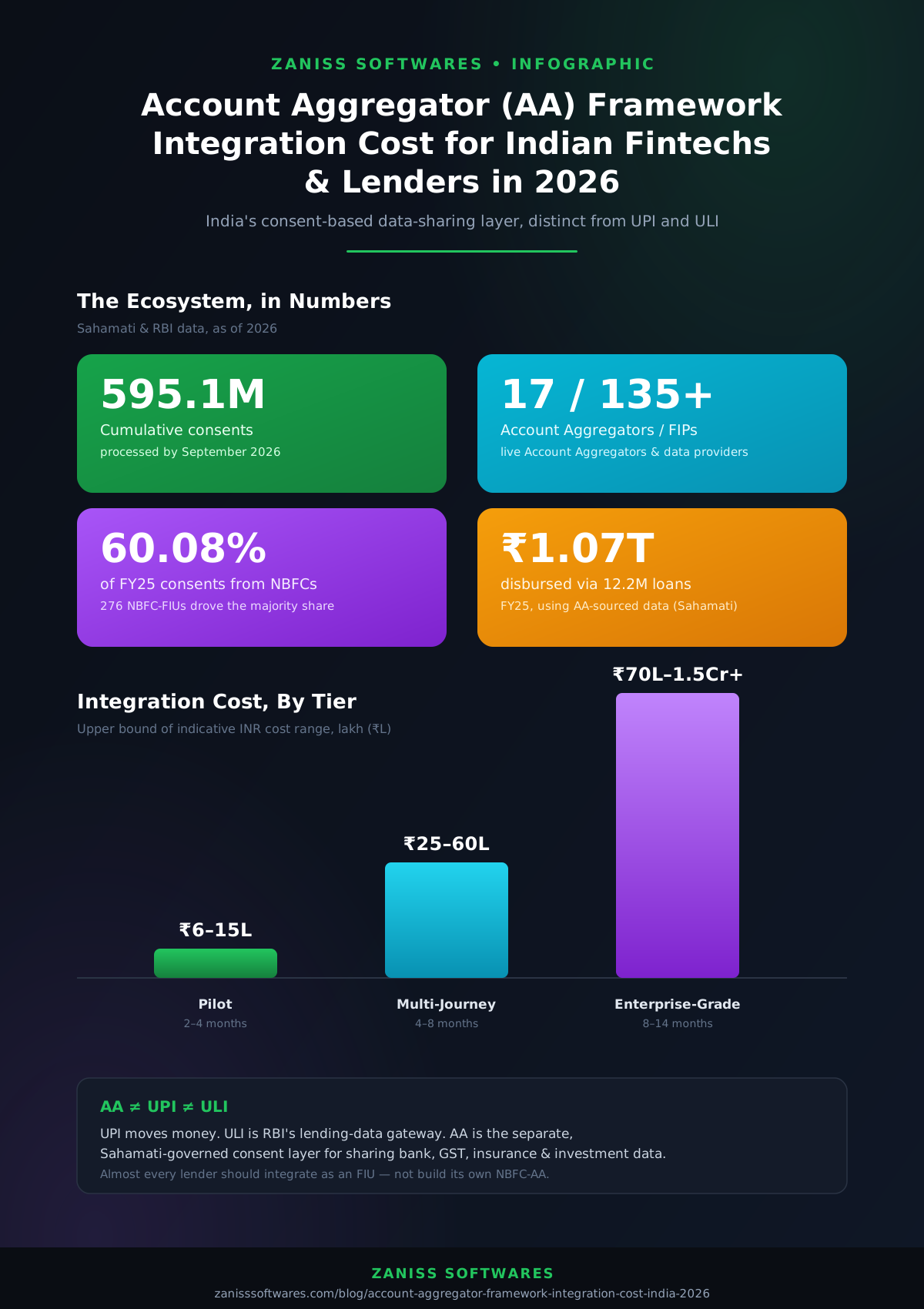
Pilot / Single Use Case
1 AA, 1 data type, one-time consent · 2–4 months · ₹6L – ₹15L
Multi-Journey Underwriting
2–3 AAs, bank+GST+investment data, periodic consent · 4–8 months · ₹25L – ₹60L
Enterprise / Regulatory-Grade
4–6 AAs, 15–20+ FI categories, in-house scoring, audit · 8–14 months · ₹70L – ₹1.5Cr+
The Ecosystem, in Numbers (Sahamati, 2026)
Live Account Aggregators: 17 (13 with live FIP integration)
Live Financial Information Providers: 135+
Registered FIUs (FY25): 748
Cumulative consents (Sep 2026): 595.11 million
Cumulative linked accounts (Sep 2026): 352.19 million
FY25 disbursed via AA-sourced data: ₹1.07 trillion / 12.2M loans
How to Evaluate / Decide
Validating a single signal? Start at Pilot tier — one AA, one-time consent, prove the lift before scaling spend.
AA data touching multiple products or needing recurring pulls? Move to Multi-Journey tier with AA redundancy.
High volume, multiple products, or heightened RBI scrutiny? Enterprise tier is the realistic floor.
Always design AA consent handling and DPDP Act compliance together, not as sequential projects.
Frequently asked questions
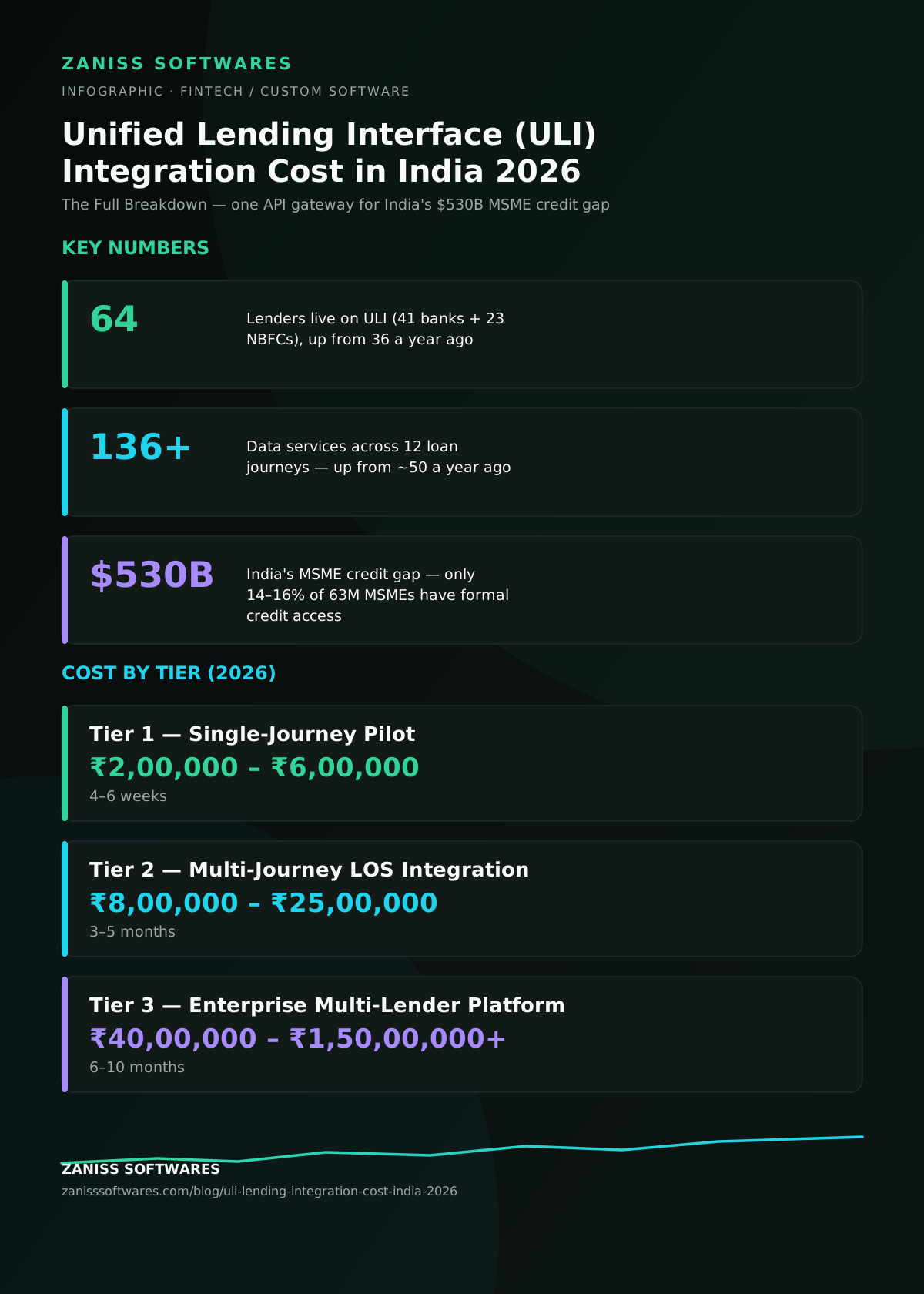
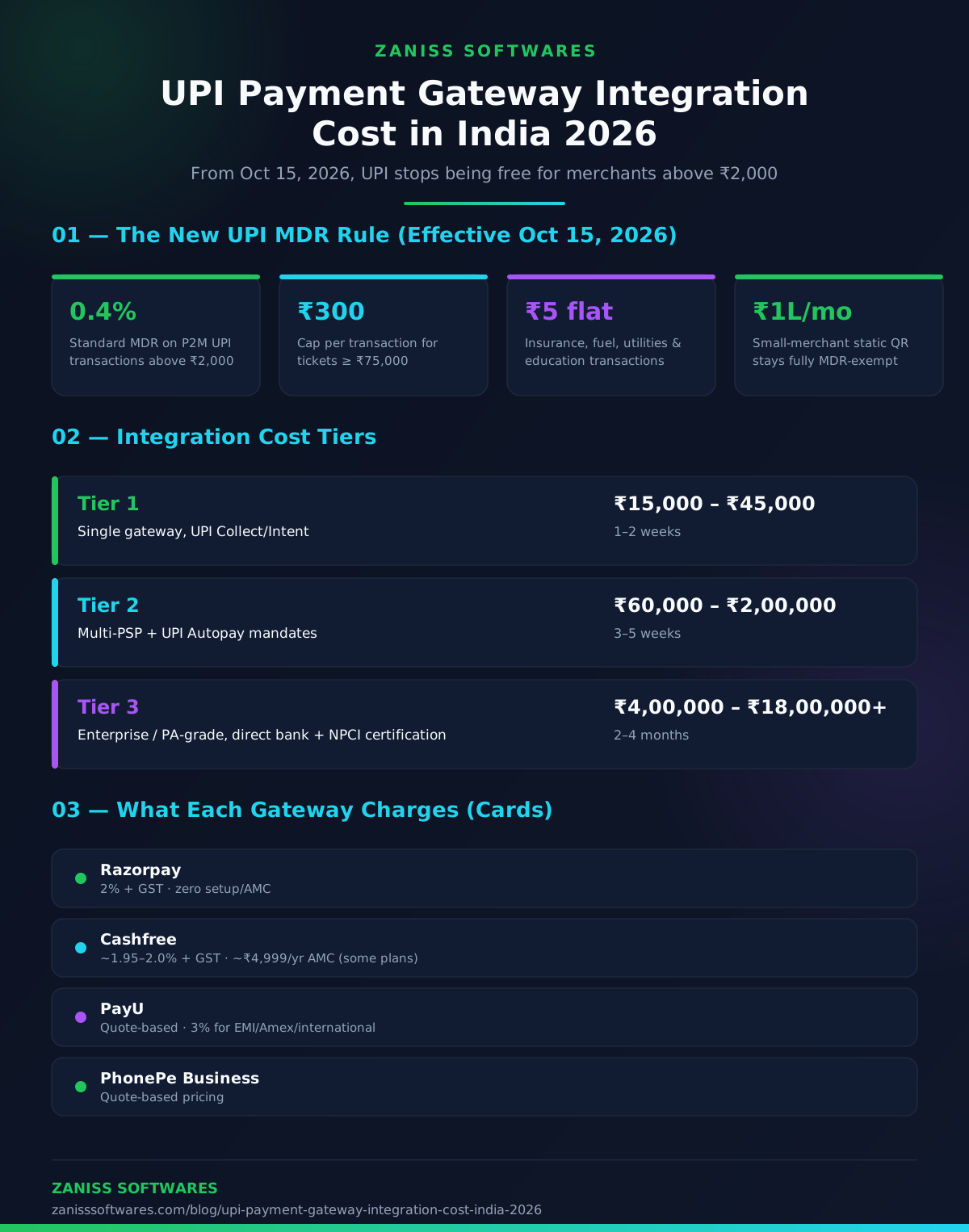
- How is Account Aggregator different from UPI or ULI?
- AA is a consent-based data-sharing layer (bank, GST, insurance, investment data); UPI moves money; ULI is RBI's separate gateway for lending-journey data. All three are distinct frameworks.
- Do we need our own NBFC-AA license to use this data?
- No — almost all lenders should integrate as an FIU through one of the 17 existing licensed AAs rather than building their own, which requires ₹2 crore minimum capital and 12–18 months of RBI licensing.
- How long does a typical AA integration take?
- 2–4 months for a single-use-case pilot; 4–8 months for a production multi-journey build; 8–14 months for an enterprise-grade, multi-AA-redundant stack.