The Three Migration Strategies — and What They Actually Cost
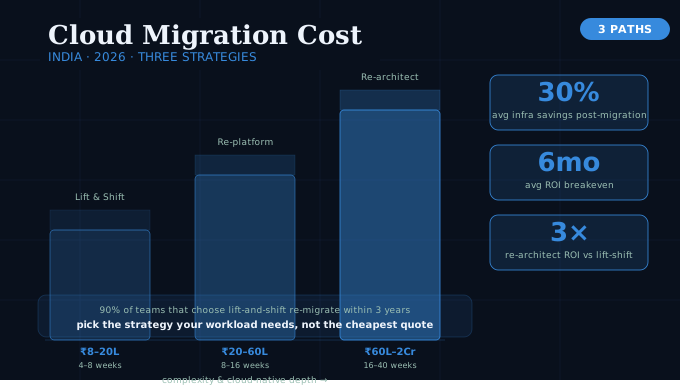
Lift-and-shift (₹8–25L) moves servers as-is into managed cloud instances — fastest path, no application change, but you keep paying for the old architecture's inefficiencies. Re-platform (₹20–60L) swaps databases and middleware for managed equivalents (RDS, managed Kafka, S3) without rewriting application code — usually the right answer for most SMB workloads in 2026. Re-architect (₹60L–2Cr+) redesigns the workload as cloud-native — containers, serverless, event-driven — and is worth it only when scale, compliance or feature velocity genuinely demands it. Picking the wrong tier is the most expensive mistake we see: re-architecting a workload that lift-and-shift would have served fine wastes 3–6× the budget for no measurable business return.
The Hidden Costs Most Migration Quotes Don't Include
Data egress during migration is the single most under-estimated line — terabyte-scale moves over the public internet generate real ISP bills and can stretch cutover windows by days. Discovery and dependency mapping (typically 8–15% of total cost) is usually skipped to make the headline number look smaller, and reappears as scope changes mid-project. License re-negotiation — Windows Server, Oracle, SQL Server — can either save or cost lakhs depending on whether the migration team understands BYOL versus license-included pricing. Post-migration optimisation (right-sizing, reserved instances, auto-scaling policies) is where the promised 30% saving actually materialises — but it requires another 6–10 weeks of focused work after cutover.
The 30% Saving — When It Shows Up
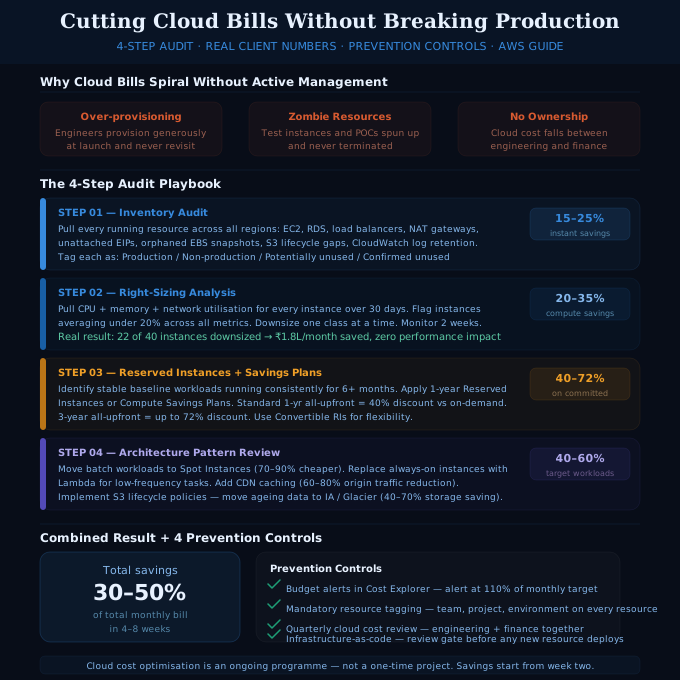
Across the migrations we've audited in 2024–26, well-run cloud moves cut steady-state infra spend by 25–35% within twelve months of cutover. The saving comes from three places: reserved-instance / savings-plan commitments on workloads with predictable load (40–60% off on-demand pricing), auto-scaling down non-prod environments during nights and weekends (30–50% of non-prod spend recovered), and replacing self-managed databases and caches with their managed equivalents (eliminates DBA labour and reduces over-provisioning). Migrations that skip the post-cutover optimisation phase typically deliver only 5–10% saving — and sometimes none at all.