Where Node.js Still Wins
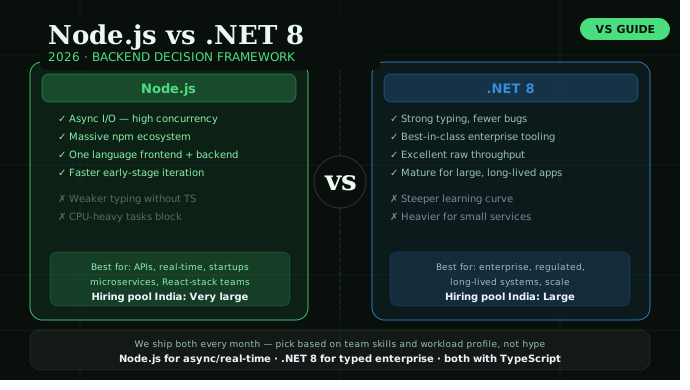
Node.js (with TypeScript) wins for I/O-heavy, real-time and event-driven workloads: chat platforms, streaming APIs, BFFs (backend-for-frontend) on top of microservices, lightweight serverless functions and anything that benefits from the world's largest package ecosystem (npm). Hiring is straightforward in India in 2026 — the JavaScript talent pool is the largest of any backend stack, and the same engineers can move fluently between frontend and backend code. Cold-start times for serverless Node functions are best-in-class, making it the default for AWS Lambda, Cloud Run and Azure Functions workloads.
Where .NET 8 Quietly Overtook Node
.NET 8 (and the newer 9 LTS path) wins for compute-heavy, strongly-typed, long-running enterprise workloads: financial systems, ERP backends, data-intensive APIs, regulated workloads where audit trail and type safety matter from the database layer up. Performance benchmarks consistently show .NET 8 outperforming Node by 2–4× on CPU-bound workloads, with lower memory overhead per request and predictable garbage collection. The C# / EF Core / ASP.NET stack is also more cohesive — fewer micro-decisions about which library to use for which job, which compresses onboarding and reduces long-term maintenance cost.
The Workload Patterns That Should Drive the Decision
Pick Node.js when: I/O-bound (databases, APIs, message queues are the bottleneck), event-driven architecture, BFF on top of microservices, JavaScript talent already in-house, serverless-first deployment. Pick .NET 8 when: CPU-bound (analytics, large data transformations, calculation engines), regulated workloads needing strict typing and audit logging, Microsoft-stack organisation (Entra ID, SQL Server, Azure), long-lived enterprise systems where stability matters more than agility. Both stacks ship great products in 2026 — the wrong choice is picking by team preference instead of workload pattern.