The Three Architecture Tiers — Build and Run Cost
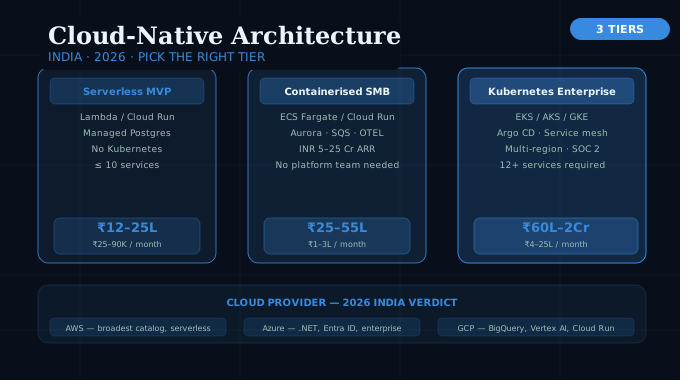
Serverless MVP (₹12–25L build / ₹25K–90K/month run): Lambda or Cloud Run, API Gateway, managed Postgres, S3 / GCS, managed auth. Default for teams under 25 engineers with fewer than 10 services. Cold starts are mostly solved in 2026 with provisioned concurrency. Containerised SMB (₹25–55L build / ₹1–3L/month run): ECS Fargate, Cloud Run or AKS managed pools — containers without the operational tax of full Kubernetes. The sweet spot for funded B2B SaaS at ₹5–25Cr ARR. Kubernetes enterprise (₹60L–2Cr build / ₹4–25L/month run): EKS / AKS / GKE, service mesh, GitOps, multi-region active-active. Worth it above ~12 services, 3+ environments, or genuine multi-region regulated workloads.
AWS vs Azure vs GCP — The 2026 India Verdict
AWS: broadest service catalog, deepest hiring market in India, best for serverless-first builds. Mumbai and Hyderabad regions are mature; data residency is straightforward. Azure: the default if you're already on Microsoft 365, Entra ID, or .NET. Enterprise contracts often beat AWS on list price; pairs cleanly with .NET 8 backends. GCP: the strongest data + AI story for Indian teams in 2026. Cloud Run is the cleanest serverless container runtime; BigQuery handles analytics at petabyte scale; Vertex AI covers training, tuning and real-time inference. The India hiring pool for GCP engineers is still smaller than AWS, but improving fast. Multi-cloud sounds prudent and is almost always a strategic mistake for teams under 200 engineers — pick one, master it, abstract only what you must.
The Five Hidden Costs That Wreck Cloud-Native Budgets
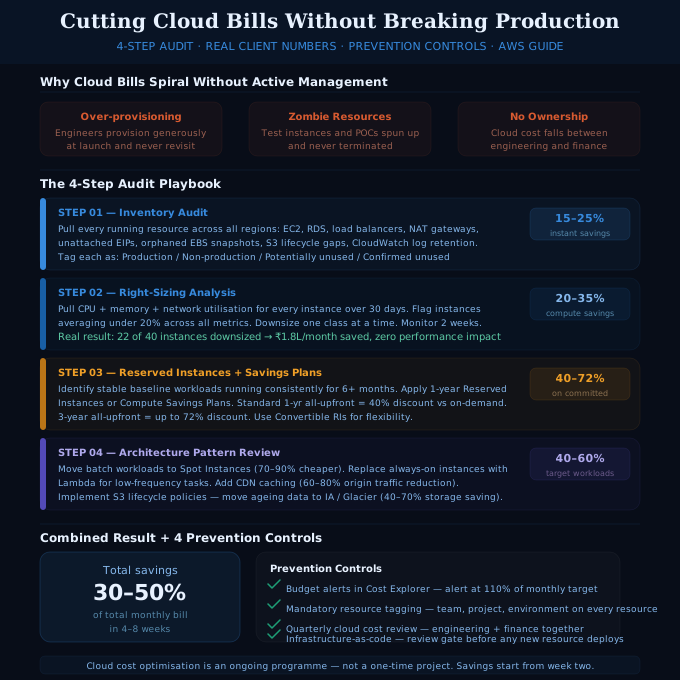
Data egress is the single most under-estimated cost line — cross-AZ replication, cross-region backups and chatty microservices can easily double the bill. Observability tooling (Datadog, New Relic) can quietly become the second-largest infra line; budget 8–18% of compute spend or use OSS (Grafana / Tempo / Loki). Always-on non-prod environments routinely cost as much as production; auto-stop policies recover 30–50% of non-prod spend. Premium support tiers are usually worth it for production; AWS Enterprise is rarely worth it below ₹8Cr ARR. Reserved-instance / Savings Plan drift — every cloud bill we audit has 12–35% of compute running on-demand when it should be on a 1- or 3-year commit.