When React-Only Is Still the Right Call
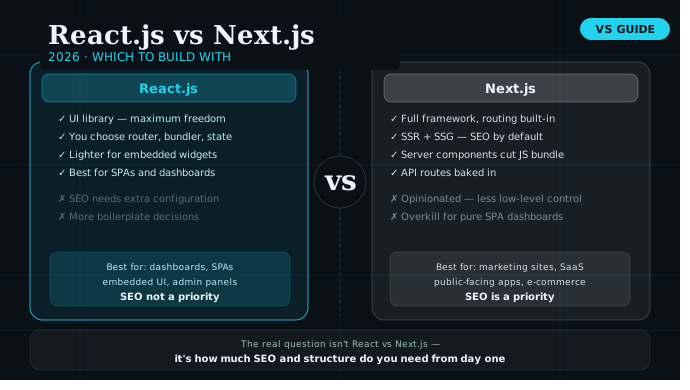
Plain React (Vite, CRA-style) is still the right call for: authenticated SaaS dashboards where SEO is irrelevant, internal admin tools, embedded widgets and micro-frontends, anywhere bundle-size flexibility and full client-side control matter more than server-rendered HTML. Without the Next.js opinionation, you keep complete control over routing, data fetching, and deployment target — the price is that everything SEO, performance and edge-caching related is your responsibility to wire up. For purely-authenticated apps, that responsibility is mostly absent and React-only is the cleaner choice.
When Next.js Is the Obvious Answer
Next.js (App Router, React Server Components) is the right default for: marketing sites, blogs, e-commerce, content-heavy products, anything where SEO and first-load performance directly affect revenue. Server-side rendering gives crawlers indexable HTML on first request, Image and Font optimisation are built in, incremental static regeneration handles content updates without rebuilds, and edge runtime support lets pages render close to users globally. For any public-facing product where Core Web Vitals affect search ranking, Next.js out-of-the-box performance is significantly easier to achieve than wiring SSR yourself onto React.
The SEO and Performance Implications Most Teams Under-Weight
Plain-React SPAs serve an empty HTML shell to crawlers and depend on client-side JavaScript to populate content — Google handles this most of the time, but other crawlers, social previews and AI search engines often do not, costing real traffic. Next.js renders complete HTML server-side, giving every crawler indexable content on the first request. Largest Contentful Paint (LCP) — Google's most-weighted Core Web Vital — is typically 1.5–3× better on Next.js out of the box thanks to streaming SSR and Image optimisation. For revenue-bearing public sites, that performance gap maps directly to organic ranking, conversion rate and ad-Quality-Score lift.