Infographic 34 · ZANISS SOFTWARES

SaaS Development in India 2026

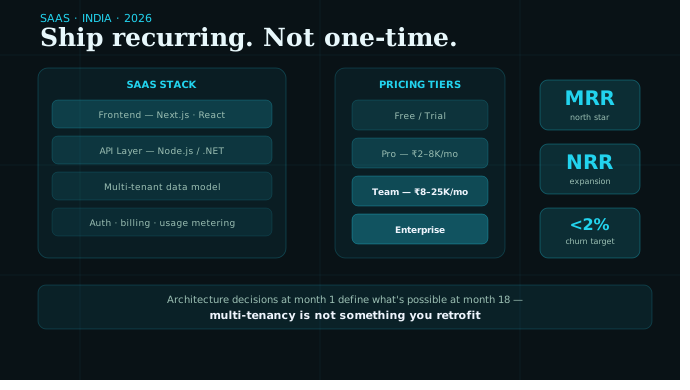
Building a SaaS product is fundamentally different from building a one-time software project — the architecture decisions you make in month one determine what's possible at month eighteen. This infographic maps the core SaaS technology stack, a realistic pricing tier structure, and the three metrics that actually predict whether your SaaS business will compound or stall.

SaaS Development in India 2026 — infographic by ZANISS SOFTWARES
SaaS Development in India 2026 · Source: ZANISS SOFTWARES — free to share with credit and a link back to this page.

Key takeaways

  • The core SaaS stack spans frontend (Next.js/React), API layer (Node.js/.NET), multi-tenant data model, and auth/billing/usage metering.
  • Multi-tenancy is an architectural decision made at build time — it is not something you can retrofit later without a costly rebuild.
  • MRR (Monthly Recurring Revenue) is the north-star metric; NRR (Net Revenue Retention) measures expansion within existing accounts.
  • A healthy SaaS business targets under 2% monthly churn — anything higher signals a retention problem that growth alone won't fix.
Key details at a glance

The core SaaS stack spans frontend (Next.js/React), API layer (Node.js/.NET), multi-tenant data model, and auth/billing/usage metering. Multi-tenancy is an architectural decision made at build time — it is not something you can retrofit later without a costly rebuild. MRR (Monthly Recurring Revenue) is the north-star metric; NRR (Net Revenue Retention) measures expansion within existing accounts. A healthy SaaS business targets under 2% monthly churn — anything higher signals a retention problem that growth alone won't fix.
Want this applied to your business?

Book a free consultation and we'll map this framework to your project — no fluff, no sales pressure.