Infographic 19 · ZANISS SOFTWARES

The Unified B2B Tech Startup Growth Pipeline

Most B2B tech companies run SEO, Google Ads and CRM in complete isolation — each with its own budget, team and dashboard. The result is duplicated spend, inconsistent messaging and leads that fall through the gaps. This page lays out the three-layer unified pipeline that treats all three as one system with shared intent data and a single conversion goal.

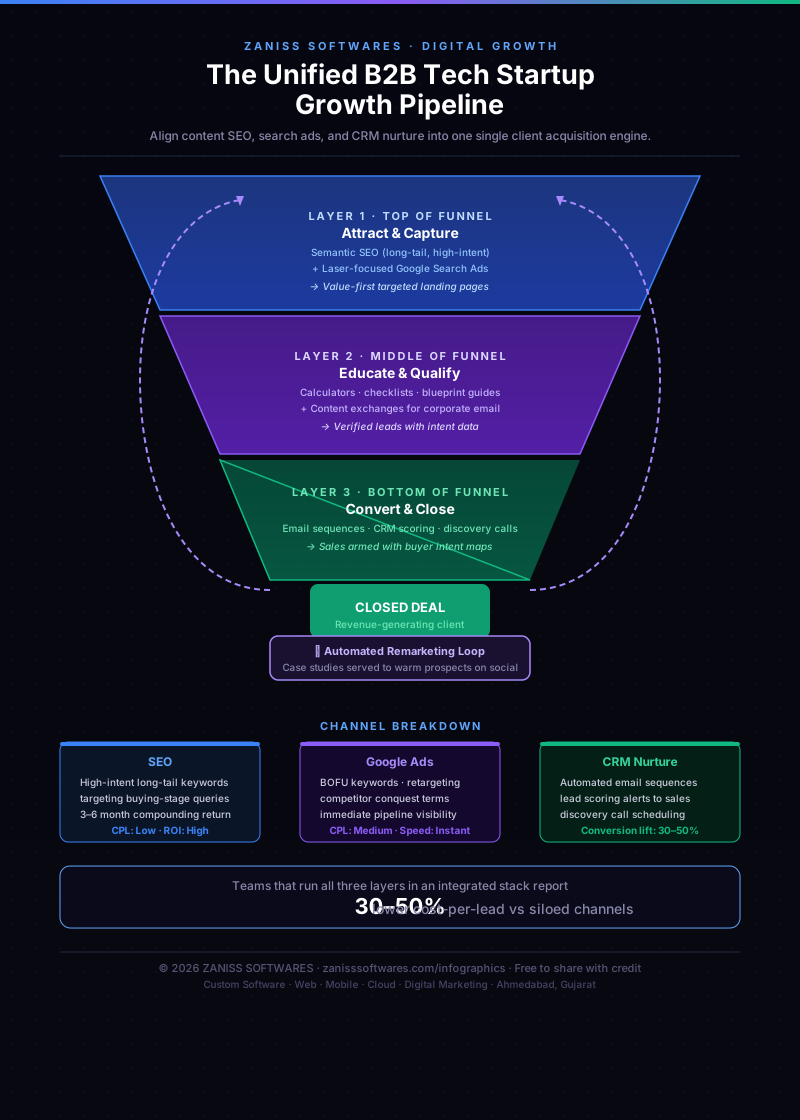
The Unified B2B Tech Startup Growth Pipeline — infographic by ZANISS SOFTWARES
The Unified B2B Tech Startup Growth Pipeline · Source: ZANISS SOFTWARES — free to share with credit and a link back to this page.

Key takeaways

  • Layer 1 — Top of Funnel: semantic SEO on high-intent long-tail + laser-focused Google Search Ads → value-first landing pages
  • Layer 2 — Middle of Funnel: interactive calculators, downloadable checklists, blueprint guides → verified, intent-rich leads via corporate email exchange
  • Layer 3 — Bottom of Funnel: CRM-triggered email sequences, lead scoring alerts and discovery call scheduling with complete buyer-intent maps
  • Automated remarketing loop: case studies served to warm prospects across LinkedIn and Google Display keep deals in motion through the B2B cycle
  • Teams running all three layers in an integrated stack report 30–50% lower CPL vs siloed channel operation

Why Siloed Channels Are Costing You Leads, and Layer 1 — Attract and Capture

When SEO and Google Ads run in silos, a lead captured organically who then searches again via paid is double-counted in both channels' reports. A warm prospect who visits the pricing page twice but does not fill in a form receives no follow-up because they fell out of the CRM workflow before being scored. The unified pipeline eliminates these gaps. Layer 1 — the top of funnel — is built on two complementary channels. Semantic SEO targets high-intent, buying-stage long-tail keywords — queries like 'custom software development company in Ahmedabad for manufacturing' — and compounds over three to six months. Google Search Ads target the same intent signals for immediate pipeline visibility from day one. Both drive traffic to value-first landing pages that provide a genuine insight, benchmark or framework — establishing credibility before asking for a commitment.
Layer 2 — Educate and Qualify

Middle-of-funnel content assets serve a dual purpose. They provide genuine value to the prospect — ROI calculators, diagnostic checklists, technical comparison guides — and in exchange they capture verified corporate email addresses alongside the intent signals embedded in which asset was downloaded. A prospect who downloads a custom software ROI calculator is measurably further along the buying journey than one who read a blog post. That intent signal is passed to the CRM automatically, updating the lead score and triggering the appropriate nurture sequence without manual intervention.

Layer 3 — Convert and Close, plus the Automated Remarketing Loop

Bottom-of-funnel sequences are triggered by CRM lead scores, not calendars. When a prospect crosses a defined threshold — based on pages visited, assets downloaded, email opens and time since first touch — an automated sequence begins: a tailored email series, a CRM alert to the sales team with a complete intent map, and a calendar link for a discovery call. Sales teams enter discovery calls knowing what the prospect has read, downloaded and searched for. Close rates improve because sales is no longer starting from zero. The remarketing loop is the mechanism that keeps deals in motion through the typically long B2B decision cycle: closed deals and published case studies are continuously fed back into the top of the funnel as retargeting content, keeping you visible and credible during the weeks or months between a prospect's first discovery and their eventual decision.

Want this applied to your business?

Book a free consultation and we'll map this framework to your project — no fluff, no sales pressure.