Infographic 9 · ZANISS SOFTWARES

Native vs Cross-Platform Apps — 2026 Decision Guide

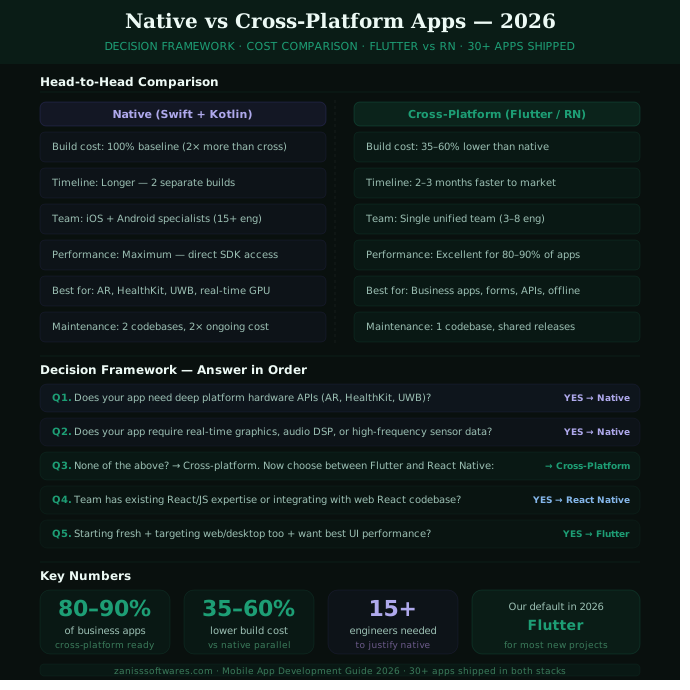
Native (Swift/Kotlin) gives you maximum performance and platform fidelity. Cross-platform (Flutter/React Native) gives you ~40% faster delivery and one team for two stores. The right choice depends on three variables — and this infographic shows you exactly which.

Native vs Cross-Platform Apps — 2026 Decision Guide — infographic by ZANISS SOFTWARES
Native vs Cross-Platform Apps — 2026 Decision Guide · Source: ZANISS SOFTWARES — free to share with credit and a link back to this page.

Key takeaways

  • Clear decision framework: when native, when cross-platform
  • Realistic timeline and cost deltas
  • Flutter vs React Native scorecard for 2026
  • Maintenance cost differences over 24 months

The decision framework

Pick native when you need heavy graphics (AR/VR, advanced camera), tight OS-level integration, or maximum animation performance. Pick cross-platform when time-to-market and budget matter more than the last 10% of polish, or when your team is small. The infographic gives clear thresholds for each axis.

Cost & timeline reality

Cross-platform typically delivers v1 in 12–18 weeks vs 18–28 weeks for two native codebases, at 50–65% of the cost. But 'one codebase' isn't free — you still need separate review submissions, store assets, and platform-specific QA. Maintenance is meaningfully cheaper, however.

Flutter vs React Native in 2026

Flutter wins on rendering consistency, performance, and a single language for everything. React Native wins on talent availability and code-sharing with web React. Both are production-ready. The deep-dive — native vs cross-platform apps 2026 — has a side-by-side scorecard.

Want this applied to your business?

Book a free consultation and we'll map this framework to your project — no fluff, no sales pressure.