The Three Honest SaaS MVP Tiers
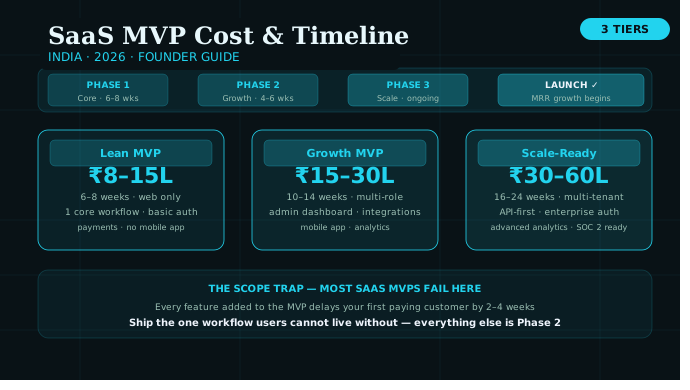
Lean MVP (₹8–15L, 10–14 weeks): one core workflow, basic authentication, single-tenant data model, Stripe or Razorpay subscription billing, minimal admin. Right for validating a sharply-defined problem. Funded MVP (₹18–35L, 14–22 weeks): multi-tenant, role-based access, full billing with proration and upgrades, onboarding flow, analytics, support inbox, and the right level of polish to charge enterprise pricing. The bracket most seed-funded founders should plan for. Enterprise-ready MVP (₹40–60L, 24–32 weeks): SSO, SOC 2-aligned controls, audit logging, API for integrations, and the operational maturity to sell into mid-market. Anything claiming this tier under ₹40L is missing compliance scope you'll discover during the first enterprise security review.
The Four Build Phases That Actually Produce an MVP
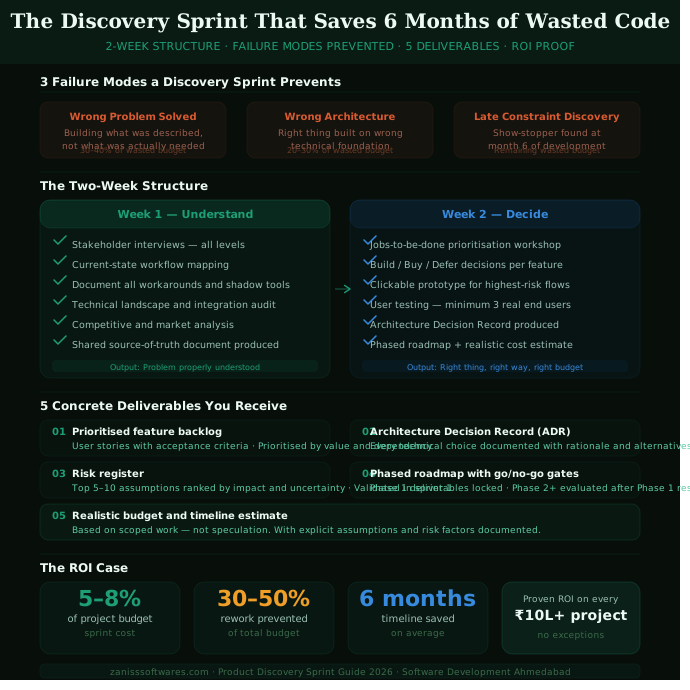
Discovery (2–3 weeks): scope, user stories, data model, pricing model. Signed off before any engineering begins. Foundations (3–5 weeks): auth, billing, multi-tenancy, deployment pipeline, observability. Boring infrastructure that every SaaS needs, and that most MVPs under-budget. Core workflow (5–10 weeks): the actual product the user pays for. This is the only phase that should consume more than one-third of the timeline. Launch readiness (2–4 weeks): UAT, security hardening, paywall testing, support runbooks, marketing site integration. Skipping this phase is how MVPs reach the App Store with broken signup flows.
The Scope Trap That Kills Most MVPs
The scope trap is the same every time: founder lists 30 features for the MVP because each one feels critical. The engineering team builds all 30 at a lower quality bar across every feature. The product ships looking like a half-finished version of a competitor, gets no traction, and the team blames marketing. The pattern that works: cut the feature list to the 5–7 features that prove the core value proposition, build those to a quality that justifies paid pricing, and defer the rest to post-launch when you have actual user feedback. The founders who succeed in 2026 are the ones who say no to 80% of their initial MVP feature list — not the ones with the longest scope document.