Where Rule-Based Automation Still Wins
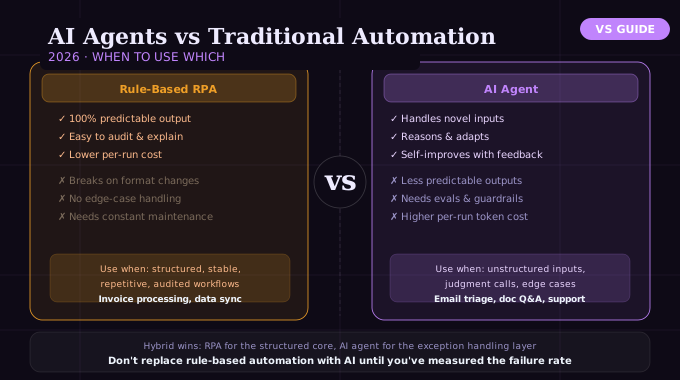
Rule-based RPA and workflow engines still win for any workflow that is deterministic, high-volume and intolerant of error: invoice posting, payroll runs, GST filings, inventory reconciliation, scheduled report generation. These workloads have clean input contracts, defined transformations and binary success criteria. Replacing them with AI agents adds non-determinism, higher per-transaction cost (LLM inference) and a compliance audit trail problem — for no business benefit. In 2026, well over 70% of business automation should still be deterministic rules. The AI agents hype has caused a wave of teams to over-engineer rule-friendly workloads at 5–10× the operating cost.
Where AI Agents Earn the Premium
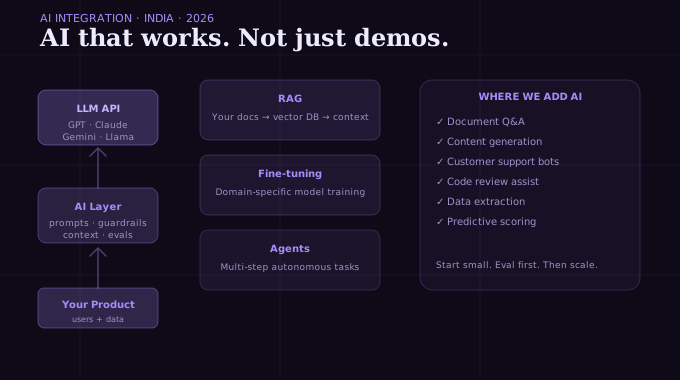
AI agents (LLMs with tool-calling, memory and multi-step planning) genuinely outperform rules on workloads that are unstructured, judgement-heavy and tolerant of probabilistic output: triaging customer support tickets, summarising long documents, extracting structured data from messy emails or PDFs, drafting first-pass responses, routing inbound enquiries to the right team. The pattern is consistent — AI handles the unstructured first mile, hands clean structured data to a deterministic engine, and a human reviews the output before final action. The cost-per-task is higher than rules, but the alternative is human labour at 10–50× the cost.
The Hybrid Pattern That Wins in 2026
The architecture that consistently wins: AI agents at the edges (intake, classification, extraction, drafting), deterministic rules in the middle (validation, routing, posting, reconciliation), humans at the bottlenecks (approval, exception handling, edge cases). This pattern gives you the unstructured flexibility of AI where it matters, the audit trail and cost predictability of rules where they matter, and human judgement on the small number of decisions that genuinely need it. Teams that try to do everything in AI agents end up with non-deterministic, expensive, hard-to-audit systems. Teams that try to do everything in rules end up unable to handle the messy real-world inputs that show up in production.