Infographic 44 · ZANISS SOFTWARES

API Development Services in India 2026

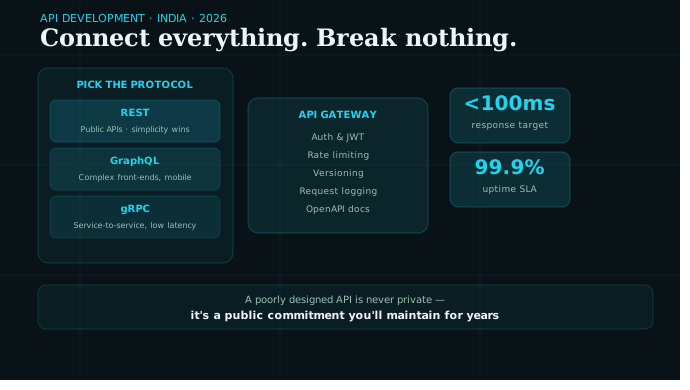
Choosing the right API protocol shapes years of maintenance burden — REST, GraphQL, and gRPC each solve different problems, and picking based on trend rather than fit is one of the most common API mistakes. This infographic lays out when each protocol wins, the gateway layer every serious API needs, and the reliability benchmarks a production API should hit.

API Development Services in India 2026 — infographic by ZANISS SOFTWARES
API Development Services in India 2026 · Source: ZANISS SOFTWARES — free to share with credit and a link back to this page.

Key takeaways

  • REST wins for public APIs where simplicity matters most; GraphQL wins for complex front-ends and mobile apps needing flexible queries; gRPC wins for lowlatency service-to-service communication.
  • Every production API needs a gateway layer handling authentication (JWT), rate limiting, versioning, request logging, and OpenAPI documentation.
  • Target response time under 100ms and 99.9% uptime SLA for production APIs serving real users.
  • A poorly designed API is never private — once published, it becomes a public commitment you'll maintain for years, so design it accordingly.
Key details at a glance

REST wins for public APIs where simplicity matters most; GraphQL wins for complex front-ends and mobile apps needing flexible queries; gRPC wins for lowlatency service-to-service communication. Every production API needs a gateway layer handling authentication (JWT), rate limiting, versioning, request logging, and OpenAPI documentation. Target response time under 100ms and 99.9% uptime SLA for production APIs serving real users. A poorly designed API is never private — once published, it becomes a public commitment you'll maintain for years, so design it accordingly.
Want this applied to your business?

Book a free consultation and we'll map this framework to your project — no fluff, no sales pressure.