Infographic 2 · ZANISS SOFTWARES

How to Choose a Software Development Company in 2026

Choosing the wrong software development partner is the single most expensive mistake a non-technical founder can make — usually discovered six months in, when rewrites are already on the table. This page distils a four-step evaluation framework, the questions every vendor must answer, and the contract terms that protect you before the first invoice.

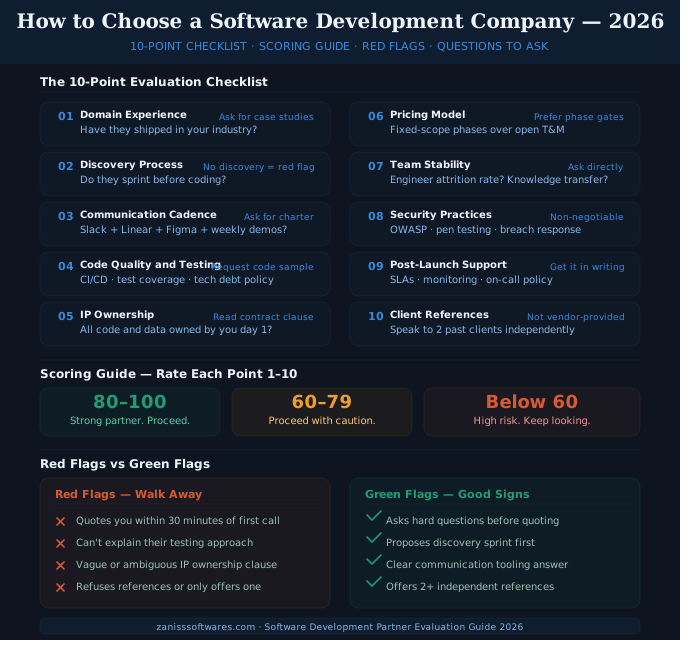
How to Choose a Software Development Company in 2026 — infographic by ZANISS SOFTWARES
How to Choose a Software Development Company in 2026 · Source: ZANISS SOFTWARES — free to share with credit and a link back to this page.

Key takeaways

  • Technical capability matters less than delivery capability — ask for evidence of on-time, on-budget delivery
  • A fixed price without discovery is an estimate, not a scope — the quote will change before or after you sign
  • Three references from similar projects beat any portfolio piece — ask about budget and timeline accuracy
  • The three contract terms that protect you: IP assignment, milestone-based payment, written change control
  • The right partner will tell you when custom software is not the right answer

Step 1 — Filter by Relevant Experience, Not General Capability

A company whose portfolio spans e-commerce, healthcare and mobile games is a generalist. If you are building a logistics SaaS, you want a partner who has done it before — one who understands the integration landscape, edge cases and compliance specific to your domain. Ask directly: have you built something at this complexity and in this industry? If the answer is no, ask how they plan to compensate. The portfolio review is not about admiring finished work — look for evidence of process: discovery documentation, wireframes, post-launch performance data, and references who can speak to how the vendor behaved when things got difficult.
Step 2 — Evaluate the Discovery Process Before You Evaluate Price

The single biggest predictor of software project success is how thoroughly a vendor understands your requirements before committing to a price. Ask every vendor: 'how do you scope a new project?' A rigorous discovery process — one that produces a signed requirements document, workflow diagrams and an architecture decision record before engineering — protects both parties from the most expensive failure mode: building the wrong thing. A vendor who quotes from a brief protects neither party. When ambiguity surfaces during engineering — and it always does — the cost of rework becomes a negotiation rather than a contractual matter.

Step 3 & 4 — Track Record, Team Structure, and the Contract Terms That Protect You

Request three client references with direct contact details. Ask: was the project delivered on the original timeline and budget? How were scope changes handled? How responsive was the team when problems arose? Then ask who will actually work on your project — the senior team you met or junior developers supervised remotely. Walk away from any vendor who quotes a fixed price without discovery, refuses to provide references, has no written change-control process, or asks for more than 30% upfront. Insist on three non-negotiable contract terms: full IP assignment on final payment, milestone-based payment tied to delivered outputs, and a defined change-control process that requires written approval and a cost estimate before any out-of-scope work begins.

Frequently asked questions

What should I look for when hiring a software development company?
Prioritise demonstrated experience with similar project types, a clear and documented development process, transparent communication practices, a structured approach to requirements and scope, defined post-launch support, and verifiable client references. The company's ability to ask good questions about your requirements during the sales process is itself a strong quality signal.
Is it safe to outsource software development to India?
Yes — when done with the right partner. India produces more software engineers than any other country and has a well-established outsourcing ecosystem that serves US, UK, European, and Australian clients. The risks of outsourcing — communication gaps, timezone friction, quality inconsistency — are all manageable with a partner that has structured processes, English-fluent engineers, and a track record with international clients.
What questions should I ask a software development company before hiring?
Ask for a walkthrough of a similar completed project, how they handle requirement changes mid-project, who owns the source code and IP at the end of the engagement, what their testing and quality assurance process looks like, how they communicate progress on a day-to-day basis, and what post-launch support options they offer. Any company unwilling or unable to answer these clearly is a risk.

Want this applied to your business?

Book a free consultation and we'll map this framework to your project — no fluff, no sales pressure.