Infographic 13 · ZANISS SOFTWARES

The No-Stress Web Engineering Journey

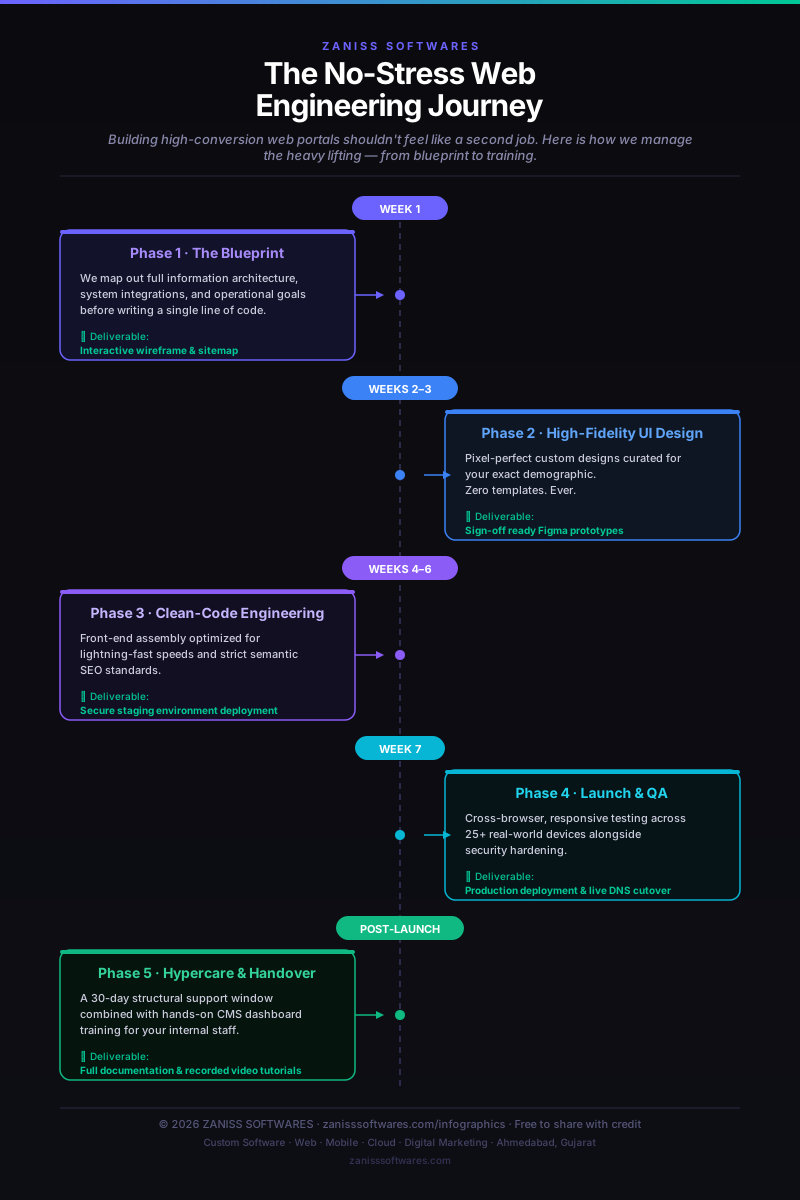
Every web project at ZANISS SOFTWARES begins with a week of structured discovery before any design tool is opened — and ends with a 30-day hypercare window with documented SLAs. This page walks through every phase in plain language, and shows what skipping any one of them actually costs.

The No-Stress Web Engineering Journey — infographic by ZANISS SOFTWARES
The No-Stress Web Engineering Journey · Source: ZANISS SOFTWARES — free to share with credit and a link back to this page.

Key takeaways

  • Information architecture defined in week one prevents scope changes in weeks four through seven
  • Pixel-perfect, demographic-specific design is a conversion decision, not an aesthetic preference
  • Front-end code optimised for Core Web Vitals and semantic SEO structure generates organic traffic from the day it is indexed
  • Cross-browser, responsive testing across 25+ real-world devices is not optional in 2026 — broken mid-range Android layouts lose a significant share of India's mobile traffic
  • A 30-day hypercare window with documented SLAs is the difference between a handover and an abandonment

The Blueprint Phase — Why It Comes First

Every web project begins with a week of structured discovery before any design tool is opened. We map full information architecture, document system integrations and establish operational goals in writing. The output is an interactive wireframe and a sitemap that every stakeholder signs off on before a single design file is created. This single phase eliminates the most expensive category of web development problem: the mid-project scope change. When navigation structure, content hierarchy and integration logic are documented and agreed at week one, weeks four through seven are engineering weeks, not negotiation weeks. Projects that skip this step routinely add 30–50% to their final cost through unplanned rework.
Design and Engineering — What Zero Templates Means in Practice

The design phase produces Figma prototypes built specifically for the demographic, conversion goal and brand identity of each client. Zero templates are used — not because templates are technically inferior, but because a template built for the average business encodes the average business's assumptions about its audience. A healthcare provider and a logistics SaaS have different primary actions, different trust signals and different content hierarchies. A template cannot know that. Custom design starts from those differences and builds outward. Front-end engineering then assembles those designs with code optimised for lightning-fast load speeds and strict semantic HTML standards — the two factors that most directly influence both Core Web Vitals scores and organic search rankings.

QA, Launch, and the Hypercare Window

Week seven is testing week. ZANISS SOFTWARES runs cross-browser and responsive testing across 25+ real-world devices — not browser simulators — alongside a structured security hardening process before any production deployment. DNS cutover is managed with zero-downtime protocols. Post-launch, every project enters a 30-day hypercare window: a structured support period with defined response times for critical and medium-severity issues, hands-on CMS dashboard training for internal staff, complete written technical documentation, and recorded video tutorials. At the end of the window, the client team is operationally self-sufficient. Most web development vendors consider delivery the end of the engagement. We consider it the beginning of the accountability period.

Want this applied to your business?

Book a free consultation and we'll map this framework to your project — no fluff, no sales pressure.