Infographic 16 · ZANISS SOFTWARES

The Tech Debt Iceberg — Hidden Software Risks

A slow page load may be unoptimised front-end — a surface problem. Or it may be an N+1 query in an ORM that was never addressed, or a legacy caching architecture that cannot be updated without restructuring a significant portion of the backend. The surface symptom is the same; the cost of the underlying cause is orders of magnitude different. This page maps the iceberg.

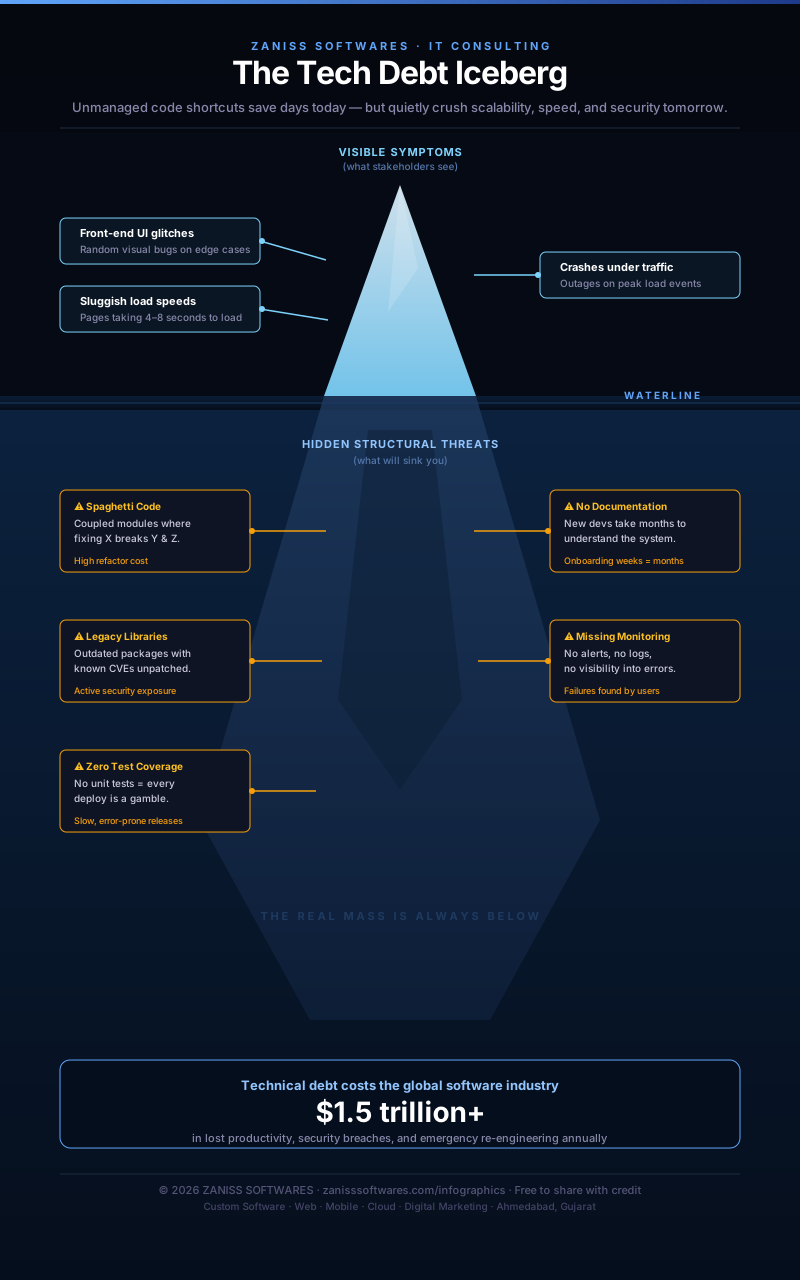
The Tech Debt Iceberg — Hidden Software Risks — infographic by ZANISS SOFTWARES
The Tech Debt Iceberg — Hidden Software Risks · Source: ZANISS SOFTWARES — free to share with credit and a link back to this page.

Key takeaways

  • Above the waterline — visible: front-end glitches, sluggish load speeds, crashes under load. These are diagnostics, not the problem
  • Below the waterline — structural: spaghetti architecture, legacy libraries with known CVEs, zero test coverage, missing documentation, absent monitoring
  • Spaghetti architecture means every change carries risk, every release requires extensive manual testing, and velocity slows progressively
  • Zero test coverage means every deployment is a manual gamble — bugs are discovered by users, not pipelines
  • Technical debt costs the global software industry $1.5T+ annually in lost productivity, breaches and emergency re-engineering

Why the Tip Is Misleading

A slow page load may be caused by unoptimised front-end code — a surface problem. Or it may be caused by an N+1 query problem in an ORM layer that was never addressed, or a legacy caching architecture that cannot be updated without restructuring a significant portion of the backend. The surface symptom is the same. The cost of the underlying cause is orders of magnitude different. This is why the iceberg metaphor is accurate: the visible portion is always a small fraction of the actual mass.
The Five Structural Threats Explained

Spaghetti architecture accumulates when modules are built with undocumented dependencies — change one thing, something unrelated breaks. The cost shows up as long QA cycles, risk-averse development teams and a growing reluctance to touch any code that is working. Legacy libraries carry known CVEs that are publicly documented and actively exploited by automated scanning tools — an unpatched dependency is not a theoretical risk, it is an open door. Zero test coverage means there is no automated safety net for the most basic question: does the code do what it is supposed to do? Every deployment is a manual process with manual verification. Missing documentation extends new-developer onboarding from days to months and creates single points of failure when senior engineers leave. Missing monitoring means your users discover production failures before your engineering team does.

How to Start Addressing Technical Debt

The first step is an honest audit, not an immediate rewrite. Most technical debt can be addressed incrementally alongside feature development if it is properly catalogued and prioritised. The four tools that give you the clearest starting picture: a static code analysis report using SonarQube or CodeClimate, an automated test coverage report, a dependency vulnerability scan using Snyk or Dependabot, and a documentation inventory that identifies which critical systems have no written architecture documentation. These four outputs give you a ranked list of what poses the highest risk and what can be safely deferred. The highest-priority items are almost always the same: unpatched security vulnerabilities, zero test coverage on payment or data processing flows, and undocumented legacy systems with a single engineer who understands them.

Want this applied to your business?

Book a free consultation and we'll map this framework to your project — no fluff, no sales pressure.