Why the Blueprint Phase Prevents the Most Expensive Failures
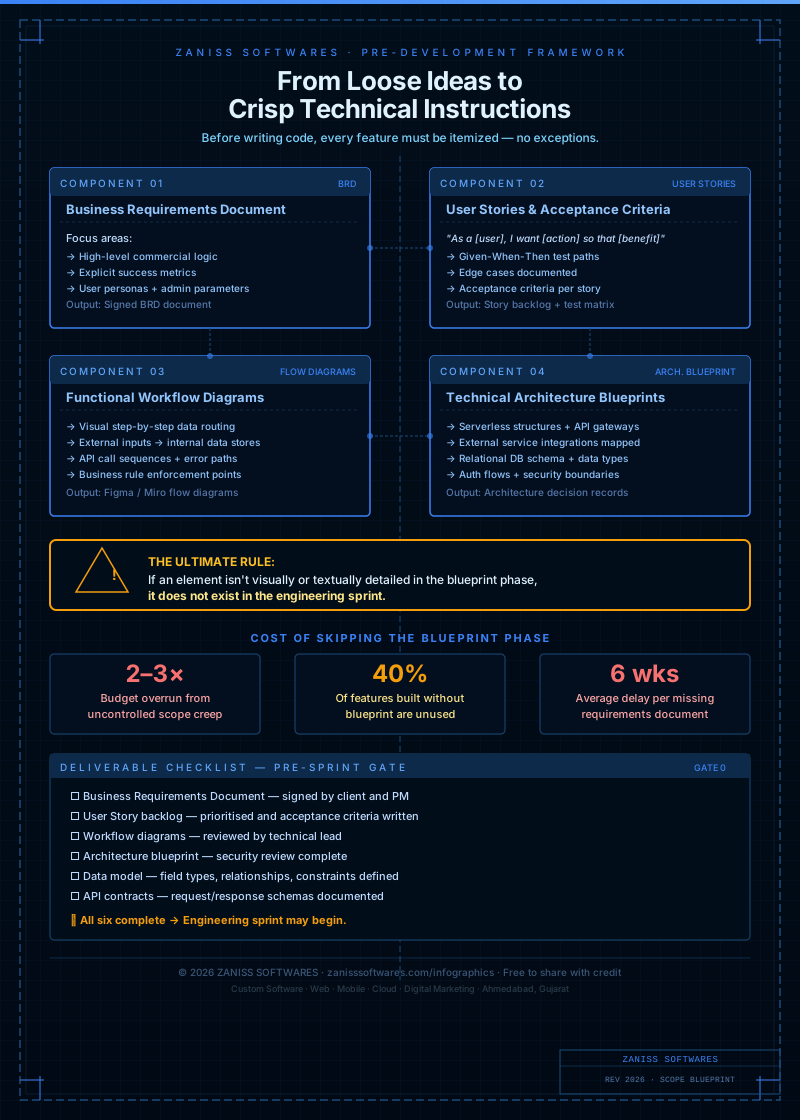
The cost of discovering a missing feature in production is 10–100× higher than discovering it during requirements. A missing field in a data model costs 10 minutes to add in the BRD. It costs days to retrofit into a deployed database schema with dependent API contracts and running production traffic. The blueprint phase does not prevent change — requirements evolve and that is normal. What it provides is a documented baseline and a formal change control process. Any requirement that surfaces after the sprint starts goes through a change request with its own estimate and approval before work begins. This converts the most expensive category of software project risk — informal scope additions — into a manageable, priced, approved process.