Infographic 42 · ZANISS SOFTWARES

Data Engineering: Warehouse vs Lakehouse in India 2026

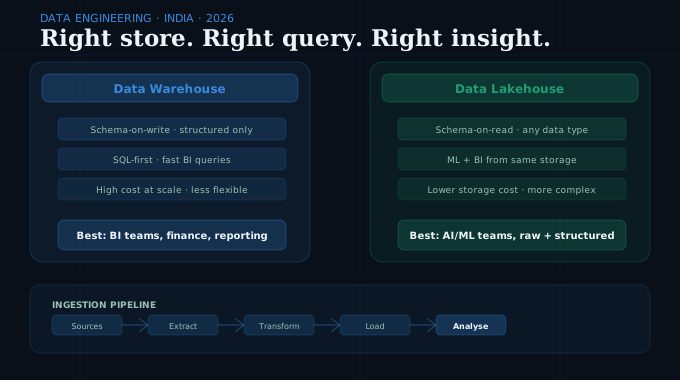
"Should we build a data warehouse or a lakehouse?" is one of the most consequential early decisions in any data engineering project, and the wrong choice is expensive to unwind later. This infographic puts both architectures side by side — schema approach, query pattern, cost profile, and ideal use case — so the decision is made on fit, not trend.

Data Engineering: Warehouse vs Lakehouse in India 2026 — infographic by ZANISS SOFTWARES
Data Engineering: Warehouse vs Lakehouse in India 2026 · Source: ZANISS SOFTWARES — free to share with credit and a link back to this page.

Key takeaways

  • Data Warehouses use schema-on-write (structured data only), are SQL-first for fast BI queries, but become expensive and inflexible at scale.
  • Data Lakehouses use schema-on-read (any data type), support both ML and BI from the same storage layer, and offer lower storage cost at the price of added complexity.
  • Warehouses best fit BI teams, finance, and reporting use cases; lakehouses best fit AI/ML teams working with both raw and structured data.
  • The same five-stage ingestion pipeline (Sources → Extract → Transform → Load → Analyse) underlies both architecture choices.
Key details at a glance

Data Warehouses use schema-on-write (structured data only), are SQL-first for fast BI queries, but become expensive and inflexible at scale. Data Lakehouses use schema-on-read (any data type), support both ML and BI from the same storage layer, and offer lower storage cost at the price of added complexity. Warehouses best fit BI teams, finance, and reporting use cases; lakehouses best fit AI/ML teams working with both raw and structured data. The same five-stage ingestion pipeline (Sources → Extract → Transform → Load → Analyse) underlies both architecture choices.
Want this applied to your business?

Book a free consultation and we'll map this framework to your project — no fluff, no sales pressure.