Quick Summary
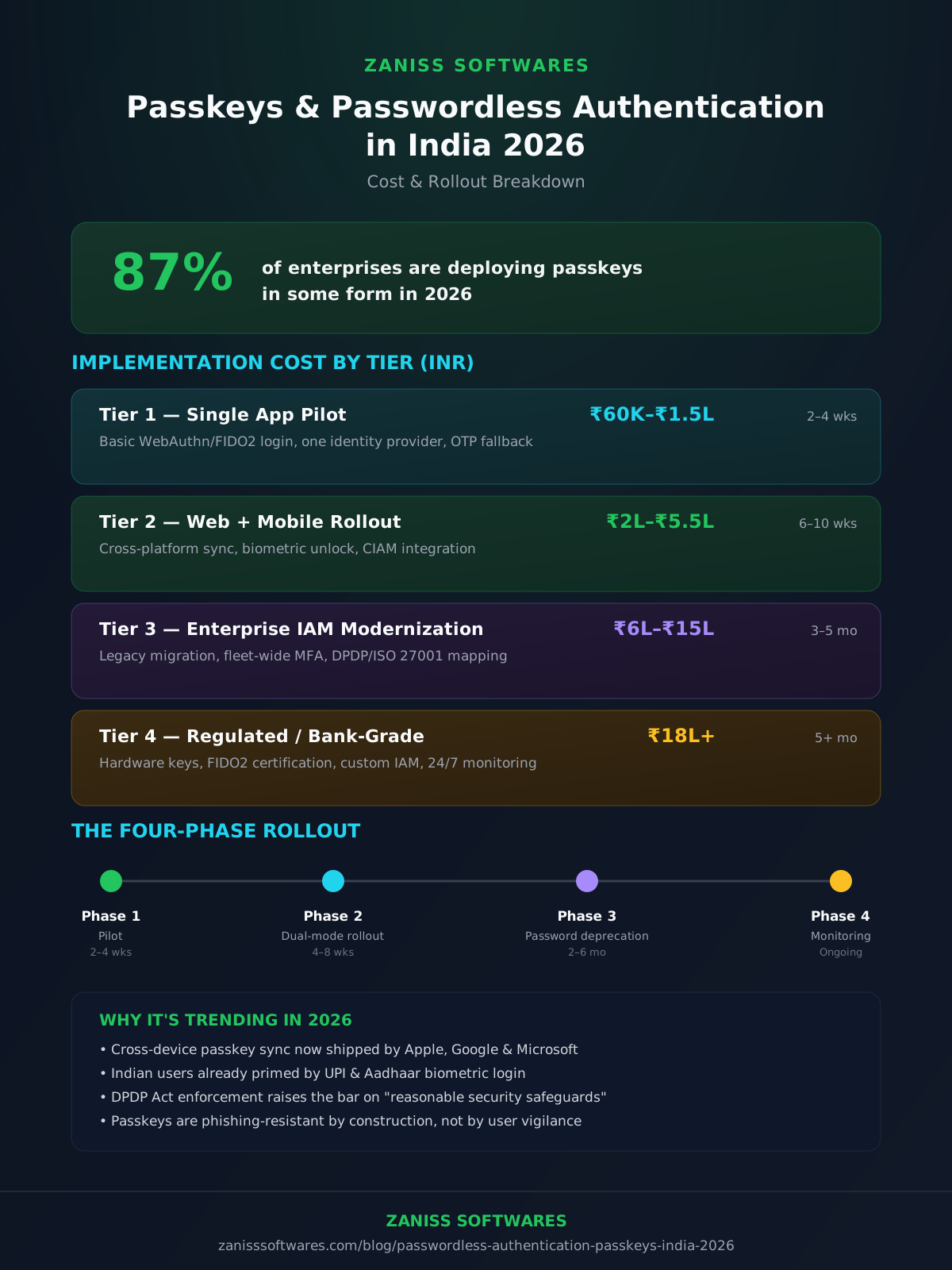
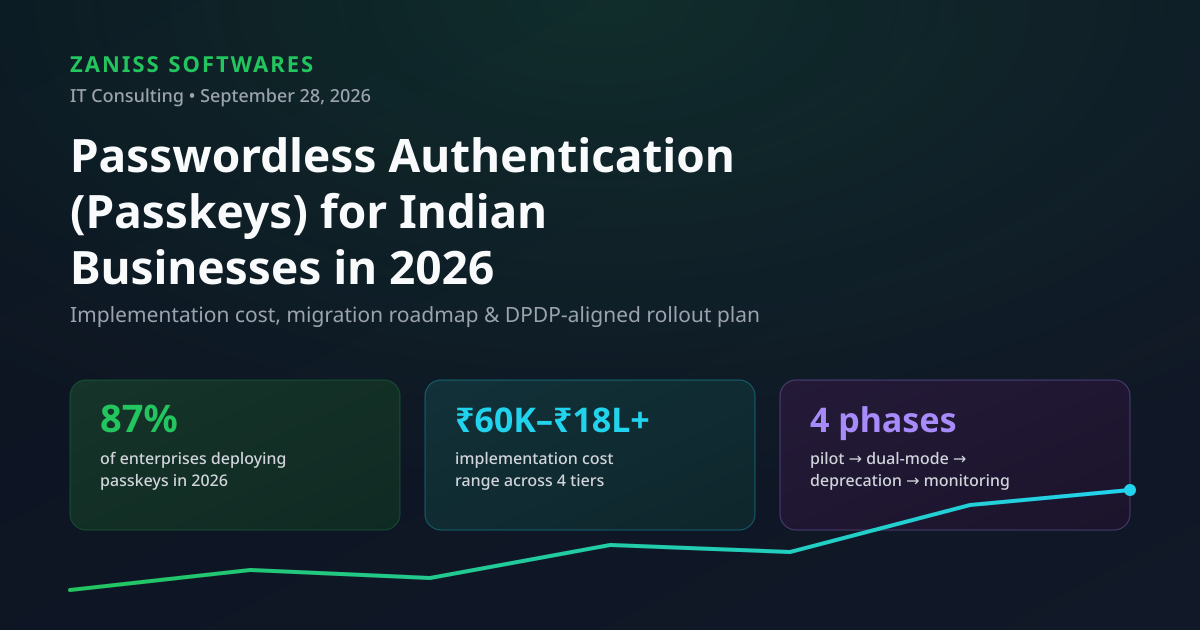
- 1Passkeys — the FIDO2/WebAuthn passwordless login standard backed by Apple, Google and Microsoft — are moving from early-adopter curiosity to default enterprise practice in 2026, with industry adoption trackers reporting 87% of enterprises now deploying them in some form. For Indian businesses, implementation typically runs from ₹60,000 for a single web app pilot to ₹18,00,000+ for a bank-grade, fleet-wide rollout, and the projects that go smoothly are the ones that treat this as a phased migration rather than a weekend switch-flip. This article breaks down real 2026 pricing tiers, the hidden costs that inflate quotes, a decision framework for timing your move, and how passkeys line up against India's DPDP Act and RBI expectations.
Why Passwords Are Becoming a Liability in 2026
Every password a business asks a customer or employee to create is a small, recurring bet that the person will pick something unique, that they won't reuse it on a weaker site that eventually gets breached, and that no one phishes it out of them in the meantime. In 2026, that bet keeps losing. Credential stuffing attacks — where leaked username/password pairs from one breach are replayed against unrelated services — remain one of the highest-volume attack types Indian SaaS and e-commerce platforms report, and password reset tickets are consistently among the top three drivers of help-desk volume for mid-sized companies.
The economics have also shifted. A single credential-related breach now carries real regulatory exposure under India's Digital Personal Data Protection (DPDP) Act, on top of the direct cost of investigation, customer notification, and churn. For a growing number of CTOs and IT leads, the question is no longer whether to move away from passwords, but how fast it can be done without breaking existing login flows.
There's also a quieter cost that rarely shows up in a security audit: password fatigue is a genuine drag on product conversion. Every added friction point at signup or login — a forgotten password, a fumbled OTP, a support ticket for account lockout — is a moment where a paying customer or a new employee simply gives up. Businesses that treat authentication purely as a security line item, rather than also as a product experience, tend to under-budget the very rollout that would fix both problems at once.
What Passkeys Actually Are (and How They Differ From an OTP or Authenticator App)
A passkey is a cryptographic key pair created on a user's device using the WebAuthn/FIDO2 standard. The private key never leaves the device — it's typically sealed inside a secure enclave or TPM chip — while the public key is registered with the application's server. Logging in means the device proves possession of the private key (unlocked by a fingerprint, face scan, or PIN), and nothing secret is ever transmitted over the network. That's the core difference from a password or a one-time code sent by SMS: there's no shared secret for an attacker to intercept, phish, or buy off a dark-web marketplace.
This also distinguishes passkeys from app-based two-factor authentication. An OTP from an authenticator app is still a shared secret that a convincing fake login page can trick a user into typing into the wrong place. A passkey simply won't authenticate against the wrong domain — the cryptographic handshake is bound to the real site's origin, which is what makes passkeys phishing-resistant by construction rather than by user vigilance.
Passkeys also come in two flavors worth knowing before scoping a project: device-bound passkeys (stored only on one physical security key or device, favored for high-security admin accounts) and synced passkeys (backed up to a user's Apple iCloud Keychain, Google Password Manager, or Microsoft account, so they carry across a person's devices). Most consumer-facing rollouts use synced passkeys for convenience; regulated back-office systems often require device-bound keys.
Why This Is Trending in India Right Now
Three things are converging in 2026. First, industry-wide adoption tracking now puts passkey deployment at roughly 87% of enterprises in some form — up sharply from pilot-stage numbers just two years ago — as Apple, Google, and Microsoft have finished building cross-ecosystem passkey sync, removing the biggest early objection ("what if my customer switches phones"). Second, Indian users are already primed for biometric-first login: UPI apps, Aadhaar-linked services, and most Android banking apps have trained an enormous user base to authenticate with a fingerprint or face scan rather than typing anything, so passkey login often feels more familiar to Indian end users than it does elsewhere.
Third, and most concretely for budget owners: the DPDP Act's enforcement posture is pushing companies to demonstrate "reasonable security safeguards" against unauthorised access, and phishing-resistant authentication is one of the clearest, most auditable ways to make that case. We're seeing this priority surface directly in client conversations that start as a cloud security review or a DPDP compliance engagement and end with a scoped passkey migration as the first concrete deliverable.
Passkey Implementation Cost in India (2026)
Pricing depends heavily on how many applications need to support passkeys, whether you're integrating a managed identity provider (CIAM) or building custom, and how much legacy password infrastructure has to be migrated rather than replaced outright. The ranges below reflect real 2026 engagement scopes for Indian small and mid-sized businesses through enterprise deployments.
| Tier | What's Included | Typical Cost (INR) | Timeline |
|---|---|---|---|
| Tier 1 — Single App Pilot | Basic WebAuthn/FIDO2 login on one web app, one identity provider, OTP fallback for unsupported devices | ₹60,000 – ₹1,50,000 | 2–4 weeks |
| Tier 2 — Web + Mobile Rollout | Cross-platform passkey sync (iOS/Android/desktop), biometric unlock, session and device management, CIAM integration (Auth0, Okta, Keycloak, or equivalent) | ₹2,00,000 – ₹5,50,000 | 6–10 weeks |
| Tier 3 — Enterprise IAM Modernization | Legacy password migration, multi-app SSO, phishing-resistant MFA fleet-wide, compliance mapping to DPDP Act / ISO 27001 | ₹6,00,000 – ₹15,00,000 | 3–5 months |
| Tier 4 — Regulated / Bank-Grade Deployment | Hardware security key support, FIDO2 certification readiness, custom IAM/CIAM build, 24/7 monitoring and incident-response integration | ₹18,00,000+ | 5+ months |
Ongoing managed monitoring for passkey/IAM infrastructure typically runs ₹40,000–₹1,20,000/month on top of the one-time build, depending on user volume and alerting depth.
What Drives the Price Up or Down
Four factors move a quote more than anything else on the checklist. Legacy fallback support is the biggest one: if a meaningful slice of your users are on older Android devices, outdated browsers, or corporate machines with restrictive security policies, you need a maintained password/OTP fallback path running in parallel — which is real ongoing engineering, not a footnote. Account recovery is the second: passkeys eliminate "forgot password" but introduce "lost my phone," and a recovery flow that's too easy reopens the exact phishing risk you were trying to close, while one that's too strict generates support tickets.
CIAM licensing is the third factor — Auth0, Okta, and similar platforms charge per active user for passkey-enabled tiers, and that recurring cost can exceed the implementation cost within 18–24 months at scale, which is why some enterprise clients choose a custom Keycloak-based build instead despite the higher upfront cost. Finally, cross-team QA across the real device matrix your users carry (iOS Safari, Chrome on Android, Windows Hello, corporate MDM-managed laptops) routinely adds 15–25% to timeline and cost versus testing against a single "happy path" device.
A Realistic Migration Roadmap
The rollouts that go badly are almost always the ones that try to switch every user over in one release. A phased approach protects both security posture and support-desk sanity:
- Phase 1 — Pilot (2–4 weeks): Enable passkeys as an optional login method for a single low-risk user segment (internal staff, or opted-in beta customers) alongside the existing password flow.
- Phase 2 — Dual-mode rollout (4–8 weeks): Offer passkeys as the default suggested method at login and signup for all users, while keeping password/OTP as a visible fallback.
- Phase 3 — Password deprecation (ongoing, 2–6 months): Nudge remaining password-only users toward passkey enrolment via email and in-app prompts; disable password reset for accounts with an active passkey to shrink the attack surface.
- Phase 4 — Monitoring and hardening: Track authentication failure rates and recovery-flow usage by device type, and periodically re-test the phishing resistance of the recovery path itself — the weakest link tends to migrate there once passkeys are in place everywhere else.
Passkeys and India's Regulatory Landscape
The DPDP Act doesn't name any specific authentication technology, but its "reasonable security safeguards" requirement is increasingly interpreted by auditors and empanelled consultants as expecting phishing-resistant MFA for any system handling personal data at scale — a bar passkeys clear more cleanly than SMS OTP, which has known interception weaknesses. For regulated entities under RBI's cybersecurity framework, and for SaaS companies pursuing SOC 2, passkey-based login is now commonly cited as evidence toward the access-control and authentication-strength criteria auditors look for, which is part of why several of our recent cybersecurity and DPDP engagements have converted directly into passkey migration projects.
None of this makes passkeys a compliance requirement by name in India today — but it does mean a business that has already implemented them has a materially easier conversation with auditors, cyber-insurance underwriters, and enterprise customers running their own vendor security reviews.
Decision Framework: Is Now the Right Time to Move?
Score your business honestly against these five dimensions before committing budget:
- Attack surface priority — Does this system guard customer financial data, admin panels, or high-value accounts? Higher stakes justify moving now rather than waiting for a bigger budget cycle.
- Device/browser diversity of your user base — WebAuthn support is broad across modern devices in 2026, but check your actual analytics for legacy Android and older browser share before assuming full coverage.
- Regulatory and compliance pressure — Are you actively pursuing SOC 2, facing a DPDP audit, or responding to an enterprise customer's vendor security questionnaire? That timeline should set your rollout timeline.
- Legacy system dependency — Is your login tied to an old on-prem Active Directory or a custom SSO nobody fully documented? This raises Tier 3/4 scope and argues for starting the assessment early rather than bolting passkeys on at the last minute.
- Budget and appetite for a phased rollout — Passkeys pay back fastest when treated as a 2–4 quarter migration, not a single sprint. Confirm you can resource Phase 3 (password deprecation) before starting Phase 1.
Common Pitfalls We See in Passkey Rollouts
The most frequent mistake is under-investing in the account recovery flow, since it becomes the new highest-value target the moment the front door (login) is hardened. A close second is assuming a CIAM platform's default passkey UI will match brand and conversion expectations without customization — most out-of-the-box flows need real design work to avoid drop-off at signup. The third is skipping employee change-management: staff who've used the same password manager for a decade need a short, well-timed rollout plan too, not just an email announcement.
A fourth, less obvious pitfall is measuring success only by enrolment numbers. A business can report that 70% of users have "added a passkey" while most logins are still falling back to passwords because the UI defaults to the old flow. The metric that actually matters is what percentage of successful logins go through the passkey path — that's the number worth tracking on a dashboard, and the one we ask clients to review with us 60 and 90 days after go-live.
Related Articles
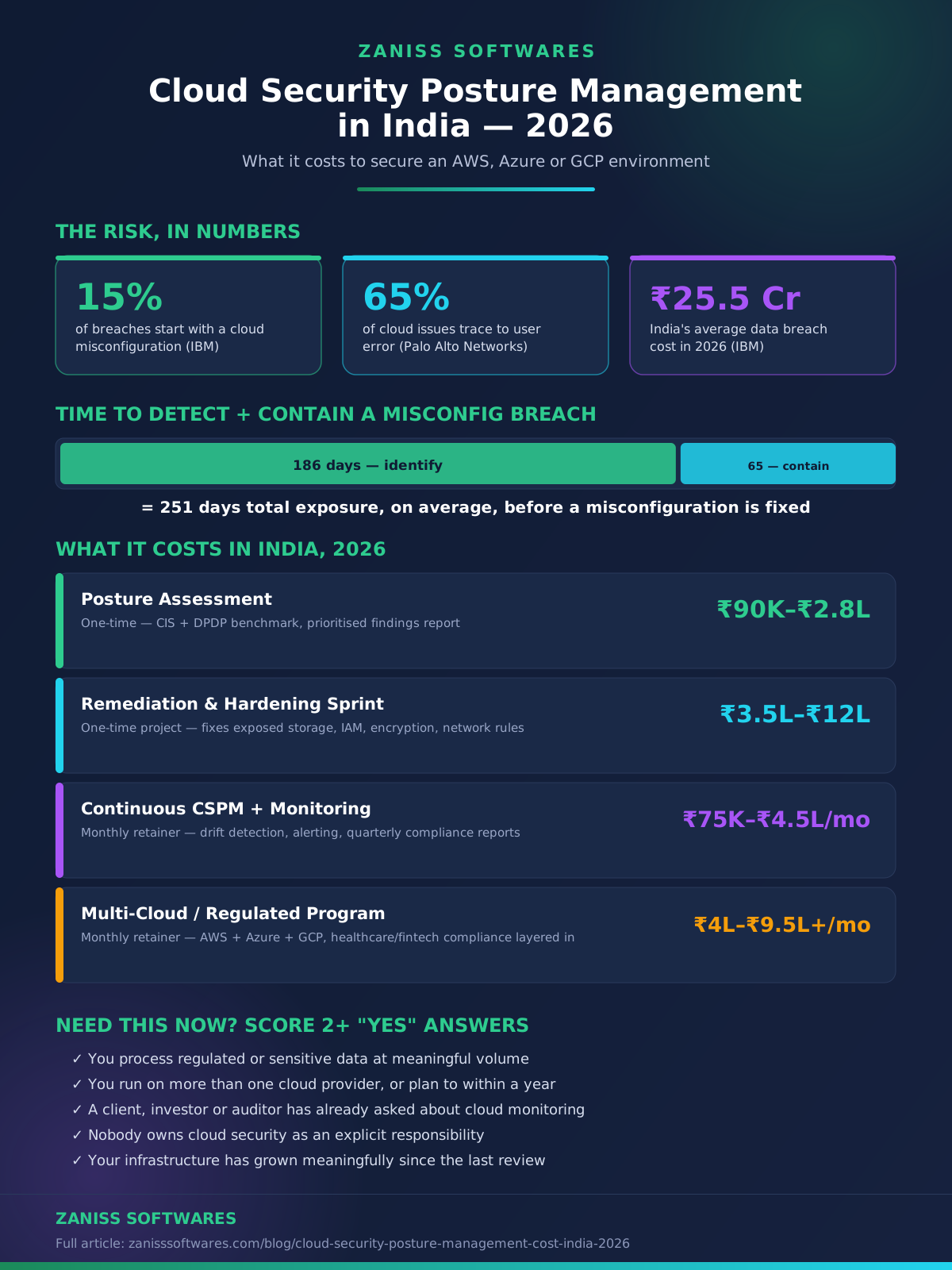
- Cloud Security Posture Management in India 2026
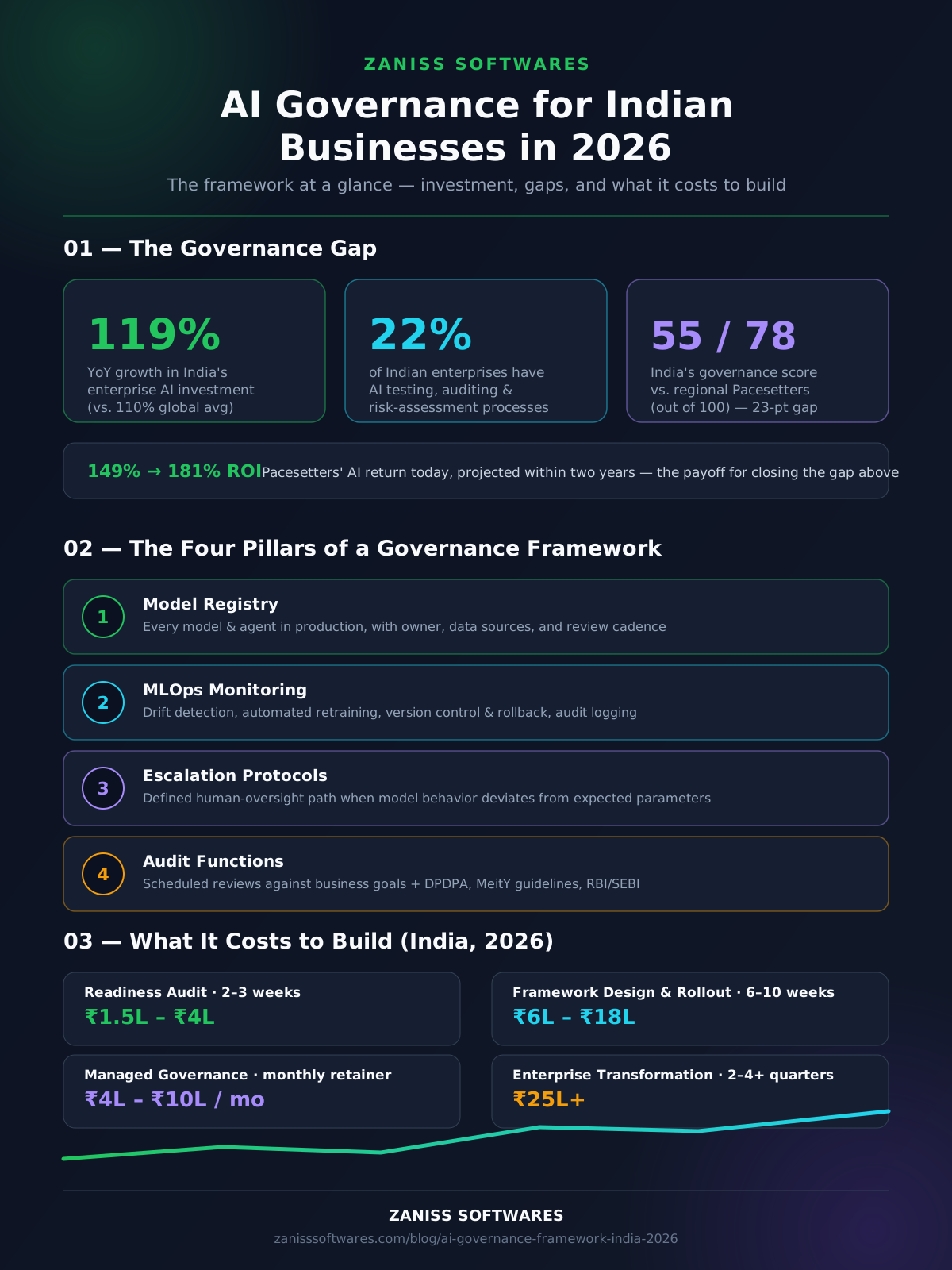
- AI Governance for Indian Businesses in 2026
- DPDP Act Compliance for Indian SaaS
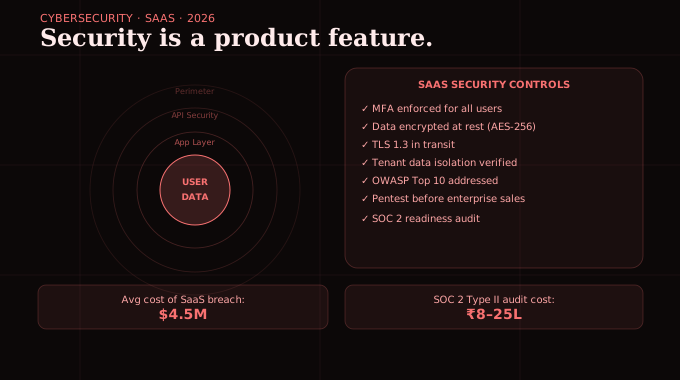
- Cybersecurity Services for SaaS Companies in 2026
Companion infographic: Passkeys & Passwordless Authentication in India 2026 — The Cost & Rollout Breakdown
IT Consulting services · Custom Software Development services · Get Free Consultation
Planning a Website? Don't Overpay or Underbuild
Most businesses overspend on features they don't need — or underspend and rebuild within a year. We help you scope it right from day one.
Pro Insight
Working With Us
Whether you're scoping a single-app passkey pilot or planning an enterprise-wide IAM modernization, our IT Consulting team can assess your current login architecture, map it against DPDP and RBI expectations, and hand you a fixed-scope migration plan — with our Custom Software Development team ready to build it. Book a free 30-minute consultation and leave with a clear plan, scope, and budget.
- ✓SEO-first architecture
- ✓Conversion-focused design
- ✓High-speed performance
- ✓Scalable, future-proof code
📩 Response within 24 hours
Frequently Asked Questions
What is passwordless authentication and how are passkeys different from passwords?
Passwordless authentication replaces a typed secret with a cryptographic key pair generated on the user's device (the passkey/WebAuthn standard). The private key never leaves the device and nothing secret travels over the network at login, which makes passkeys resistant to phishing, credential stuffing, and password-database breaches in ways passwords structurally cannot be.
How much does it cost to implement passkeys for a business in India in 2026?
A single-app pilot with OTP fallback typically runs ₹60,000–₹1,50,000. A web-plus-mobile rollout with a managed CIAM provider runs ₹2,00,000–₹5,50,000. Enterprise-wide IAM modernization with SSO and compliance mapping runs ₹6,00,000–₹15,00,000, and bank-grade or regulated deployments with hardware key support run ₹18,00,000 and up.
Are passkeys compliant with India's DPDP Act and RBI guidelines?
Neither framework names passkeys specifically, but both expect "reasonable security safeguards" and strong access control for systems handling personal or financial data. Passkeys are widely accepted by auditors as strong evidence toward those requirements because they satisfy phishing-resistant MFA expectations more cleanly than SMS OTP.
Can passkeys work alongside existing password systems during migration?
Yes — and they should. A phased dual-mode rollout, where passkeys are offered as the default option while passwords remain a fallback for unmigrated users, is the pattern that avoids support-desk overload and login-flow breakage during the transition.
What happens if a user loses their device — how is account recovery handled?
Synced passkeys (backed up to iCloud Keychain, Google Password Manager, or a Microsoft account) typically restore automatically on a new device after the platform's own identity verification. For device-bound passkeys or high-security accounts, businesses need a secondary verification path — this recovery flow deserves as much security design attention as the login flow itself.