Quick Summary
- 1ONDC lets any seller reach buyers across Paytm, PhonePe, Meesho, and dozens of other apps through one shared protocol instead of separate marketplace listings.
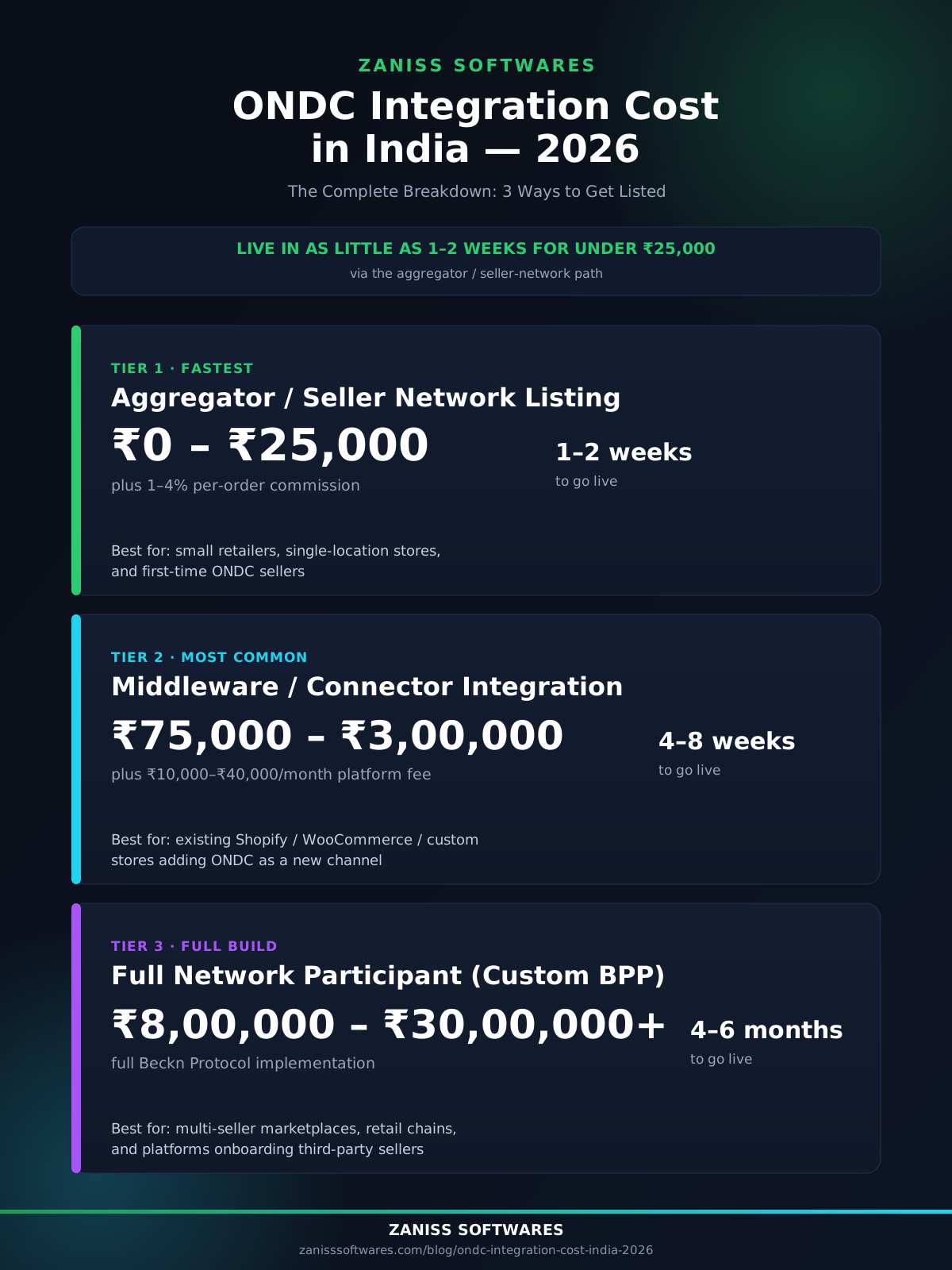
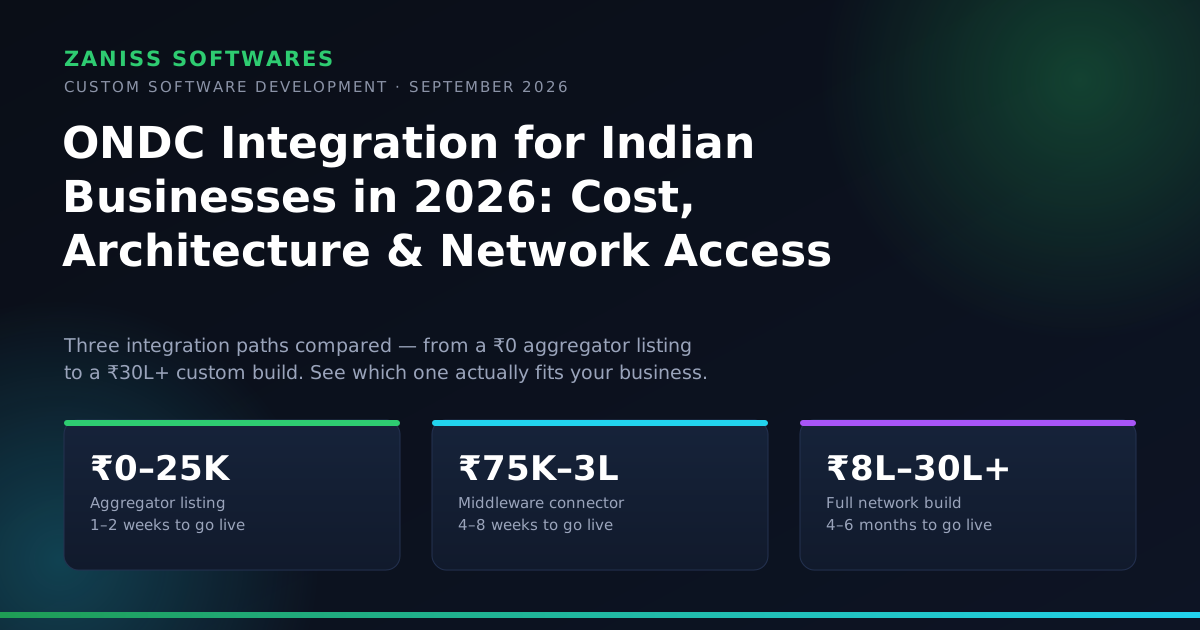
- 2An existing ONDC seller network costs ₹0–₹25,000 and can go live in 1–2 weeks.
- 3A middleware connector costs ₹75,000–₹3,00,000 and typically launches in 4–8 weeks.
- 4A full Network Participant with a custom Seller App costs ₹8,00,000–₹30,00,000+ and takes 4–6 months. Most SMBs should start with an aggregator or connector.
What Is ONDC, and Why It Matters for Your Business in 2026
The Open Network for Digital Commerce is a government-backed, open-protocol alternative to closed marketplace platforms. Instead of a single company like Amazon or Zomato owning both the buyer relationship and the seller relationship, ONDC separates them using the Beckn Protocol: a shared technical standard that lets any registered Buyer App (BAP) discover, order from, and pay any registered Seller App (BPP), regardless of which company built either app.
For an Indian retailer, restaurant, service provider, or logistics company, that shift matters commercially. A seller onboarded once onto the ONDC network becomes discoverable across every buyer app connected to it: Paytm, PhonePe, MyStore, Namshi, and a growing list of others, without negotiating separate listing agreements or paying platform-specific commission structures. By 2026, ONDC spans retail, food and beverage, mobility, logistics, and an expanding set of service categories, and adoption among Tier 2 and Tier 3 city sellers has continued to grow because it removes the "pay to be visible" dynamic of closed marketplaces.
The catch is that ONDC is a protocol, not a plug-and-play app store. Getting listed means integrating with its API specification in some form, and the cost of that integration varies enormously depending on which path a business takes. That variance is exactly why so many businesses either overspend on infrastructure they don't need or underestimate the work involved in doing it properly — this guide exists to make that decision concrete rather than guesswork.
The Three Ways Indian Businesses Can Join the ONDC Network
Path 1: Join through an existing Seller Network Participant. Most small and mid-sized sellers do not build anything themselves. Instead, they list their catalog through a company that is already a registered ONDC Seller App, such as retail-focused platforms, POS vendors with ONDC plug-ins, or aggregator apps built specifically to onboard SMB sellers. This is functionally similar to opening a store on an existing marketplace, except the technical integration with ONDC's protocol is handled entirely by the aggregator.
Path 2: Add a middleware connector to an existing storefront. Businesses that already run a Shopify, WooCommerce, or custom e-commerce site can use a connector layer that translates their existing product catalog and order management into ONDC-compliant API calls. This preserves the business's existing website and backend while adding ONDC as a new sales channel, and requires real integration work but not a ground-up build.
Path 3: Become a full Network Participant with a custom Seller App (BPP). This is the path for platforms, marketplaces, and larger retail chains that want to onboard many sellers under their own brand, want full control over the buyer experience, or need bespoke logic (custom fulfillment rules, multi-warehouse inventory, private-label catalog structures) that off-the-shelf connectors do not support. It means implementing the full Beckn Protocol surface: discovery, search, catalog, order, fulfillment, cancellation, returns, and settlement APIs, registering as a Network Participant, and maintaining that infrastructure long-term.
ONDC Categories and What Each One Requires
Not every ONDC category has the same technical bar. Retail (fashion, electronics, home goods, general merchandise) is the most mature category and the easiest to integrate, with well-documented catalog schemas and predictable fulfillment windows measured in days. Food and beverage carries a stricter technical requirement: real-time inventory sync and tight fulfillment SLAs, because a restaurant that oversells a dish creates a far worse buyer experience than a retailer that ships a day late. Mobility and logistics categories add location-based dispatch logic and live tracking requirements that a simple catalog connector was never designed to handle. Financial services and other emerging categories are still evolving their technical specifications as ONDC expands, which means integrations there should budget extra time for spec changes mid-build. Before scoping cost, confirm which category (or categories) your business actually sells in — a fashion retailer and a QSR chain are solving structurally different integration problems even though both are "joining ONDC."
ONDC Integration Cost in India (2026): Complete Pricing Breakdown
The numbers below are indicative 2026 ranges based on typical engagement scope for each path; actual pricing depends on catalog size, category (retail vs. food vs. logistics carries different compliance requirements), and how much custom logic is needed.
| Integration Path | Typical Cost (INR) | Timeline | Best For |
|---|---|---|---|
| Aggregator / Seller Network Listing | ₹0 – ₹25,000 setup, plus 1–4% per-order commission | 1–2 weeks | Small retailers, single-location stores, first-time ONDC sellers |
| Middleware / Connector Integration | ₹75,000 – ₹3,00,000 one-time, plus ₹10,000–₹40,000/month platform fee | 4–8 weeks | Businesses with an existing Shopify/WooCommerce/custom store wanting ONDC as an additional channel |
| Full Network Participant (Custom BPP Build) | ₹8,00,000 – ₹30,00,000+ | 4–6 months | Multi-seller marketplaces, retail chains, platforms onboarding third-party sellers |
A useful way to read this table: the first two rows are about reaching ONDC buyers, and the third row is about becoming part of the network's infrastructure. Most businesses reading this guide belong in row one or two.
What Actually Drives the Cost Up or Down
Four factors move a project between the low and high end of each tier. Catalog complexity is the biggest one: a business with 40 SKUs and simple pricing integrates far faster than one with thousands of variants, bulk pricing tiers, or perishable-goods logistics rules. Category matters too, because food and grocery categories carry additional real-time inventory and fulfillment-time requirements that retail categories do not. Existing system quality plays a role: a business already running a clean product database with a working API integrates faster than one still managing inventory in spreadsheets. Finally, settlement and reconciliation requirements add cost at the higher tiers, since a Network Participant is responsible for accurate order-to-payment reconciliation across every connected buyer app.
Team availability during integration also affects timeline more than most businesses expect. ONDC sandbox testing typically surfaces edge cases — a discount rule that doesn't map cleanly to the protocol's pricing schema, a return policy that needs a workaround — that require someone on the business side to make a quick decision. Projects where a single point of contact can turn around those decisions within a day move through the 4–8 week connector timeline comfortably; projects where sign-off routes through multiple stakeholders regularly slip past the eight-week mark for reasons that have nothing to do with the engineering itself.
The Hidden Costs Nobody Mentions
Three costs regularly get missed in initial ONDC integration quotes. The first is catalog cleanup: ONDC requires structured product data (categories, attributes, GTIN/HSN codes where applicable) that many businesses' existing spreadsheets or POS exports do not provide cleanly, and preparing that data is often underestimated. The second is ongoing category-specific compliance: ONDC's technical and policy requirements evolve by category and periodically require updates to fulfillment SLAs or catalog fields, which means a connector or BPP needs a maintenance budget, not just a one-time build. The third is customer support routing: once a business is listed on multiple buyer apps, order issues, cancellations, and returns can originate from any of them, and without a unified order management view, support gets fragmented across channels.
A Decision Framework: Which ONDC Path Is Right for You
Ask three questions in order. First: do you want to sell as one seller, or do you want other sellers to sell through you? If the answer is "just me," rule out the full Network Participant build entirely — it solves a different problem. Second: do you already have a working e-commerce backend with a product API? If yes, a middleware connector is usually the fastest, cheapest way to add ONDC as a channel without disrupting your existing site. If no, an aggregator or seller-network listing gets you live in weeks rather than months, while you build out a proper backend in parallel. Third: does your business depend on custom fulfillment logic — multi-warehouse routing, subscription orders, regulated-category compliance — that a generic connector cannot express? If yes, and only if yes, the full custom build is worth the six-figure-plus investment; otherwise it is over-engineering a problem a ₹1–3 lakh connector already solves. Run through these three questions before taking a single sales call from an ONDC integration vendor — it will save you from being quoted a solution sized for a problem you don't actually have.
Common Mistakes Businesses Make When Joining ONDC
The most common mistake is treating ONDC like a second marketplace listing rather than a new sales channel with its own operational load: order volume from ONDC buyer apps still needs to route into the same inventory and fulfillment system as every other channel, or businesses end up overselling stock. The second mistake is underestimating catalog data quality requirements and discovering mid-integration that product titles, categories, or images need rework, which extends timelines by weeks. The third is choosing a full custom build when a connector would have worked, driven by the (often mistaken) assumption that "custom" always beats "off-the-shelf" — for single-seller businesses, it rarely does. A fourth, subtler mistake is going live on ONDC without updating internal reporting: businesses that don't tag ONDC-originated orders separately in their systems lose the ability to measure whether the channel is actually profitable once commission, connector fees, and support overhead are accounted for, and end up unable to answer the one question that justifies further investment.
How ZANISS SOFTWARES Approaches ONDC Integration
We start every ONDC engagement with a scoping call to identify which of the three paths actually fits the business, rather than defaulting to the most expensive option. For businesses with an existing storefront, we typically scope and build a middleware connector that maps the existing product and order APIs into ONDC-compliant calls, test it against a sandbox buyer app, and handle the catalog cleanup that most integrations underestimate. For platforms that genuinely need to be a Network Participant, we scope the full Beckn Protocol implementation as a phased build, starting with the discovery and order APIs before layering in fulfillment, cancellation, and settlement, so the business can go live with a working subset rather than waiting six months for everything at once.
Post-launch, we treat ONDC the same way we treat any live integration: it needs monitoring, not just a handoff. That means tracking order success rates through the buyer-app callback chain, watching for category-specification changes ONDC pushes out, and keeping a monthly view of ONDC-originated revenue against the commission and platform fees it costs to run, so a business can make an informed call on whether to expand into more categories or hold steady at the current channel mix.
Related Articles
- E-commerce Website Cost in India 2026 — Shopify vs Custom vs Headless
- API Development Services in India 2026 (REST, GraphQL, gRPC)
- System Integration India 2026: iPaaS vs Custom Cost
- Agentic Commerce Readiness 2026: AI Shopping Agents
Companion infographic: ONDC Integration Cost in India 2026 — Complete Breakdown →
Planning a Website? Don't Overpay or Underbuild
Most businesses overspend on features they don't need — or underspend and rebuild within a year. We help you scope it right from day one.
Pro Insight
Working With Us
If you're evaluating whether ONDC is worth integrating into your sales channels, we can scope the right path for your catalog and existing systems in one call — no pressure toward the most expensive option.
- ✓SEO-first architecture
- ✓Conversion-focused design
- ✓High-speed performance
- ✓Scalable, future-proof code
📩 Response within 24 hours