Quick Summary
- 150–75% of large enterprise software projects fail by budget, time or outcome — and the failure modes are consistent.
- 2Requirements, integration and data migration risks are the three under-estimated cost killers.
- 3Vendor stability, change management and scope governance kill projects that were otherwise on track.
- 4Every risk has a documented mitigation that costs less than the risk itself if addressed pre-contract.
Why enterprise software projects have a higher failure rate than anyone admits
Studies consistently put the failure rate of large enterprise software implementations between 50 and 75 percent — where "failure" means significantly over budget, over time, or not delivering the stated business outcome. The Standish Group's CHAOS Report has tracked this for decades and the numbers barely improve year over year. The reasons are consistent: unclear requirements, scope that grows without governance, vendor changes mid-project, integration complexity underestimated, and insufficient internal resource allocated to the implementation.
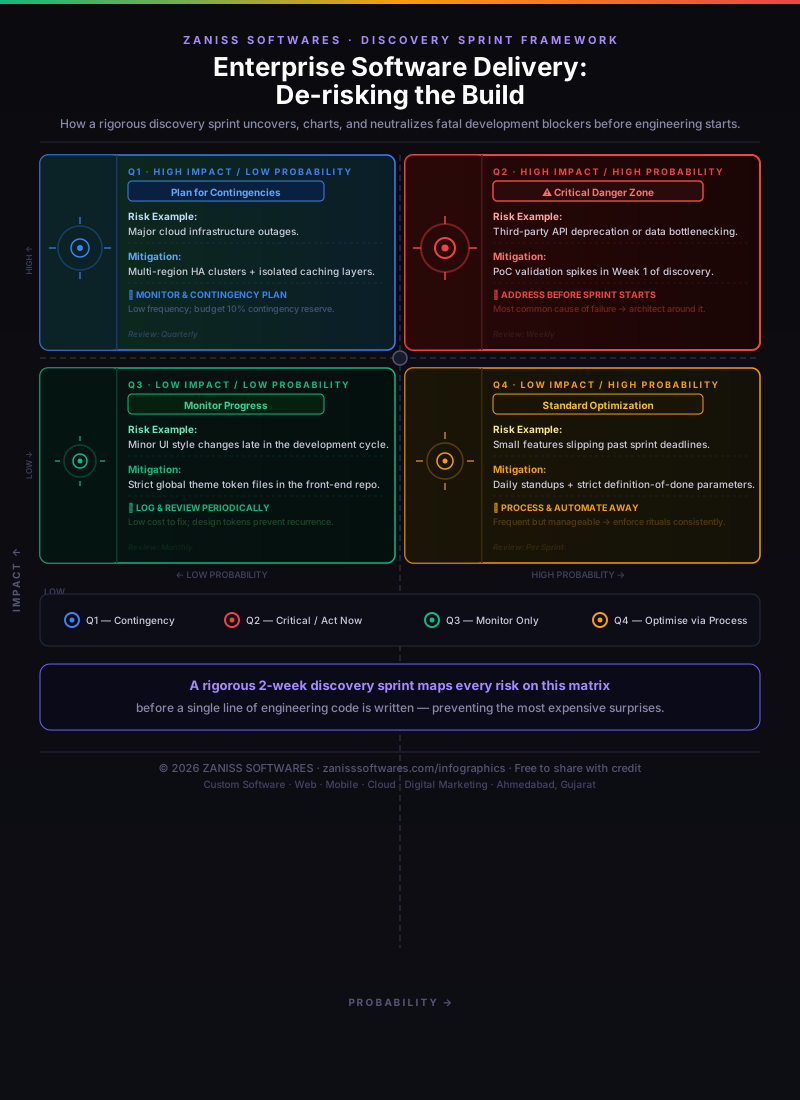
The risk matrix below doesn't prevent these failures — it makes them visible early enough to address before they become expensive.
Risk Category 1: Requirements risk
The risk: Business requirements are documented at a high level and assumed to be understood. Six months in, implementation reveals that key workflows were underdocumented or contradictory.
Probability: High — nearly every enterprise project suffers from this.
Mitigation: Require a detailed requirements validation workshop before contract signature. Every business process the system will touch should be mapped, with sign-off from the process owner, not just the project sponsor.
Risk Category 2: Integration risk
The risk: The new system needs to connect with 5–10 existing enterprise systems. Each integration is assumed to be straightforward. None of them are.
Probability: Very high for any large enterprise implementation.
Mitigation: Require a technical integration pre-assessment before the project begins. Every source and target system should be assessed for API availability, data quality, and integration complexity — separately from the main project estimate. Hidden integration complexity is the single biggest cause of enterprise project overruns.
Planning a Website? Don't Overpay or Underbuild
Most businesses overspend on features they don't need — or underspend and rebuild within a year. We help you scope it right from day one.
Risk Category 3: Vendor stability risk
The risk: The vendor wins the contract, then faces staff attrition, financial difficulty, or leadership change mid-project. Institutional knowledge of your project walks out the door.
Probability: Medium but costly when it happens.
Mitigation: Require documented handover protocols, knowledge management practices (architecture decision records, runbooks), and contractual SLAs around key personnel. Escrow the codebase from month one.
Risk Category 4: Data migration risk
The risk: Legacy data is dirtier and more complex than the initial estimate assumed. Migration takes 3× as long and introduces data quality issues into the new system.
Probability: High — data migrations almost always surface surprises.
Mitigation: Require a data profiling exercise (sample analysis of source data) before the migration estimate is finalised. Build a data quality remediation budget. Never assume clean data.
Risk Category 5: Change management risk
The risk: The system is technically delivered on time, but adoption is low because users weren't trained, weren't consulted, or actively resist change.
Probability: Medium-high, especially for systems replacing long-established manual processes.
Mitigation: Include change management as a line item in the project budget, not a footnote. Super-users embedded in each affected team, training before go-live, and a feedback channel in the first 90 days post-launch all materially improve adoption.
Risk Category 6: Scope governance risk
The risk: Stakeholders request features during the project that weren't in scope. Each addition is "small," but collectively they push timeline and budget 40% over.
Probability: Very high on any enterprise project with multiple stakeholders.
Mitigation: Establish a change control process in the contract before the project starts. Every scope addition requires a written change request, an impact assessment, and sign-off from the project owner before work begins. No exceptions.
We map enterprise contracts through this matrix as part of IT consulting and custom software development.
Evaluating a large software contract? Run it through this framework first. contact us for a free consultation.
Pro Insight
Planning a cloud-native platform? Let's review your architecture for free.
At ZANISS SOFTWARES, we don't just build websites — we build growth systems.
- ✓SEO-first architecture
- ✓Conversion-focused design
- ✓High-speed performance
- ✓Scalable, future-proof code
📩 Response within 24 hours
Frequently Asked Questions
Who should own the risk matrix on the buyer side?
The internal project sponsor, supported by an independent technical advisor. The vendor shouldn't own their own risk register — that's a conflict of interest.
When should we run a technical integration pre-assessment?
Before signing the implementation contract. The pre-assessment is a separate, smaller engagement that lets you fix the main project estimate against real integration data, not assumed data.
How much change management budget is enough?
Typically 10–20% of the technical implementation budget for systems replacing established workflows. Less for greenfield systems with no incumbent process to displace.