In this article
Quick Summary
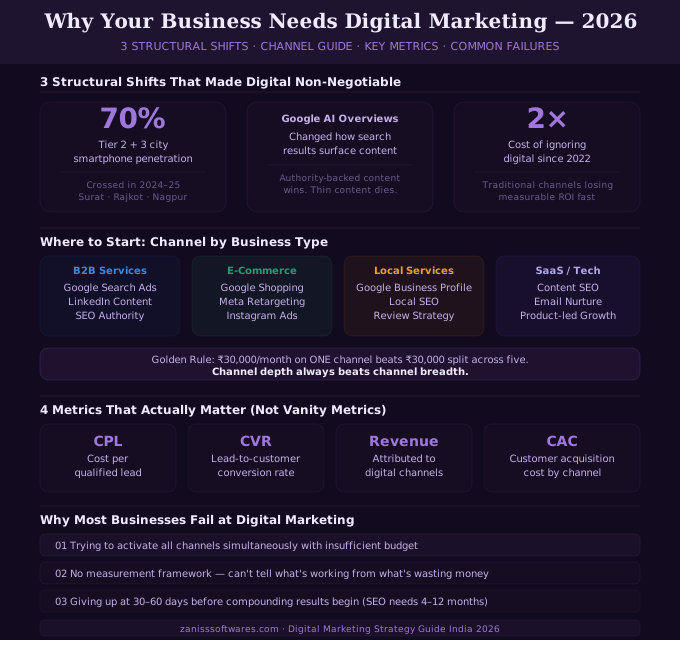
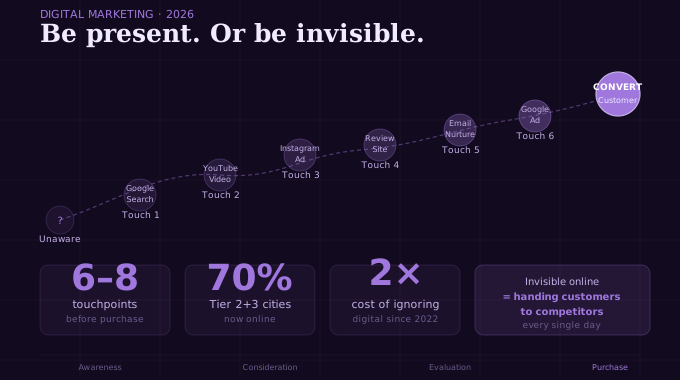
- 1The 6–8 touchpoint buying journey is now real even for ₹500 service decisions — not just enterprise procurement.
- 2AI Overviews and ChatGPT favour structured, opinionated content with named sources. Generic listicles are getting filtered out.
- 3Start with Google Business Profile and three intent-driven landing pages before spending a rupee on paid ads.
- 4Track CPL, lead-to-customer rate, and CAC payback months. Likes and impressions are entertainment, not marketing.
The case for digital marketing in 2026 isn't really about being online — that argument was settled five years ago. The more interesting shift is that customers now complete most of their decision before they ever fill out your contact form. By the time the phone rings, they've read your reviews, scanned your competitor, looked you up on LinkedIn, and probably asked ChatGPT for a second opinion.
If any of those touchpoints disappoints, the call simply doesn't happen. You don't lose the deal — you never see the deal.
What's actually different about 2026
Three quiet shifts have changed the rules. Most marketing agencies are still selling you the 2022 version of digital.
The buying journey got longer, even for small purchases
It used to be that 6–8 touchpoints applied to enterprise software. Now we see the same pattern for ₹15,000 dental procedures and ₹40,000 wedding photographers. Customers in Ahmedabad, Surat, and Rajkot research as carefully as Mumbai or Bangalore — and that includes Tier 3 markets, which is the part that surprises older businesses.
AI search rewards opinion and punishes filler
Google AI Overviews and ChatGPT both pull answers from a small set of sources they trust. The pages that get cited are the ones with a clear point of view, named authors, structured data, and specific numbers. Generic "10 benefits of X" articles — the bread and butter of SEO five years ago — are getting filtered out of AI answers entirely. If your content sounds like it could have been written by anyone, it now performs like content written by no one.
Zero-click search rewards brand recall
More users get the answer right inside Google and never click. That sounds bad — and for traffic numbers, it is. But brand recall from those zero-click impressions is real, and it's why showing up consistently in the answer box matters even when CTR drops.
The honest 3-step plan we recommend to most SMEs
You can't fight on every channel at once with a ₹50,000 budget. Sequence beats spread.
Step 1 — Lock down local before anything else
Claim your Google Business Profile, fill every field, post weekly with real photos (not stock), and build a one-line process for collecting reviews after every job. For service businesses we work with, this single step typically delivers 40–60% of inbound enquiries within 90 days, at zero ongoing media spend. Skip it and your paid ads work twice as hard.
Step 2 — Write three pages that match buying intent
Not "blog posts." Pick the three most expensive questions a prospect asks before paying you, and write a clear, opinionated 600–900 word page for each — with proper schema, FAQs, and one strong call to action per page. These are the pages your ads will eventually point to, and the ones that quietly accumulate organic traffic over months.
Step 3 — Layer paid ads on top of pages that already convert
Most businesses do this in reverse: they buy ads, send traffic to a homepage that doesn't convert, and conclude that "ads don't work." When ads point at landing pages already proven to convert organic traffic, conversion rates typically jump 2–3x and cost-per-lead drops with them.
What "good" digital marketing looks like under the hood
Strip away the jargon and there are four moving parts:
- Intent map — a written list of what your buyer searches for at each stage, from "what is X?" to "X near me with reviews."
- Asset inventory — landing pages, articles, videos, and creatives mapped to each intent.
- Distribution mix — which channel earns each impression, with daily budgets per channel.
- Measurement loop — GA4 + a CRM (or even a tagged Google Sheet) so you can attribute revenue, not just clicks.
If any of these is missing, the rest leak budget into a black box. The most common gap by far is the measurement loop — which is why agencies that show you "engagement" and "impressions" but not pipeline are usually billing for activity, not outcomes.
Planning a Website? Don't Overpay or Underbuild
Most businesses overspend on features they don't need — or underspend and rebuild within a year. We help you scope it right from day one.
The numbers that should be on your dashboard
- Cost per qualified lead (CPL), broken down by channel
- Lead-to-customer conversion rate
- Customer acquisition cost (CAC) and how many months until it pays back
- Share of revenue attributable to organic vs paid vs direct
Likes and follower counts are fine to glance at. They are not what you optimise on. We've never seen a business go bust from low engagement; we've seen plenty go bust from CAC silently doubling over six months.
Why most digital marketing budgets get wasted
Two reasons, in this order. First, businesses quit before the channel has had time to work — paid ads usually need 3–4 weeks of iteration to find their footing, SEO needs 4–6 months to compound, and content needs 6–18 months to throw off serious organic traffic. Second, they try every channel at once on a budget that wouldn't sustain one channel properly. Pick two channels, fund them well, give them six months, and only then expand.
What realistic year-one results look like
- Local pack visibility for your top 5 service+location queries
- Cost per qualified lead trending down 10–25% quarter on quarter
- 30%+ of leads coming from organic and direct, not just paid
- A repeatable WhatsApp + email follow-up flow with measurable conversion
Related reading
Pair this with our deeper write-ups: benefits of digital marketing in India, SEO tips for small businesses, and the website cost guide for India.
Want a second opinion on your current spend?
We run digital marketing programmes for Indian SMEs and we'll happily look at your numbers and tell you honestly where the money is leaking. contact us for a 45-minute audit — no pitch, just useful advice.
Pro Insight
Planning a cloud-native platform? Let's review your architecture for free.
At ZANISS SOFTWARES, we don't just build websites — we build growth systems.
- ✓SEO-first architecture
- ✓Conversion-focused design
- ✓High-speed performance
- ✓Scalable, future-proof code
📩 Response within 24 hours
Frequently Asked Questions
Why is digital marketing important in 2026?
Because the buying journey now happens almost entirely before the first call. Customers vet you across Google, reviews, social proof, and AI search engines — and decide whether to enquire before you've even heard of them.
How much should I spend on digital marketing?
For most Indian SMEs, a meaningful starting budget is ₹30,000–₹70,000/month split across Google Ads, local SEO, and content. Below ₹20,000 you're mostly testing; above ₹1 lakh you should be measuring CAC payback weekly.