In this article
Quick Summary
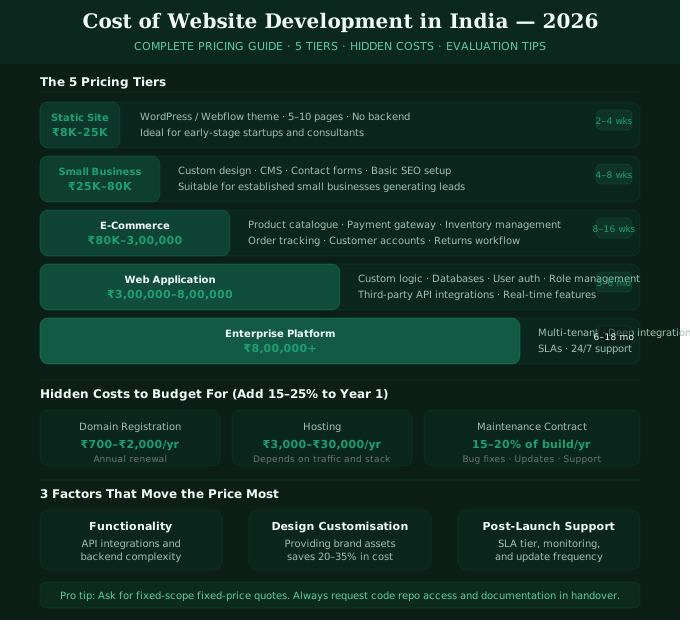
- 1Website prices in India range from ₹8,000 (basic) to ₹8,00,000+ (enterprise) — driven by functionality, not aesthetics.
- 2₹25,000–₹80,000 is the realistic minimum for a serious small-business website with custom design, CMS, and basic SEO.
- 3Hidden costs — domain, hosting, maintenance, SEO setup — can add 15–25% on top of the build price.
- 4A ₹50,000 strategic site often outperforms a ₹3-lakh poorly planned one. Strategy beats budget every time.
Most people who come to us with a website project have already collected three or four quotes — and they look nothing alike. One agency wants ₹12,000. The next one quotes ₹4 lakh. A third sends a 14-page proposal and ₹11 lakh.
It's not random, and nobody is necessarily lying. After scoping a few hundred web projects for businesses across Ahmedabad, Mumbai, and Bangalore over the last few years, I can tell you the gap almost always comes down to two things: what the site actually has to do, and how seriously the team behind it treats your business risk.
Let's break down 2026 pricing the way I'd explain it to a client over coffee.
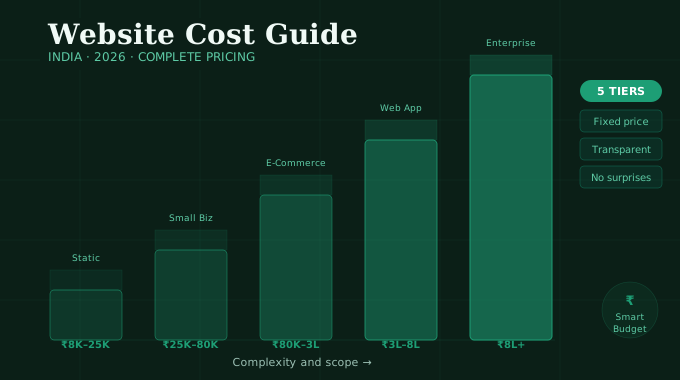
The five tiers of website pricing in India (and where most businesses really fit)
Almost every project I scope falls into one of five buckets. Pick the wrong bucket and you'll either overspend on chrome you don't need, or underspend and rebuild within 18 months — which I've seen happen more times than I'd like.
1. Basic / static site — ₹8,000 to ₹25,000
Pre-made template, 5–10 pages, almost no logic. Useful as a "we exist" page for a freelancer or a personal portfolio. The catch nobody mentions: when you eventually need a contact-to-CRM flow or basic analytics, you'll usually scrap it and start over. Cheap upfront, expensive later if your business grows.
2. Small business website — ₹25,000 to ₹80,000
This is where most service businesses actually belong. Custom design (or a heavily customised theme), a CMS you can update yourself, working contact forms, on-page SEO, and decent Core Web Vitals. If you have a real sales team or a phone that needs to ring, this is the realistic floor.
3. E-commerce — ₹80,000 to ₹3,00,000
Catalog, payment gateway (Razorpay or Cashfree usually), order workflow, customer accounts, GST-aware invoicing. The biggest budget drains here aren't features — they're integrations: Shiprocket, Tally, WhatsApp order updates, and abandoned-cart flows. Plan for them up front or pay double to retrofit later.
4. Custom web application — ₹3,00,000 to ₹8,00,000
Dashboards, role-based access, automation, third-party APIs. This is where a website stops being a brochure and starts replacing actual operational work. If you're still running your business out of Excel sheets and WhatsApp groups, this is the tier that pays for itself fastest. We cover the engineering side under custom software development.
5. Enterprise platform — ₹8,00,000 and up
Multi-tenant systems, ERP/CRM tie-ins, SSO, audit trails, dedicated infra. Quotes here are almost always wrong on the first pass — even ours — because nobody has fully mapped the workflows yet. Always insist on a paid discovery before signing the build contract.
What actually drives the number on the quote
Clients usually focus on page count and "design quality". In reality, those are minor factors. Here's what really moves the budget:
Functionality, by a wide margin
A 10-page brochure site and a 10-page client portal share almost nothing in cost. Booking engines, custom calculators, role-based dashboards, file uploads — each of these is a small project on its own. When you compare quotes, compare the feature list line by line, not the page count.
Design — but not the way you think
Good agencies aren't expensive because they "design more pages". They're expensive because they spend time on user flows and component systems that survive future redesigns. If you already have brand guidelines and rough Figma wireframes, you can genuinely save 20–35% on this phase.
Stack choice
A modern stack — Next.js or TanStack Start, a headless CMS, edge hosting on Cloudflare or Vercel — costs more upfront. It also tends to load in under 1.5s, scores 90+ on PageSpeed, and is cheaper to maintain. The "₹15,000 WordPress" quote is rarely cheaper over three years; it's just cheaper in month one.
SEO and content from day one
I've seen ₹4-lakh sites get zero leads because nobody touched SEO until launch day. Get keyword research, on-page structure, and a plan for the first 10 articles into the build itself. Our digital marketing team usually scopes this in parallel.
Website Cost Breakdown (India 2026)
| Website Type | Price Range | Best For |
|---|---|---|
| Basic / Static | ₹8K – ₹25K | Freelancers, personal brands |
| Small Business | ₹25K – ₹80K | Local businesses, service providers |
| E-commerce | ₹80K – ₹3L | Retail brands, D2C startups |
| Custom Web App | ₹3L – ₹8L | SaaS, dashboards, automation |
| Enterprise Platform | ₹8L+ | Multi-user, ERP/CRM integrations |
Planning a Website? Don't Overpay or Underbuild
Most businesses overspend on features they don't need — or underspend and rebuild within a year. We help you scope it right from day one.
The hidden costs every quote conveniently leaves out
The build price is rarely the final number. Budget honestly for:
- Domain: ₹700–₹2,000/year (and don't buy 5-year .com bundles you don't need).
- Hosting: ₹3,000/year for a brochure site, ₹15,000–₹40,000/year once you have real traffic or a Node backend.
- Maintenance: realistically 15–20% of build cost per year if you want plugin updates, backups, and a human to call when something breaks at 11pm.
- Content + SEO: ₹10,000–₹25,000 for solid initial setup, then ongoing if you want rankings.
- Email + transactional: Resend, Postmark, or SES — small but real.
A safe rule: take the lowest quote you're considering and add 20%. That's closer to what the first year will actually cost you.
How to read a website quote without getting played
Don't compare price first. Compare these, in order:
- Scope clarity — every page, feature, and integration listed explicitly. "Custom design" alone is not scope.
- Stack reasoning — they should be able to explain why Next.js over WordPress (or vice versa) for your specific use case.
- SEO baseline — semantic HTML, sitemap, schema, Core Web Vitals targets. If they mention "we'll add SEO later", walk away.
- Code ownership — your repo, your domain, your accounts. Get this in writing.
- Post-launch — what's covered for the first 30/60/90 days, and what hourly rate kicks in after.
- Comparable case studies — not just any portfolio, but a project of similar scale in a similar industry.
A ₹50,000 site can outperform a ₹3-lakh one (here's why)
I've watched a ₹55,000 plumbing-services site outrank and outconvert a ₹3.2-lakh competitor in the same city. The difference wasn't budget — it was strategy: a clear single conversion goal, three intent-driven landing pages, fast load, real photos, and 14 well-targeted blog posts.
Before signing any quote, ask the developer one question: "How will this website generate leads in the first 90 days?" If the answer is vague, the quote isn't worth what it says.
Related reading
If you're also evaluating partners, read our guide on how to choose a software development company in 2026. Stuck between SaaS and custom? See Custom Software vs Ready-Made Software. Want traffic from day one? Start with our SEO tips for small businesses.
Ahmedabad in particular has emerged as a strong technology hub — see our breakdown of leading software development companies in Ahmedabad and what separates the best from the rest.
Pro Insight
Planning a cloud-native platform? Let's review your architecture for free.
At ZANISS SOFTWARES, we don't just build websites — we build growth systems.
- ✓SEO-first architecture
- ✓Conversion-focused design
- ✓High-speed performance
- ✓Scalable, future-proof code
📩 Response within 24 hours
Frequently Asked Questions
What is the cost of a website in India?
Website costs in India range from ₹25,000 for small business sites to ₹8 lakh+ for custom platforms depending on complexity.
How long does website development take?
Basic websites take 2–4 weeks, while complex platforms may take 3–9 months.