In this article
Quick Summary
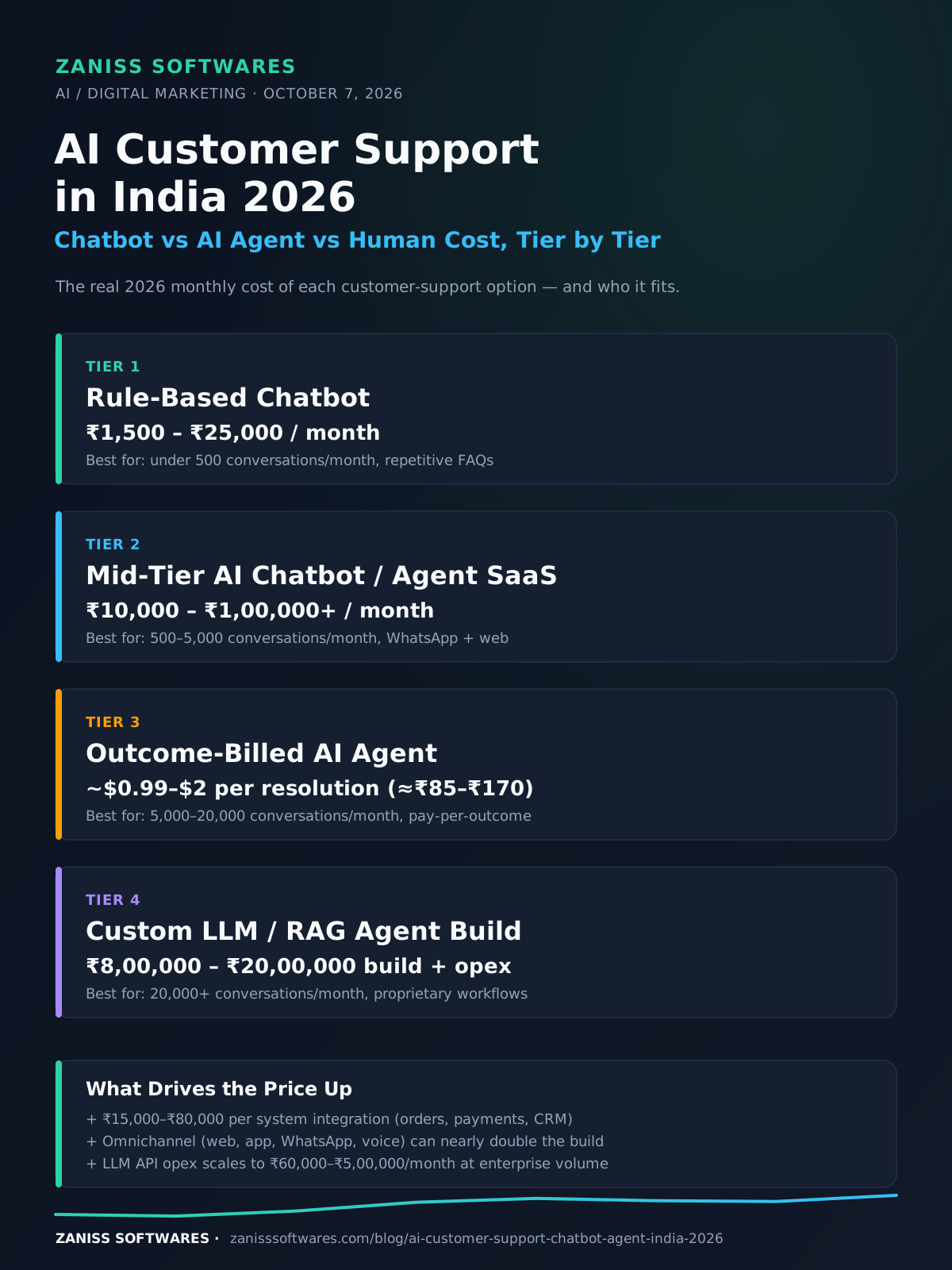
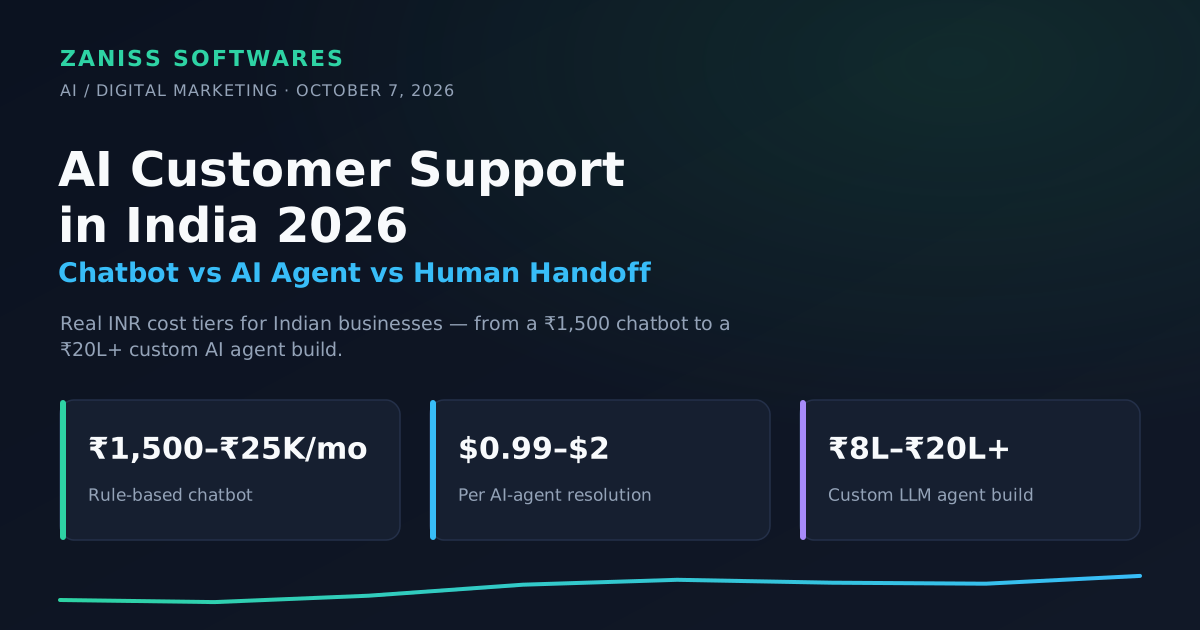
- 1Most Indian businesses evaluating "AI customer support" in 2026 are actually choosing between three very different things: a scripted chatbot (₹2,500–₹25,000/month), an outcome-billed AI agent like Intercom Fin or Haptik (₹10,000–₹1,00,000+/month, or roughly $0.99–$2 per resolution), and a custom-built LLM/RAG agent wired into your own systems (₹8,00,000–₹20,00,000+ to build). None of them eliminate the need for human handoff — the businesses getting the best results are the ones who design the escalation path on purpose, not as an afterthought.
Why "AI Customer Support" Now Means Three Different Things
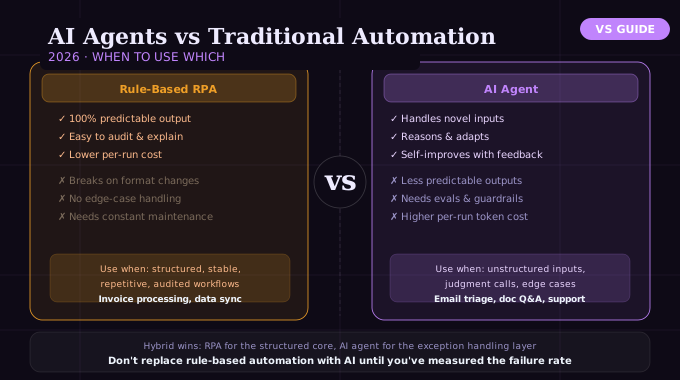
When an Indian founder says "we're adding AI to our support," they could mean three fairly different purchases. The first is a rule-based chatbot — a scripted, decision-tree tool that answers FAQs and routes everything else to a human. The second is an AI agent — a system built on a large language model that understands open-ended questions, holds context across a conversation, and can take real actions like processing a refund or rescheduling a delivery. The third is, confusingly, still mostly human — a trained support team working through a shared inbox, now assisted by AI drafting suggestions rather than replaced outright.
The distinction matters because the three options have wildly different costs, implementation timelines, and failure modes. A chatbot deployed to handle complex billing disputes will frustrate customers within days. An AI agent given access to refund and order-management systems without a clear escalation path can issue incorrect refunds at scale before anyone notices. A human-only team, however well trained, will struggle to hold response times under WhatsApp-era customer expectations once conversation volume crosses a few hundred a day.
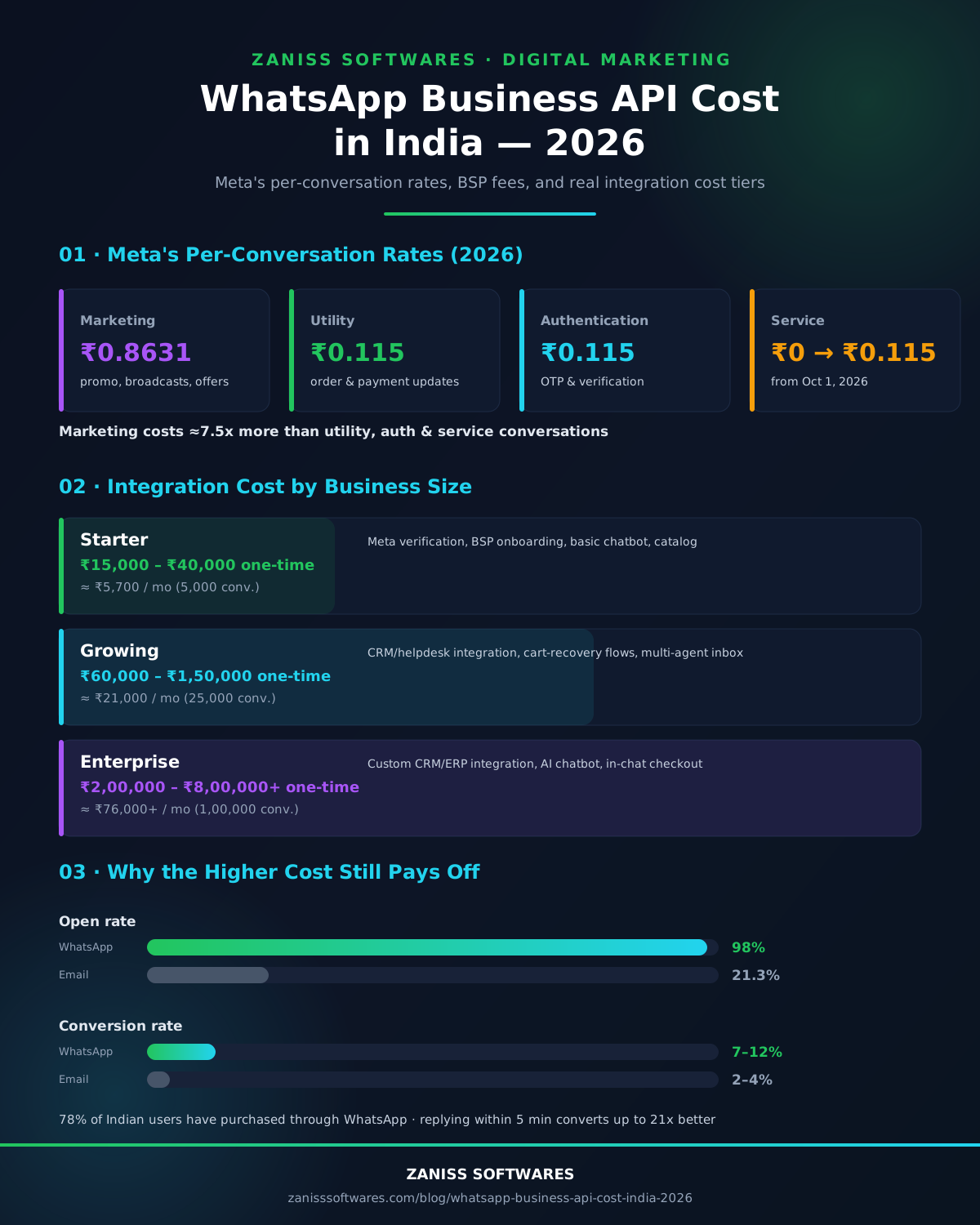
For Indian businesses specifically, there's an added layer: a large share of support conversations arrive through WhatsApp rather than web chat or email (see our guide to WhatsApp Business API integration cost), which changes both the vendor shortlist and the pricing model, since Meta's own per-conversation fees stack on top of whatever platform fee you're paying. Getting this decision right in 2026 means understanding what each option actually does, what it costs in India specifically — not the US sticker price — and where human handoff fits in, because it always has to fit somewhere.
Rule-Based Chatbots: Fast, Cheap, and Still Useful for the Right Job
Rule-based chatbots are the oldest and simplest layer of automated support, and despite the AI agent hype, they remain the right starting point for a large share of Indian SMBs and early-stage startups. These tools work from a decision tree or a small set of intents: a customer asks about order status, shipping policy, or refund eligibility, and the bot matches the question to a scripted answer. Anything that doesn't match a known pattern gets handed to a human or logged as a missed query.
The appeal is cost and predictability. Platforms like Tidio start free for a small number of billable conversations, with paid plans from roughly $29/month (about ₹2,400) for 100 conversations, scaling to $59+/month as volume grows. Indian-built alternatives aimed at WhatsApp-first SMBs — Gupshup, Vernacular.ai, and similar platforms — price their entry tiers from as low as ₹1,500–₹2,500/month, which removes the currency-conversion tax that comes with US-priced SaaS.
The limitation is equally simple: a rule-based bot cannot handle anything it wasn't explicitly scripted for. It has no memory of earlier messages in the same conversation, no ability to reason about an unusual request, and no capacity to take an action like processing a refund — it can only direct the customer somewhere else to get one. For a business with under a few hundred support conversations a month and mostly repetitive questions, that trade-off is entirely reasonable. The mistake is keeping a rule-based bot in place once conversation complexity grows past what a decision tree can handle — at that point, every unresolved chat is actively costing goodwill, not just failing to help.
AI Agents: When Support Software Starts Taking Action
An AI agent is a different category of tool, built on a large language model rather than a decision tree. The practical difference shows up in three places: understanding, memory, and action. Where a chatbot gets confused by phrasing it wasn't scripted for, an AI agent can parse an open-ended, messy complaint and identify the underlying intent. Where a chatbot treats every message as a fresh start, an agent carries context across the conversation and, in more advanced deployments, across a customer's history with the business. And where a chatbot can only point a customer toward a solution, an agent connected to the right systems can execute one directly — issuing a refund, rebooking a delivery slot, or updating an order, all inside the same conversation.
This is where the pricing model changes shape too. Intercom's Fin AI agent is billed per resolution — from $0.99 (roughly ₹85) per confirmed or assumed resolution, with no published volume discount, on top of seat fees of $29–$132 per agent per month. A 10-person support team handling 2,000 AI resolutions a month, with Copilot drafting assistance for human agents, can land around $3,120/month (about ₹2.6 lakh) once every component is added up — a figure the vendor's own advertised seat price doesn't hint at.
Indian-built agent platforms — Haptik, Yellow.ai (Yellow Messenger), and similar — take a more India-priced approach, with published or quoted tiers from roughly ₹3,000–₹30,000+/month depending on volume and channel mix, though enterprise tiers on all of these platforms typically move to custom quotes once WhatsApp conversation fees, voice AI minutes, and premium LLM pass-through costs are factored in. The common thread: an AI agent's real monthly cost is rarely the headline plan price — it's the plan price plus usage.
Human Handoff Isn't a Failure State — It's a Design Decision
It's tempting to treat "human handoff" as the thing that happens when the AI fails. That framing causes most of the bad AI support experiences customers complain about in 2026 — the bot that loops a frustrated customer through the same three suggestions, the agent that finally hands off with zero context so the customer has to re-explain everything from scratch, or worse, the agent that is never told it's allowed to hand off at all and simply gives a wrong or unhelpful final answer because it was built to always sound confident.
The businesses getting this right treat human handoff as a designed state, not a fallback. That means defining, in advance, exactly which situations should never be resolved by AI alone — anything involving a legal threat, a safety complaint, a high-value order, explicit frustration signals, or a customer who has already failed to get resolution twice. It means the handoff carries the full conversation transcript and any account context to the human agent, so the customer never has to repeat themselves. And it means measuring handoff rate and time-to-human as seriously as resolution rate, because a platform that proudly reports "87% AI resolution" but makes the remaining 13% miserable has a design problem, not a success story.
This matters more in the Indian market than most platform sales decks admit. WhatsApp — the dominant support channel for Indian consumers — has no typing indicator for "a human is now reading this," no easy way to see conversation history across a handoff unless the backend is built for it, and strict per-message costs from Meta that make silent, looping bot conversations expensive as well as annoying. Getting handoff right isn't a nice-to-have; on WhatsApp specifically, it's also how you control cost.
What Indian Businesses Are Actually Paying in 2026
Three pricing realities worth separating. First, consumer-facing SaaS platforms price in USD by default — Tidio, Intercom, and most Western AI agent tools — which adds a real currency premium for Indian businesses before any usage is counted. Second, India-built platforms price natively in INR and tend to undercut the US tools meaningfully at the entry tier, but several (Haptik's Contakt enterprise line, for instance) move to custom, sales-assisted quoting once you need enterprise features, and those quotes have been known to run ₹25,000–₹30,000+/month before WhatsApp and voice add-ons. Third, a custom-built agent is the only option with a real one-time cost structure rather than a forever-recurring one — but "one-time" undersells it, since a working LLM support agent for an Indian startup typically costs ₹8,00,000–₹20,00,000 to build and still carries ₹4,000–₹25,000/month in LLM API costs at moderate volume (roughly 5,000 conversations/month), climbing to ₹60,000–₹5,00,000/month at enterprise scale.
| Support Option | Typical Monthly Cost (India, 2026) | Best For |
|---|---|---|
| Rule-based chatbot (Tidio, Gupshup Starter, Vernacular.ai Basic) | ₹1,500 – ₹25,000/month | Under 500 conversations/month, repetitive FAQs |
| Mid-tier AI chatbot/agent SaaS (Haptik Growth, Yellow.ai Professional, Freshchat) | ₹10,000 – ₹1,00,000+/month | 500–5,000 conversations/month, WhatsApp + web |
| Outcome-billed AI agent (Intercom Fin, Zendesk AI) | ~$0.99–$2 per resolution (≈₹85–₹170) + seat fees | 5,000–20,000 conversations/month, pay-per-outcome preferred |
| Custom LLM/RAG agent build | ₹8,00,000–₹20,00,000 build + ₹4,000–₹25,000/month opex (up to ₹5,00,000/month at scale) | 20,000+ conversations/month, proprietary workflows or compliance needs |
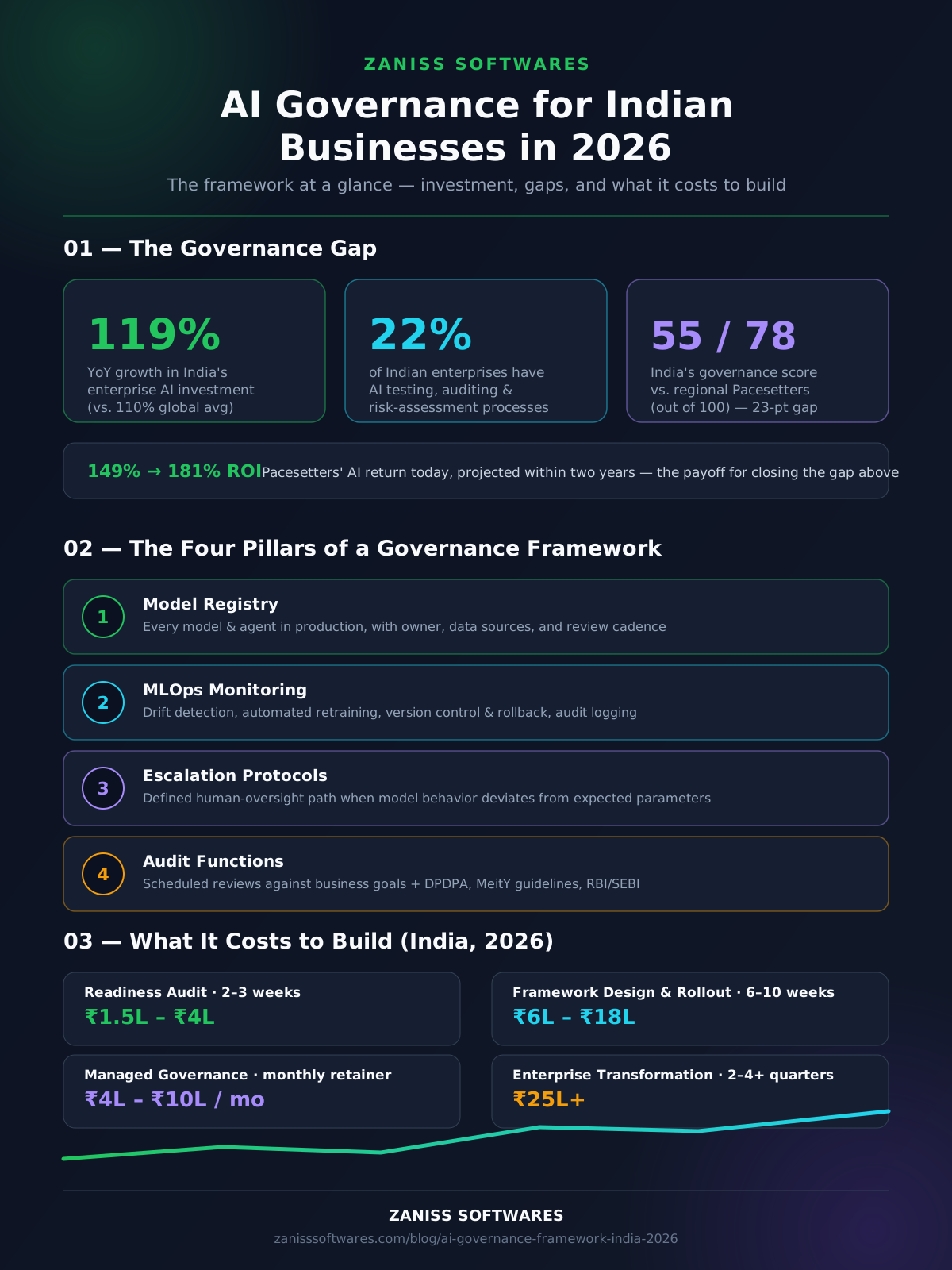
The build estimate changes significantly with integration scope. Connecting the agent to an order tracker, a payments system, or a CRM each typically adds ₹15,000–₹80,000 in development per integration, and going omnichannel (web, app, WhatsApp, voice) rather than single-channel can nearly double the total build. None of these figures include the ongoing cost of monitoring, retraining, and governance — a gap our AI governance guide covers in more depth, since Indian enterprises have been found to increase AI spend by over 100% year-on-year while governance maturity lags well behind.
Build vs Buy: A Practical Decision Framework
Instead of starting from "which platform has the best reviews," start from conversation volume and how proprietary your workflows are — two variables that predict the right answer more reliably than any feature comparison.
- Under ~500 conversations/month, mostly repetitive questions: a free or entry-tier rule-based chatbot is the right call almost every time. The cost of a mis-scoped AI agent project at this stage — months of build time, ₹8 lakh+ in development — dwarfs whatever efficiency it would deliver on a few hundred conversations.
- 500–5,000 conversations/month, WhatsApp-dominant, growing query complexity: a mid-tier Indian SaaS platform (Yellow.ai, Haptik's Interakt/Growth tier, Gupshup) usually beats both a basic chatbot and a custom build — the INR-native pricing and WhatsApp-first design fit this stage well, provided escalation rules are configured deliberately rather than left at the default.
- 5,000–20,000 conversations/month, or the support team is spending real money on seats and overtime: an outcome-billed AI agent (Intercom Fin, or an Indian platform's enterprise tier) starts to pay for itself, provided someone is actively tracking cost-per-resolution against what a human agent costs to handle the same ticket.
- 20,000+ conversations/month, or proprietary workflows, compliance requirements, or data that shouldn't leave your own systems: a custom-built LLM/RAG agent becomes the economically rational choice despite the higher upfront cost — full ownership of the model's behavior, integration depth, and data residency all become harder to get from an off-the-shelf platform as the business scales.
Designing the Escalation Workflow That Doesn't Frustrate Customers
Whichever path you choose, the escalation workflow deserves as much design attention as the AI itself. A handful of practices separate the support experiences customers tolerate from the ones they complain about publicly.
- Set explicit escalation triggers rather than relying on the AI to decide. Sentiment shifts, a confidence score below a set threshold, a second unresolved message on the same issue, specific keywords ("cancel," "refund," "legal," "complaint"), and order value above a defined threshold should all force a handoff automatically, regardless of how confident the AI sounds.
- Pass full context forward. The human agent picking up a handed-off conversation should receive the entire transcript, the customer's account and order history, and — ideally — a one-line summary of what the AI already tried, so the customer is never asked to repeat themselves.
- Set a visible SLA for human pickup, and tell the customer what to expect the moment a handoff happens, rather than leaving them wondering whether the conversation is still being read. On WhatsApp specifically, this also controls cost, since open-ended silent waits can trigger additional billable conversation windows under Meta's pricing.
- Log every handoff and feed it back into the system. A rising handoff rate on a specific topic is usually the clearest signal that the AI needs retraining, a new integration, or a policy change — treating escalation data as product feedback, not just an operational metric, is what separates support systems that improve over time from ones that plateau.
Companion infographic: AI Customer Support in India 2026: Chatbot vs Agent vs Human Cost at a Glance →
Related Articles
Planning a Website? Don't Overpay or Underbuild
Most businesses overspend on features they don't need — or underspend and rebuild within a year. We help you scope it right from day one.
Pro Insight
Working With Us
If you're weighing a chatbot, an AI agent, or a custom-built support system for your own business, our Digital Marketing and Custom Software Development teams can walk through the real cost and timeline for your specific volume and workflows. Explore our Digital Marketing services, or book a free consultation to scope your project.
- ✓SEO-first architecture
- ✓Conversion-focused design
- ✓High-speed performance
- ✓Scalable, future-proof code
📩 Response within 24 hours
Frequently Asked Questions
What's the real difference between a chatbot, an AI agent, and human support?
A chatbot follows a scripted decision tree and can only answer questions it was explicitly built for. An AI agent, built on a large language model, understands open-ended language, holds context across a conversation, and can take real actions (refunds, rebooking, order updates) when connected to the right systems. Human support remains essential for anything emotionally sensitive, high-value, or outside what either automated option was designed to handle — the goal isn't to eliminate it, but to route to it deliberately.
How much does AI-powered customer support cost for an Indian business in 2026?
It depends on the path: entry-tier rule-based chatbots run ₹2,500–₹25,000/month; mid-tier Indian AI platforms (Haptik, Yellow.ai, Gupshup) range ₹10,000–₹1,00,000+/month depending on volume and channels; outcome-billed agents like Intercom Fin cost roughly $0.99–$2 (₹85–₹170) per resolution; and a custom-built LLM/RAG agent typically costs ₹8,00,000–₹20,00,000 to build, plus ₹4,000–₹25,000+/month in ongoing API costs.
Should we buy a SaaS AI agent platform or build a custom one?
Buy if your support volume is under roughly 5,000–20,000 conversations a month and your workflows are reasonably standard — time-to-value is faster and cost is predictable. Build if you're past that volume, have proprietary data or workflows a generic platform can't model well, or have compliance requirements that make data residency and model behavior non-negotiable.
Will AI agents replace human customer support teams entirely?
Not for any business handling real money, sensitive complaints, or long-term customer relationships. Even the most advanced AI agent deployments in 2026 route a meaningful share of conversations to humans by design — the businesses seeing the best results are explicit about which conversations that should be, rather than treating every handoff as an AI failure.
How do we design a good AI-to-human escalation workflow?
Define explicit triggers (sentiment, confidence thresholds, keywords, order value) rather than letting the AI decide on its own; pass the full conversation context to the human agent so customers never repeat themselves; set and communicate a clear pickup SLA; and treat handoff data as ongoing product feedback to keep improving the AI over time.