In this article
Quick Summary
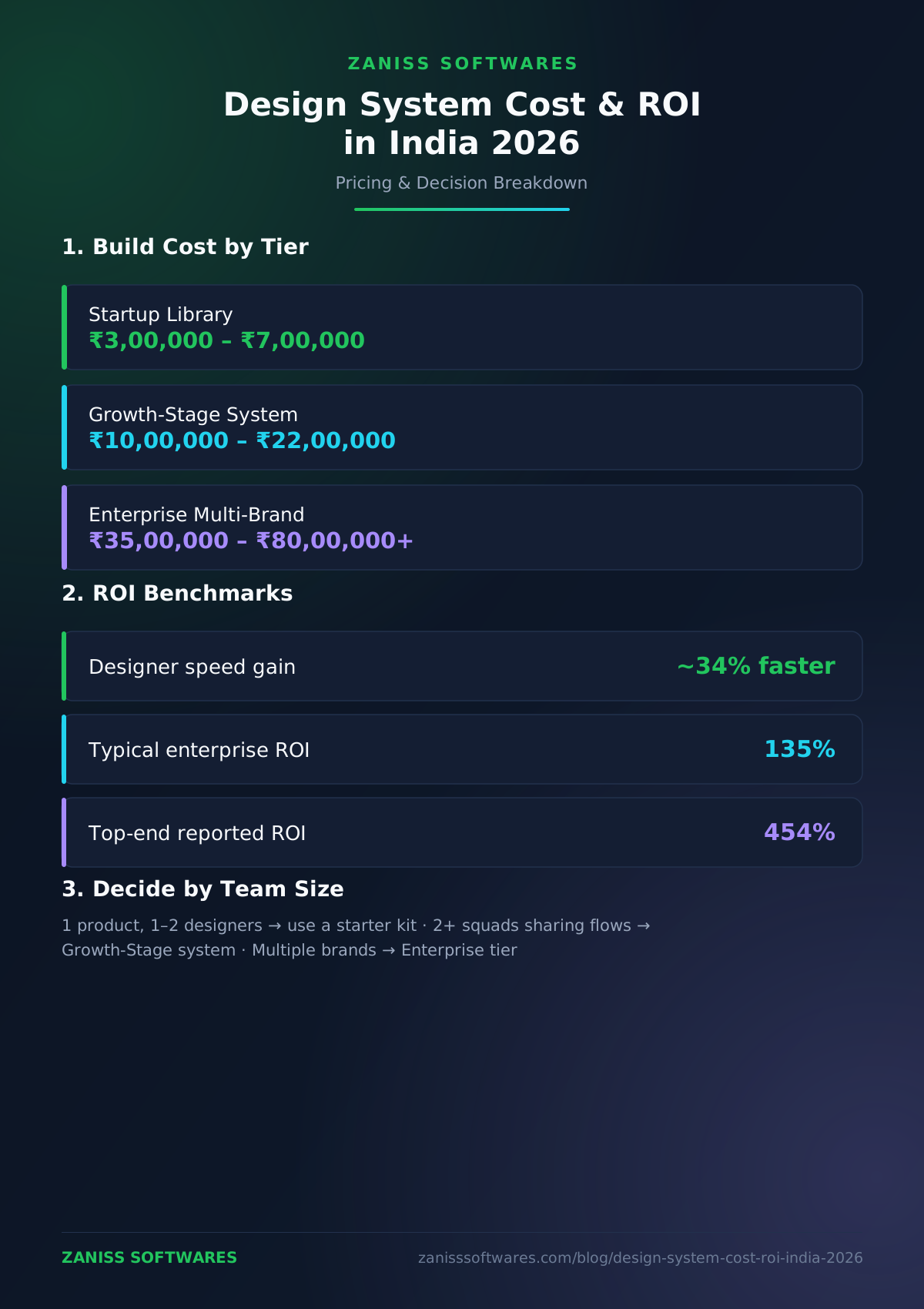
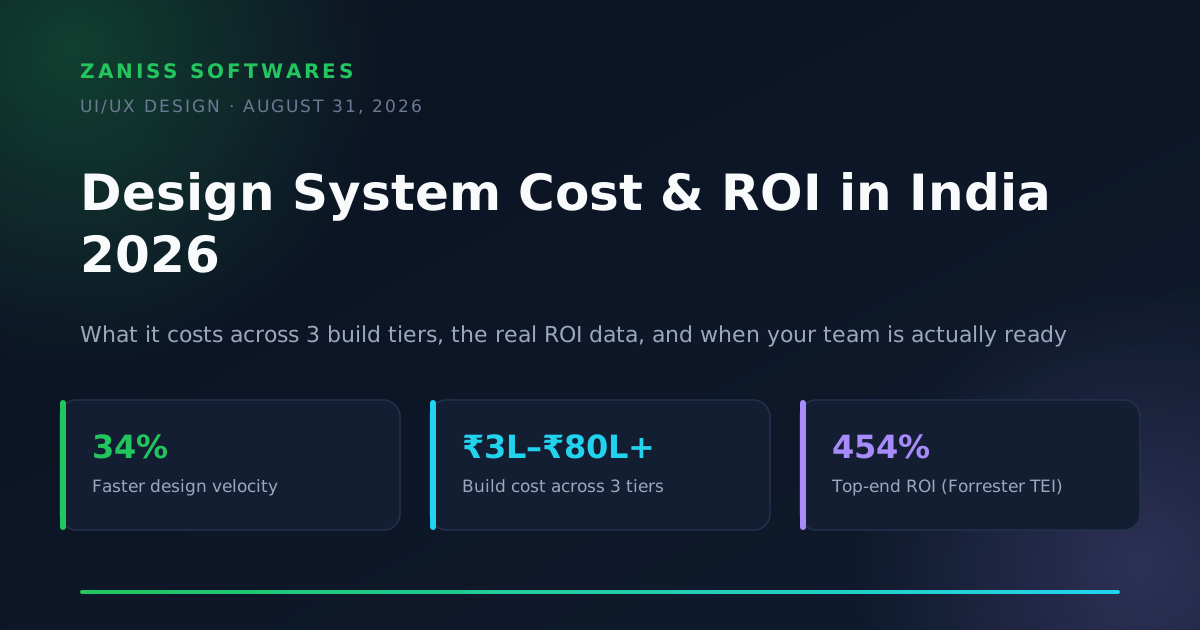
- 1Design systems typically pay back through speed, not just consistency — designers work roughly 34% faster with a mature system in place, and enterprises report ROI in the 135%–450%+ range depending on team size and reuse.
- 2A realistic build in India in 2026 ranges from ₹3L–₹7L for a single-product component library up to ₹35L–₹80L+ for a multi-brand, multi-platform enterprise system — most teams land in the ₹10L–₹22L growth-stage tier.
- 3Timeline follows a predictable curve: 4–6 weeks to a usable MVP library, 3–6 months to a documented and adopted system, and 3–12 months to full multi-team scale.
- 4The single biggest predictor of ROI isn't component count — it's adoption. A beautifully built system that engineering doesn't actually use returns close to zero; a scrappy one with 80% adoption pays for itself within two quarters.
Why Design Systems Are a 2026 Priority, Not a 2027 Nice-to-Have
For years, a design system was something only a handful of large Indian product companies bothered building — it looked like a documentation project with no clear finish line, competing for budget against features that actually shipped revenue. That calculus has shifted. As product teams in India scale across web, iOS, Android, and increasingly multiple brands or white-labeled products, the cost of not having a shared design language compounds fast: every new screen re-solves problems that were already solved three sprints ago, every rebrand touches hundreds of hardcoded values, and every new hire spends their first month reverse-engineering conventions that were never written down.
The tooling shift has helped too. Figma's variables and multi-mode support, AI-assisted component generation, and mature token-sync pipelines (Tokens Studio, Style Dictionary) mean a design system in 2026 costs meaningfully less to build and maintain than the same system would have three years ago — the manual glue work that used to eat half the budget is now largely automated.
This guide breaks down what a design system actually costs to build in India in 2026, the ROI data behind the investment, and — more importantly — how to tell whether your team is at the stage where building one is worth it at all.
A Quick Illustration: What Inconsistency Actually Costs
Picture a mid-sized SaaS company with three product squads and no shared component library. Each squad has its own version of a date picker, its own shade of “primary blue,” and its own modal component with slightly different close-button behavior. None of this shows up as a line item anywhere — it shows up as an extra half-day per sprint spent rebuilding something that already exists elsewhere in the codebase, a support ticket every few weeks because one modal traps focus differently than another, and a rebrand that touches 40 different files instead of one token file.
None of those costs are dramatic on their own. Compounded across a year and three squads, they routinely add up to more engineering and design time than the design system itself would have cost to build — which is exactly why the ROI studies cited below tend to land where they do.
What “Design System” Actually Means (Beyond a Component Library)
A component library — a shared set of buttons, inputs, and cards in Figma — is the visible part, but it is not the system. A real design system has four layers: design tokens (the raw values for color, spacing, typography, and motion, stored once and consumed everywhere), a documented component library with usage guidelines and accessibility rules, a synced engineering library (React, Flutter, or native components that map one-to-one to the design components), and a governance model that decides how the system evolves and who can contribute to it.
Teams that stall out or abandon design systems almost always skipped one of these four layers — usually governance. A component library with no contribution process ossifies within two quarters: engineers start forking components locally because getting a change approved takes longer than just building it themselves, and the system quietly stops being a system.
The ROI Data Behind Design Systems
The return on a design system shows up in three places, and it is worth being specific about which one you are optimizing for before you scope the build. Design velocity is the most immediate: designers working with a mature, well-documented system complete comparable work roughly 34% faster than designers working without one, according to Figma's own usage data, because they are assembling from a known-good library instead of solving layout and interaction problems from scratch every time.
Engineering velocity follows a similar curve but with a lag — the first project or two after a design system launches is often slower, not faster, because teams are migrating existing screens onto the new components. The payoff shows up from the third project onward, where shared, tested components mean less QA time and fewer visual regression bugs shipping to production.
The financial return, when studies bother to measure it, tends to be striking. Independent analyses of mature enterprise design system programs have found ROI in the 135% range when measured narrowly across design and engineering time saved, and case studies from design system consultancies report figures as high as 454% ROI (per a Forrester Total Economic Impact study) once reduced QA cycles, faster onboarding, and brand-consistency wins are factored in. Those top-end numbers come from large, well-adopted enterprise systems — a smaller Indian startup building its first system should expect the lower, more conservative end of that range, not the headline number.
Design System Cost in India: Three Honest Tiers
Cost scales primarily with platform coverage (web only vs. web + mobile + native), component count, and whether the system needs to support multiple brands or white-labeled themes. Using the same seniority-based hourly rates common across Indian UI/UX design engagements — roughly ₹2,000–₹3,500/hour for junior designers, ₹3,500–₹6,000/hour for mid-level, and ₹6,000–₹8,000+/hour for senior/lead designers and design engineers — here is how that translates into three realistic project tiers.
| Tier | Scope | One-Time Build Cost | Typical Timeline |
|---|---|---|---|
| Startup Library | Single product, ~40 core components, tokens, basic Figma library + Storybook | ₹3,00,000 – ₹7,00,000 | 4 – 6 weeks |
| Growth-Stage System | Web + mobile, ~100 components, documented (Zeroheight), synced engineering library, basic governance | ₹10,00,000 – ₹22,00,000 | 8 – 14 weeks |
| Enterprise Multi-Brand System | Multi-brand theming, cross-platform libraries (React + Flutter/native), full governance & contribution model | ₹35,00,000 – ₹80,00,000+ | 4 – 9 months |
On top of the build cost, budget an ongoing maintenance retainer — realistically ₹25,000–₹1,50,000 a month depending on tier — to keep the system evolving as the product does. Teams that treat a design system as a one-time project rather than a maintained product are the ones most likely to see it decay within a year.
Planning a Website? Don't Overpay or Underbuild
Most businesses overspend on features they don't need — or underspend and rebuild within a year. We help you scope it right from day one.
The Adoption Problem Nobody Budgets For
The most expensive line item in most failed design system projects never appears on an invoice: it is the change-management work of getting existing teams to actually migrate onto the new system instead of continuing to build in their old patterns. A system with 100 beautifully documented components and 20% real adoption across engineering teams delivers a fraction of the ROI numbers cited above, because most screens in production are still built the old way.
The teams that get this right budget explicit migration time — usually 15–25% of the total build budget — for retrofitting at least the highest-traffic existing screens onto the new system, rather than only applying it to new features going forward. They also assign a small, named team (often two to four people) as system owners with real authority to review and merge contributions, rather than leaving the system as an unowned shared resource that everyone is nominally responsible for and no one actually maintains.
Build In-House, Hire an Agency, or Buy a Starter Kit?
Three paths exist, and the right one depends on team size and how differentiated your product's visual identity needs to be. Off-the-shelf design system starter kits (built on top of Radix, shadcn/ui, or similar headless component libraries) get a team to a working component library in days rather than months, at minimal cost — the trade-off is a visual identity that looks recognizably similar to hundreds of other products built on the same starter kit, which matters less for internal tools and more for a consumer-facing brand.
Building in-house makes sense once a team has at least two to three product squads that would genuinely share the system, and enough senior design and engineering capacity to own it without pulling those people permanently off feature work. Bringing in an outside team — typically for the initial 8–14 week build, with an internal team taking over maintenance afterward — is the middle path most growth-stage Indian companies land on: it gets the foundational token architecture and governance model right the first time, which is difficult to retrofit later, while keeping long-term ownership internal.
Common Mistakes Indian Teams Make
Three patterns show up repeatedly. First, teams start with visual components (buttons, cards, colors) before defining tokens, which means every component gets rebuilt again once someone finally sits down to formalize spacing and color scales — building tokens first, even informally, saves a full rebuild cycle later. Second, teams build a beautiful Figma library with no synced engineering equivalent, so designers and engineers drift apart within a quarter because the “source of truth” only lives in one discipline's tool. Third, teams scope for every platform and every brand from day one, which turns a 10-week project into a 9-month one and burns morale before the system ever reaches its first real user — starting with one platform and one brand, then expanding once adoption is proven, is consistently the faster path to a system that actually gets used.
A fourth, quieter mistake is treating documentation as optional. A component library without usage guidelines — when to use a modal versus a drawer, which button variant is primary in a given context — still leaves every designer making the same judgment calls independently, which reintroduces the exact inconsistency the system was built to remove. The documentation is not overhead on top of the real work; for a design system, it is a large part of the real work.
Decision Framework: Is This the Right Time to Build One?
Team size and product surface area are the two questions that matter most, not company age or funding stage. If you have a single product with one or two designers and a handful of engineers, a design system is premature — a well-organized Figma file and a lightweight component library using a starter kit like shadcn/ui will outperform a custom-built system for the next year or two of that team's life. If you have two or more product squads building on shared or overlapping user flows, or you are actively rebranding or launching a second product under the same design language, the Growth-Stage tier typically pays for itself within two to three quarters through faster shipping and fewer inconsistency bugs. If you are managing multiple brands, white-labeled products, or a platform other teams build on top of, the Enterprise tier is not optional infrastructure — it is the only way to keep those surfaces from drifting apart entirely within a year.
Related Articles
- [Design] UI/UX Design Cost in India in 2026: A Complete Pricing Guide by Project Type
- [Design] UI/UX Design ROI in 2026: What Good Design Is Actually Worth
- [Design] UX Audits in India 2026: The Framework We Run Before Any Redesign
- [Web Development] React.js vs Next.js in 2026: Which Should You Build With?
Companion infographic: Design System Cost & ROI in India 2026 →
Working With Us
Thinking about whether your product is at the stage where a design system pays off? Our UI/UX Design team builds scalable design systems end to end — tokens, documented component libraries, synced engineering libraries, and the governance model that keeps them alive past launch. Get a free consultation and we'll tell you honestly which tier — if any — your team is ready for.
Pro Insight
Working With Us
Thinking about whether your product is at the stage where a design system pays off? Our UI/UX Design team builds scalable design systems end to end — tokens, documented component libraries, synced engineering libraries, and the governance model that keeps them alive past launch.
- ✓SEO-first architecture
- ✓Conversion-focused design
- ✓High-speed performance
- ✓Scalable, future-proof code
📩 Response within 24 hours
Frequently Asked Questions
How much does a design system cost to build in India in 2026?
A single-product startup component library typically runs ₹3,00,000–₹7,00,000. A growth-stage system covering web and mobile with documentation and a synced engineering library runs ₹10,00,000–₹22,00,000. A full enterprise multi-brand system runs ₹35,00,000–₹80,00,000 or more.
What ROI can we actually expect from a design system?
Designers typically work about 34% faster with a mature system. Financial ROI studies on well-adopted enterprise systems report figures from roughly 135% up to 454% (per a Forrester TEI study), though smaller first-time builds should expect the lower end of that range until adoption matures.
How long does it take to build and roll out a design system?
A usable MVP component library takes 4–6 weeks. A documented, engineering-synced system typically takes 8–14 weeks to build, with full team adoption and scale taking another 3–6 months beyond that.
Should we build a design system in-house or hire outside help?
Most growth-stage Indian teams bring in outside expertise for the initial 8–14 week build — to get the token architecture and governance model right the first time — then hand maintenance to an internal team. Pure in-house builds work well once you already have senior design and engineering capacity to spare; off-the-shelf starter kits work well when you need something functional in days, not months.
Is our team too small to need a design system yet?
If you have a single product with one or two designers, yes — a well-organized Figma file and a lightweight starter-kit component library will serve you better than a custom system for now. The threshold to build one is roughly two or more product squads sharing overlapping user flows, or an active multi-brand or white-label need.